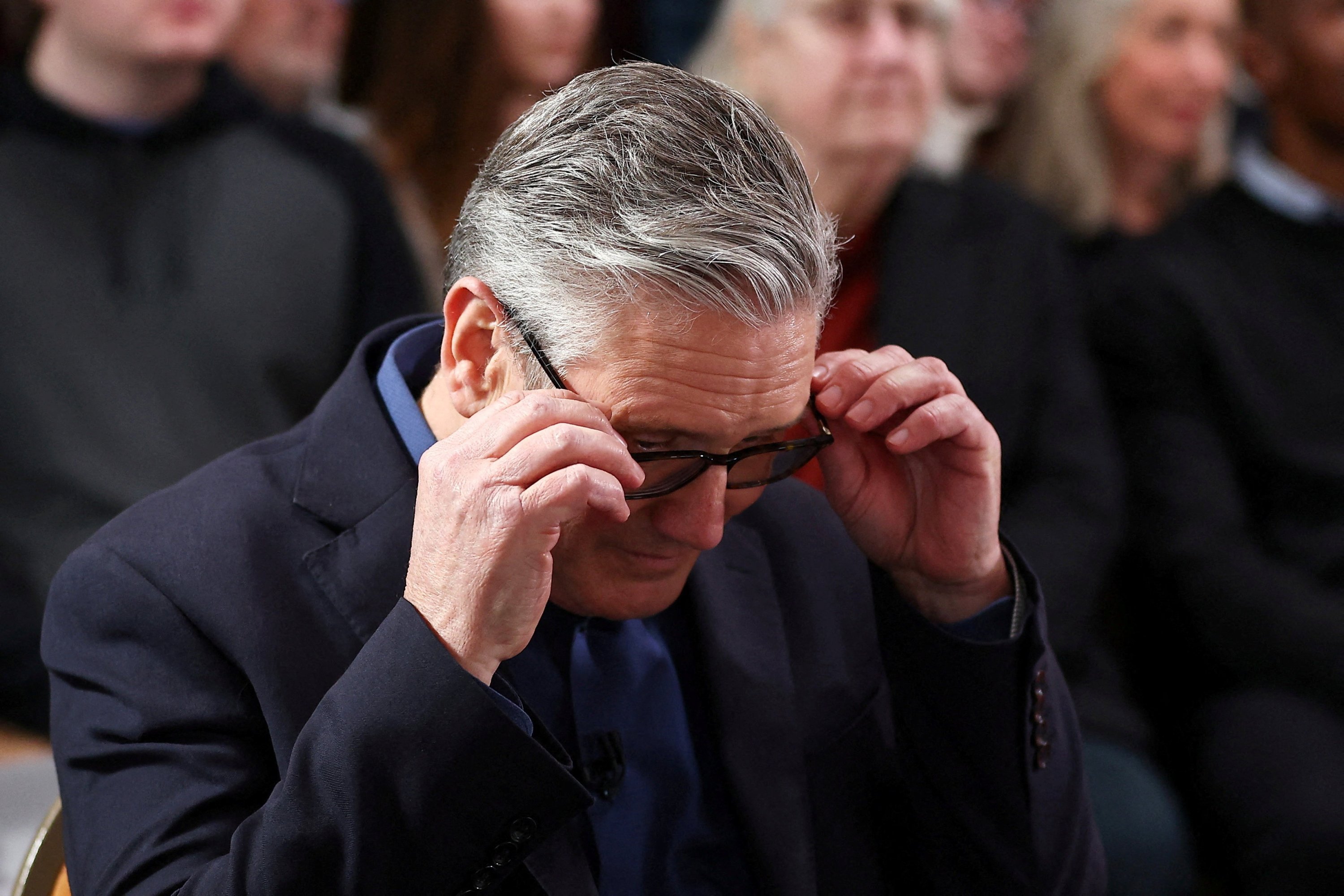
British Prime Minister Keir Starmer is fighting for political survival after fresh revelations about Jeffrey Epstein’s network reignited scrutiny of a decision that now threatens to define his premiership.
Starmer never met the disgraced financier, but his judgment is under intense pressure after appointing Peter Mandelson as Britain’s ambassador to Washington despite Mandelson’s long-standing ties to Epstein. Those ties, downplayed at the time, have been laid bare by newly released U.S. Justice Department documents that have plunged the Labour government into its deepest crisis since taking power.
The controversy has already claimed high-profile casualties. Epstein’s connections previously helped topple Prince Andrew and now Mandelson, a veteran Labour powerbroker, has been fired and placed under police investigation. Critics say Starmer’s role in elevating him could be the mistake that ends his time in office.
On Thursday, Starmer offered a public apology to Epstein’s victims, acknowledging that Mandelson had repeatedly misled him.
“I am sorry, sorry for what was done to you, sorry that so many people with power failed you,” Starmer said. “Sorry for having believed Mandelson’s lies and appointed him.”
Mandelson, 72, was dismissed in September after emails revealed he remained friendly with Epstein even after the financier’s 2008 conviction for sex offenses involving a minor. Epstein died by suicide in a U.S. jail in 2019 while awaiting trial on federal sex trafficking charges.
Documents released last week added fresh fuel. They suggest Mandelson shared sensitive government information with Epstein following the 2008 global financial crisis and received payments totaling $75,000 in 2003 and 2004 to accounts linked to him or his husband, Reinaldo Avila da Silva. Other records include informal and jokey messages that contradict Mandelson’s claims that the relationship was distant.
British police are now investigating Mandelson for possible misconduct in public office. He is not accused of any sexual crimes and says he never witnessed wrongdoing.
Starmer had appointed Mandelson for his trade expertise, international contacts and political skill, qualities seen as crucial for managing relations with U.S. President Donald Trump’s second administration. But opponents argue the risks were obvious. Mandelson had already resigned twice from senior government roles in past scandals involving money and ethics.
The pressure intensified in Parliament this week when Starmer said “Yes” after being asked whether the 2024 vetting process had identified that Mandelson’s friendship with Epstein continued after the conviction. The answer sent shock waves through the House of Commons. A day later, Starmer said he had meant only that their acquaintance was publicly known, not that its extent was understood.
The government now plans to publish files related to the vetting process, arguing they will show Mandelson deceived officials. Some material may be withheld due to the police inquiry, while other documents will be reviewed by Parliament’s Intelligence and Security Committee for national security concerns.
Labour lawmakers are unconvinced.
“He is now essentially a boxer on the ropes,” said Rob Ford, a political science professor at the University of Manchester. “His administration could fall tomorrow or limp on for months or years, but his authority is badly damaged.”
Paula Barker, a Labour member of Parliament, said Starmer’s judgment had been called into question.
“He has a very long way to go to rebuild trust with the public and within our party,” she told the BBC.
The scandal lands at a perilous moment. Since leading Labour to a landslide victory in July 2024, Starmer has struggled to deliver economic growth, fix strained public services and ease the cost-of-living crisis. He promised clean government after years of Conservative turmoil, but his tenure has been marked by policy reversals and internal dissent.
Internationally, Starmer has drawn praise for shoring up European support for Ukraine, keeping Trump engaged with NATO and repairing ties with the European Union after Brexit. At home, Labour trails the hard-right Reform UK party in opinion polls, and leadership murmurs were already growing before the Epstein revelations.
Potential challengers remain cautious. Angela Rayner, popular on Labour’s left, resigned as deputy prime minister in September over a tax issue. Health Secretary Wes Streeting, a leading figure on the party’s right, had close ties to Mandelson.
Anger is now shifting toward Starmer’s inner circle. Some lawmakers are calling for the dismissal of his chief aide, Morgan McSweeney, a powerful strategist widely blamed for Mandelson’s appointment.
Karl Turner, another Labour legislator, said the prime minister should “get rid of those advisers who frankly have given terrible advice over these weeks and months.”
Starmer has vowed to press on with what he called the “vital work” of governing, but more tests loom. Labour faces a difficult by-election on Feb. 26 in Greater Manchester and is bracing for losses in local and regional elections in May.
Whenever Starmer’s tenure ends, Ford said, the cause may be clear.
“It will all be traced back to appointing Peter Mandelson,” he said.