The United Nations' top court declared Wednesday that countries failing to act on climate change may be violating international law – a sweeping legal opinion that could reshape global climate accountability.
In a historic advisory opinion, the International Court of Justice said climate change poses an "urgent and existential" threat to humanity. The court emphasized that states have a legal obligation to protect the planet and that ignoring this duty could constitute an internationally wrongful act.
"Failure of a state to take appropriate action to protect the climate system ... may constitute an internationally wrongful act," said court President Yuji Iwasawa, speaking from the bench in The Hague.
Though nonbinding, the court’s opinion – spanning more than 500 pages – is being hailed as a landmark moment in international climate law.
It also reinforces the idea that access to a clean, healthy and sustainable environment is a fundamental human right.
By framing environmental protection as a legal and moral obligation, the ruling opens the door for future legal action – whether through international courts, domestic lawsuits or binding agreements.
States may now find themselves held to account not only by global institutions but by their own citizens.
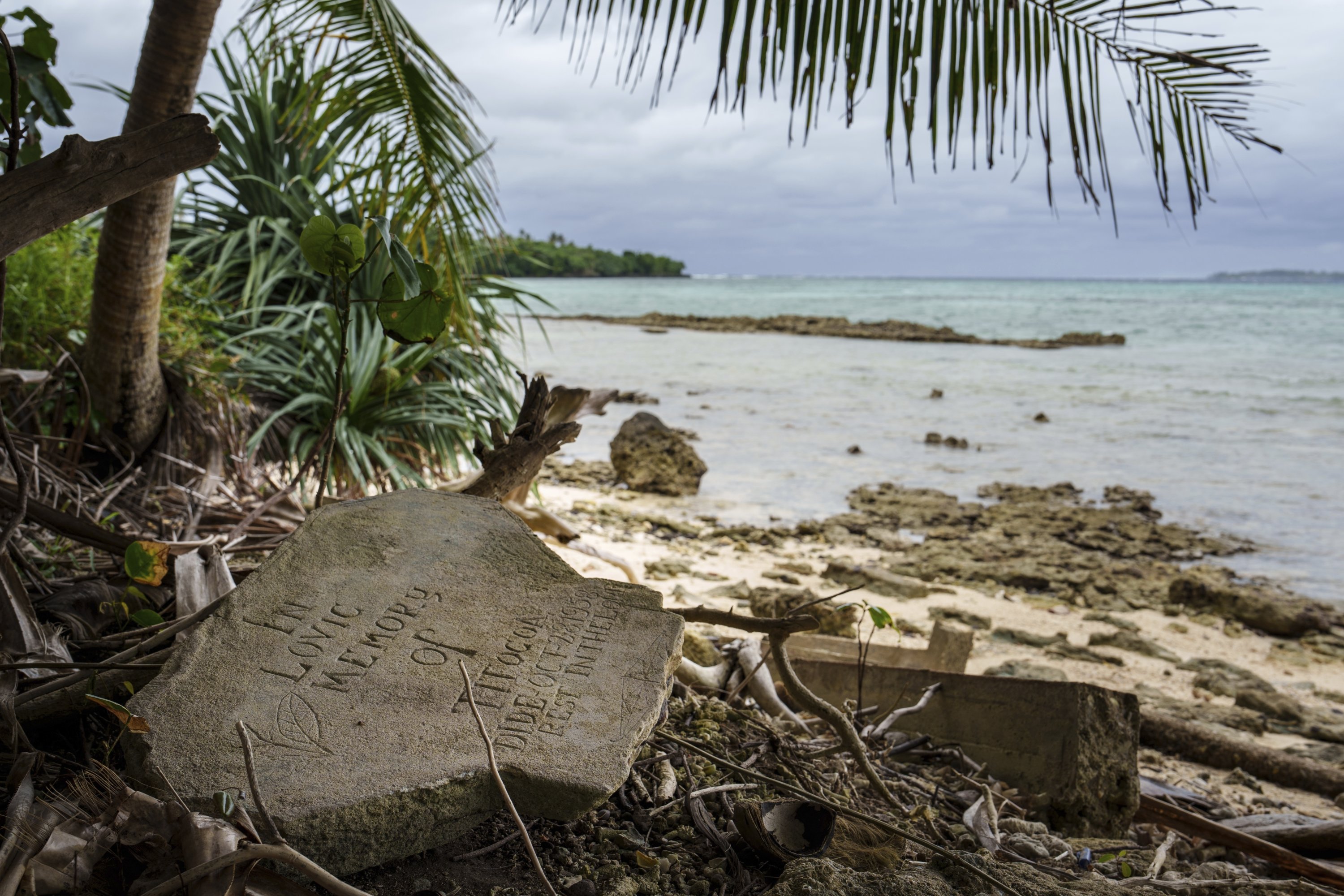
The case was led by the Pacific island nation of Vanuatu and backed by more than 130 countries.
All U.N. member states, including major greenhouse gas emitters such as the U.S. and China, are parties to the court.
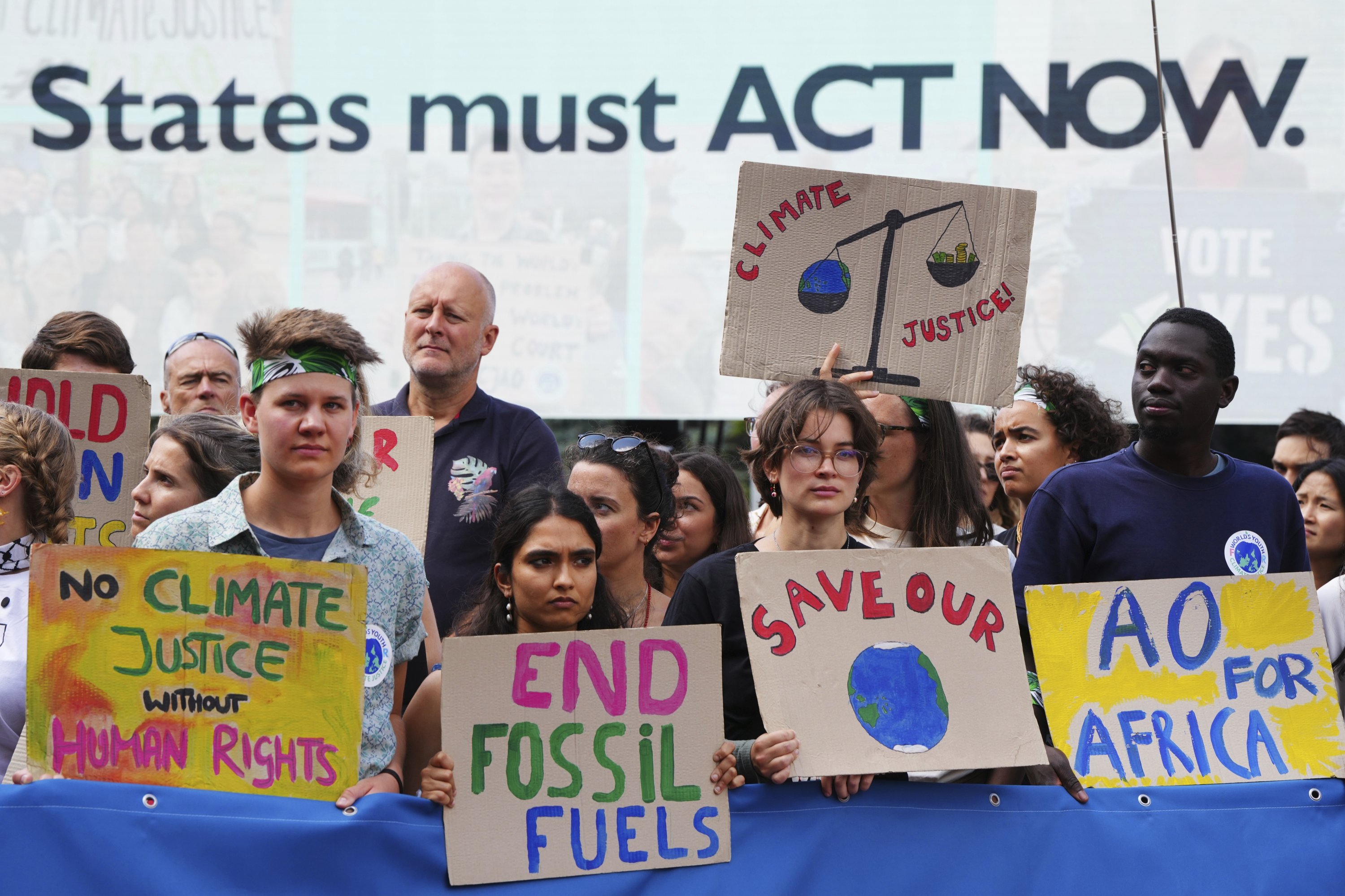
Outside the courthouse, climate activists gathered with a banner that read: “Courts have spoken. The law is clear. States must ACT NOW.” The courtroom, known as the Great Hall of Justice, was packed.
After years of lobbying by vulnerable island nations fearing they could disappear under rising seas, the U.N. General Assembly asked the court in 2023 for an advisory opinion – an important step in clarifying international obligations.
A panel of 15 judges was tasked with answering two questions: What are countries obliged to do under international law to protect the climate and environment from human-caused greenhouse gas emissions? And what are the legal consequences for governments whose actions – or inaction – have significantly harmed the climate and environment?
"The stakes could not be higher. The survival of my people and so many others is on the line,” said Arnold Kiel Loughman, attorney general of Vanuatu, during a week of hearings in December.
In the decade leading up to 2023, sea levels rose by a global average of about 4.3 centimeters (1.7 inches), with parts of the Pacific rising even higher.
The planet has also warmed 1.3 degrees Celsius (2.3 degrees Fahrenheit) since preindustrial times, largely due to the burning of fossil fuels.
Vanuatu is among a coalition of small island states pushing for international legal intervention in the climate crisis, but the issue affects many more nations across the South Pacific.
"The agreements being made at an international level between states are not moving fast enough,” said Ralph Regenvanu, Vanuatu’s minister for climate change, in an interview with The Associated Press (AP).
Activists may now seek to bring lawsuits against their own governments for failing to comply with the court’s decision.
"What makes this case so important is that it addresses the past, present and future of climate action. It’s not just about future targets – it also tackles historical responsibility, because we cannot solve the climate crisis without confronting its roots,” said Joie Chowdhury, a senior attorney at the Center for International Environmental Law.
The U.S. and Russia – both major petroleum-producing countries – are staunchly opposed to the court mandating emissions reductions.
But those clinging to fossil fuels could face economic ruin, U.N. Secretary-General António Guterres told The Associated Press in an exclusive interview this week.
The court’s opinion is the latest in a series of legal victories for small island nations. Earlier this month, the Inter-American Court of Human Rights ruled that countries have a legal duty not only to avoid environmental harm but also to protect and restore ecosystems. Last year, the European Court of Human Rights found that nations must better safeguard their people from the consequences of climate change.
In 2019, the Netherlands’ Supreme Court delivered the first major legal win for climate activists when it ruled that protection from the potentially devastating effects of climate change was a human right – and that governments have a duty to protect their citizens.