The United Nations has expressed concern over police tactics during nationwide student protests in France, where more than 6,800 people have been detained and several injured as demonstrations over underfunded schools enter their third week.
Although most high schools had reopened by Friday, student unions vowed to continue their campaign, arguing that government concessions fall short of demands for more teachers, better classrooms and improved learning conditions.
The protests have attracted tens of thousands of people, university students, teachers and other supporters.
“We are following with concern incidents related to the student protests and high school blockades in France, some of which have turned violent,” Shabia Mantoo, spokesperson for the U.N. human rights office, said Friday.
She urged all sides to keep demonstrations peaceful and warned against the disproportionate use of force by law enforcement, stressing that the right to peaceful assembly must be upheld.
The demonstrations began in late September, with students complaining of teacher shortages, overloaded timetables, deteriorating school buildings and classrooms struggling to cope with rising temperatures.
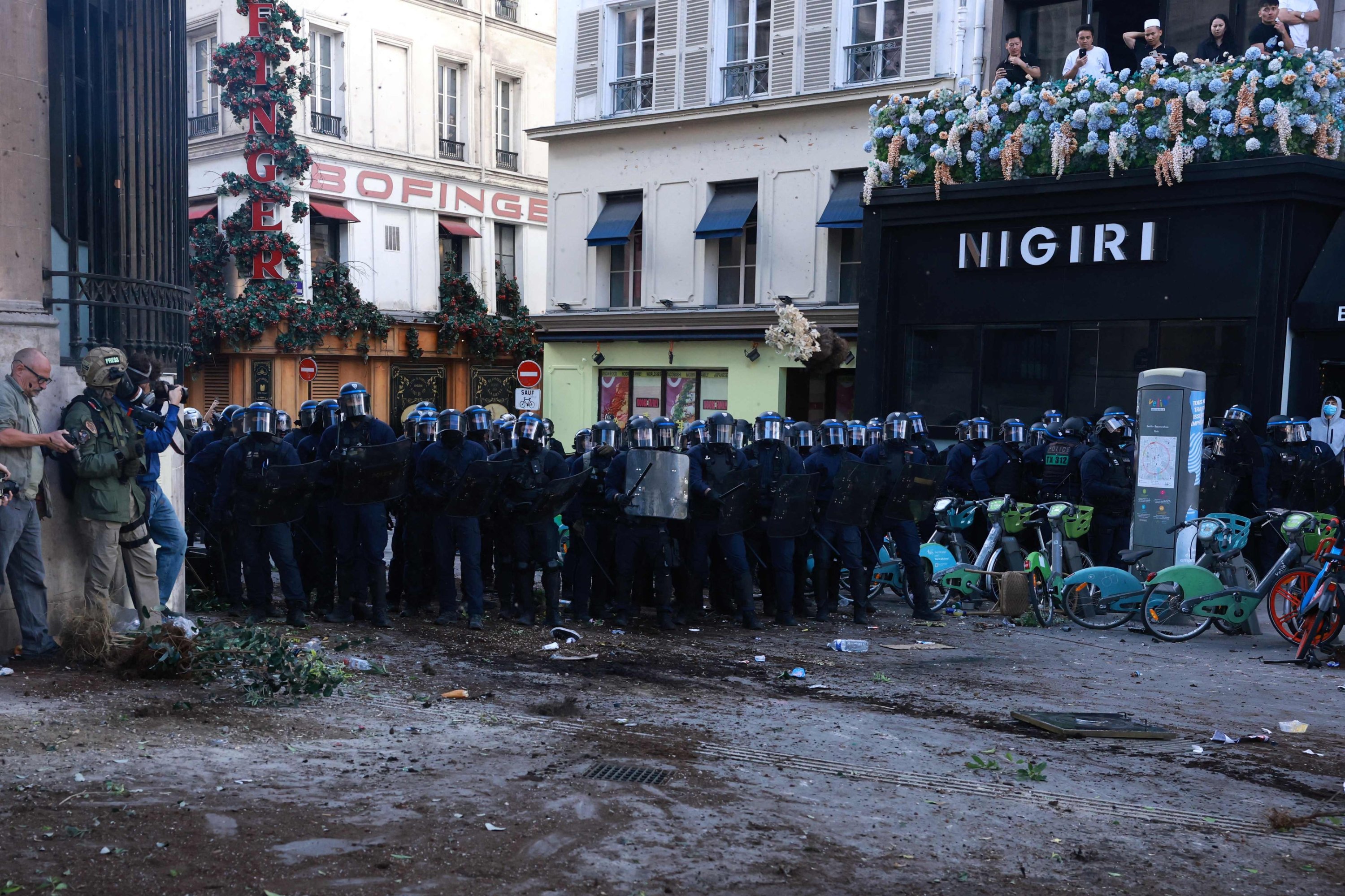
Police have used tear gas, batons, stun grenades and water cannon to disperse blockades, prompting accusations of excessive force from students and rights groups. Police have opened 18 internal investigations into alleged misconduct.
A 15-year-old student lost a hand Monday after police fired a stun grenade, prompting the government to suspend the weapon’s use.
The Justice Ministry said Friday that more than 6,800 people had been detained since the protests began, with minors accounting for 86% of those arrested.
While most demonstrations have remained peaceful, some have involved vandalism, fires and clashes with police. Authorities reported attacks on education staff and damage to public property, while a school in the western city of Poitiers was set on fire.
The government made its first significant concession late Thursday, when Education Minister Edouard Geffray announced that about 3,000 qualified teachers who have yet to begin working would be deployed to address staffing shortages at the 114 high schools most affected.
The measure takes effect immediately and will cost several dozen million euros, Geffray told broadcaster TF1.
Student unions welcomed the announcement but insisted that it did not resolve the wider problems facing schools.
Marius Mesnil, a high school student union representative, said the decision showed that continued protests could deliver results.
“I find it crazy we need to block hundreds of high schools just to get a vacancy plan,” he told Franceinfo radio.
Mesnil described the offer as insufficient and called for another nationwide wave of school strikes Tuesday.
Other students expressed similar frustration. A 16-year-old in Toulouse said that protesters were saving their energy for the following week, while Alice, a student in Marseille, called the announcement a first step but said more action was needed.
Prime Minister Sébastien Lecornu has promised a broader plan to address the crisis by the end of October. Economy Minister Roland Lescure has also said there is room to consider education demands despite constraints in the proposed 2027 budget.
Under the current draft, education funding would rise 1.4% to 90.9 billion euros, the second-largest increase among government spending categories after defense.
The Education Ministry reported that 141 of France’s roughly 3,700 high schools remained closed Friday, down from about 800 a week earlier. However, disruptions continued at universities and other institutions.
Police cleared a blockade at Assas University, one of France’s leading law schools, in central Paris on Friday. Nearby Mines Paris, an elite engineering school, was also affected, while the Institut Catholique moved classes online because of a campus blockade.
Paris has become a focal point of the unrest, with students barricading school entrances and confronting riot police.
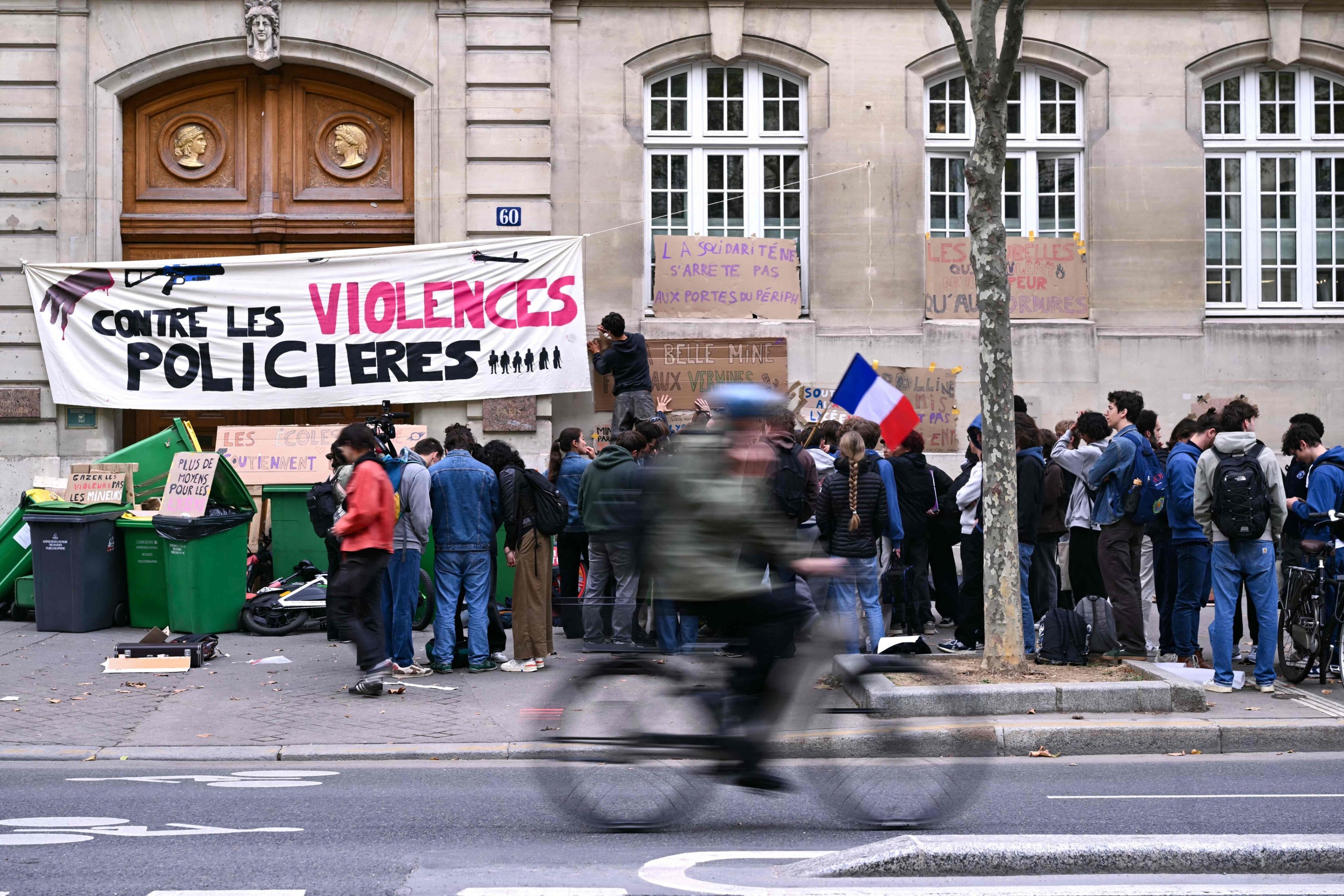
At Helene Boucher High School in northeastern Paris, students blocked the entrance with garbage bins Thursday before police moved in with tear gas. Demonstrators later gathered around Place de la Republique and Place de la Bastille, carrying signs demanding more education funding and questioning police conduct.
Some placards read “More money for repression than for our education” and “Who protects us from the police?”
Police used tear gas and water cannon to disperse crowds, while some protesters threw projectiles at officers.
Emma Khelil, an 18-year-old university student who returned to her former high school to support the movement, said she feared police violence.
“We’re here to defend our rights, not to lose an eye or a hand,” she told The Associated Press.
Khelil also described poor school conditions, including water leaks and insulation problems, and said she had occasionally seen rats inside the building.
Dounia Gergeon, a 39-year-old school librarian who joined a demonstration in Paris, said students felt abandoned and worried about their futures.
“They do not feel supported,” she said. “They feel cornered and forced to work under these conditions.”
Lecornu condemned attacks on students, school staff and police officers, along with fires, vandalism and thousands of hours of lost instruction. He accused political leaders of exploiting public anger for electoral purposes ahead of France’s presidential election in April.
“We cannot play with the safety of France’s youth,” he said.
The protests have intensified scrutiny of France’s public spending priorities as the government tries to address education shortages while reducing public debt.
Nearly 10% of teaching hours at French state high schools go unstaffed, according to education ministry figures. The shortages have fueled dissatisfaction among families, with some wealthier parents moving their children to private schools.
Stéphane Boujnah, head of Euronext, which operates the Paris stock market, said France needed difficult spending decisions to protect younger generations from the consequences of mounting debt. He suggested that reducing pension spending could free up money for education.
The Interior Ministry said 71,500 people demonstrated across France Thursday. Student and teacher unions are planning further strikes, raising the prospect of renewed disruption despite the decline in school closures.
The unrest has also coincided with demonstrations and labor action elsewhere in Europe.
In Belgium, two major labor unions organized a nationwide strike Friday that disrupted public transport, schools and air traffic over planned budget cuts and the rising cost of living. Tens of thousands were expected to attend a demonstration in Brussels.
Student protests have also spread across Belgium, with demonstrators demanding more teachers, smaller classes and improvements to school facilities. In Liège, authorities banned public gatherings until Oct. 16 after clashes involving tear gas and water cannon. Nearly 90 people were arrested, and several police officers were injured.
In Italy, students have occupied schools and organized marches over deteriorating buildings, education funding and increased military spending. Activists have explicitly drawn inspiration from the French movement, adopting the slogan “Let’s do as they do in France.”