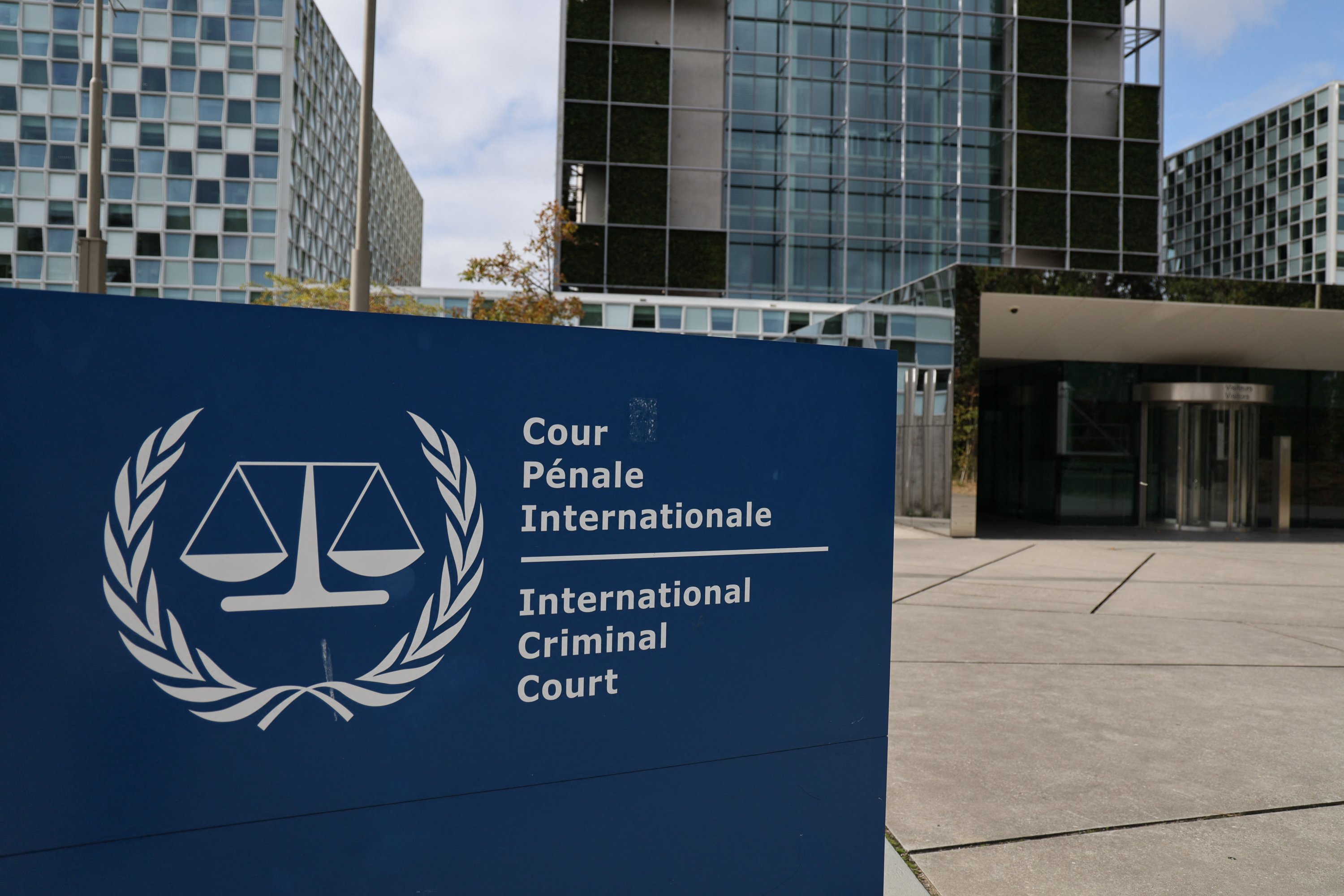
The U.S. faced mounting international criticism Friday over its sweeping sanctions against the International Criminal Court (ICC), as European governments, Canada and Japan rallied behind the tribunal and warned that Washington's move threatened international justice and judicial independence.
In a joint statement, the foreign ministers of Denmark, Germany, France, Italy, the Netherlands and the U.K., alongside their counterparts from Canada and Japan, expressed strong opposition to the sanctions, warning of serious consequences for the court's operations and personnel.
"We, the undersigned States Parties to the Rome Statute of the International Criminal Court (ICC), reaffirm our continued and unwavering support for the independence, impartiality, and integrity of the ICC," the ministers said.
They cautioned that the restrictions, if implemented, would significantly affect the tribunal's work, its employees and their families, while welcoming preparations aimed at maintaining its operations.
The eight countries pledged to maintain dialogue with nations outside the Rome Statute, the treaty establishing the ICC, ahead of the Assembly of States Parties in December.
"We will continue to work together to support the Court's vital work, uphold the rules-based international system, and advance accountability," they said.
The ICC itself denounced the measures as an attempt to obstruct justice and intimidate those cooperating with the tribunal.
The sanctions represent "an assault on the rule of law and on the very foundations of the international legal order," the court said, warning that they undermine the principle that no individual is above the law.
The tribunal vowed to continue its work despite the restrictions but urged its member states to defend its independence.
"The Court, for its part, will not be deterred," it said, adding that its future also depended on the governments that established it.
The European Commission similarly criticized Washington's decision and pledged to consider measures to protect the tribunal and European businesses affected by the sanctions.
"The EU stands ready to take any necessary measures to enable the Court to carry out its work," the commission said, referring to investigations and prosecutions involving war crimes and crimes against humanity.
Dutch Foreign Minister Tom Berendsen described the sanctions as deeply regrettable but emphasized that a six-month period before their implementation would allow time for negotiations.
"We will stand firm in defence of the Court," he said, adding that service providers could continue working with the tribunal during the transition period.
Belgian Foreign Minister Maxime Prevot called for more decisive European action, urging the EU to activate its Blocking Statute to shield the court from the effects of U.S. sanctions.
"Europe must act," Prevot said, announcing plans to raise the issue with EU foreign ministers and at the upcoming European Council meeting.
German Justice Minister Stefanie Hubig also condemned the decision, highlighting Washington's historic role in establishing international criminal accountability following World War II.
She recalled that the United States had championed the Nuremberg trials against senior Nazi officials, helping lay the foundations of modern international criminal law.
"It is utterly staggering that the US, of all countries, is now setting out to destroy this idea once and for all," Hubig said.
In Washington, Democratic Sen. Jeanne Shaheen, the ranking member of the Senate Foreign Relations Committee, called the sanctions "unfortunate and short-sighted," accusing the Trump administration of further isolating the United States and undermining efforts to prosecute atrocities in Ukraine and Darfur.
Human rights organizations also criticized the measures, linking them to Washington's opposition to ICC proceedings involving U.S. and Israeli officials.
Philippe Bolopion, executive director of Human Rights Watch, accused the Trump administration of seeking to dismantle the tribunal to protect American and Israeli officials from potential prosecution.
He urged governments, particularly the EU, to take immediate steps to protect the ICC, its employees and those cooperating with its investigations.
James A. Goldston, executive director of the Open Society Justice Initiative, similarly described the sanctions as a deliberate challenge to judicial independence and equality before the law.
He characterized the move as part of a broader effort to weaken the international justice system.
The sanctions have intensified tensions between Washington and its European allies over the ICC, which has faced U.S. criticism over its investigations involving American personnel and arrest warrants issued for Israeli officials, including Prime Minister Benjamin Netanyahu, over alleged war crimes and crimes against humanity in Gaza.