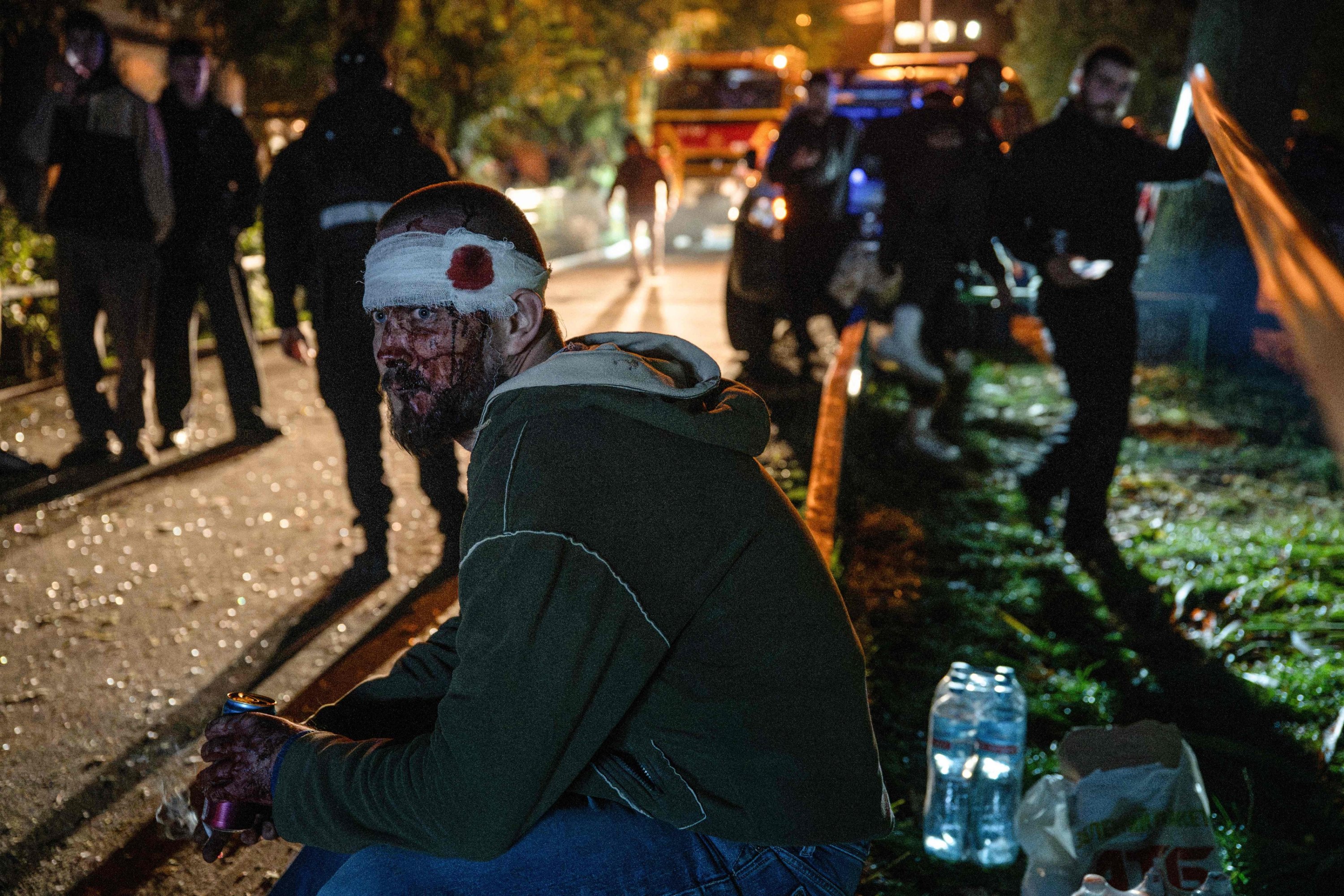
Ukraine accused Russia on Wednesday of violating Donald Trump’s "energy cease-fire" and wasting an opportunity for de-escalation, following a wave of deadly strikes that targeted power supplies nationwide.
Kyiv in particular faced a barrage of powerful ballistic missiles and attack drones targeting energy facilities and critical infrastructure, despite the U.S. president's surprise weekend announcement.
Four people were killed in the city and power to at least 600,000 people was cut after significant damage was reported to power facilities and equipment.
Power plants also came under ballistic missile attack in the eastern Kharkiv region, hitting electricity and heating infrastructure, Prime Minister Sergiy Koretsky said.
President Volodymyr Zelenskyy blasted the latest attack as "entirely deliberate and demonstrative in its scale," adding: "Russia has never before shown such ostentatious disrespect toward the United States."
"Russia does not consider the American President's statements strong," he wrote on X.
Trump blindsided both Kyiv and Moscow Sunday by unilaterally announcing an "energy cease-fire," two days after enraging Ukraine's Western allies with news of a deal with heavily sanctioned Russia to supply diesel fuel.
The U.S. leader has repeatedly lashed out at Zelenskyy – and even said he should be replaced as president – for Ukrainian strikes on Russian oil refineries.
A senior Ukrainian official confirmed to AFP reports in recent days that Washington threatened to pull intelligence-sharing with Kyiv that it relies on to detect incoming attacks.
The renewed signs of strain with Trump have cast doubt on those arrangements, as air raid sirens warning of approaching drones or missiles failed to sound on Monday night and Tuesday night before explosions were heard.
That has occurred only rarely in the past. Ukrainian officials attributed the issue to the Russian military's use of hard-to-detect missiles or potential technical issues.
But Zelenskyy on Tuesday evening said Ukraine had received "no early warning from our partners" about ballistic missile launches, calling it "absolutely unjust."
An aide to Zelenskyy meanwhile said the operation of some Starlink internet terminals also appeared to have been restricted overnight, disrupting "a number of missions" by Ukrainian defense forces.
"Obviously, this action cannot be a coincidence and is linked to the current political situation," said Sergiy Beskrestnov.
A senior Ukrainian official told Agence France-Presse (AFP) that Starlink speeds had been "throttled," suggesting that it was done to Russia's advantage.
"What is important is that this has been ongoing since last night. Some restrictions were already being reported yesterday evening, so, in effect, it is happening in sync with this morning's Russian ballistic attack," they added.
Zelenskyy has said Ukraine is prepared to hold off from striking Russian energy infrastructure, but accused the Kremlin of having "squandered the opportunity for de-escalation" in the nearly five-year conflict.
Russia has previously targeted Ukraine's power stations and heating infrastructure, crippling supplies before winter, when temperatures can plummet to as low as -20 degrees Celsius.
Ukraine has been pushing its allies for more military support as Kyiv increasingly comes under attack, particularly the supply of advanced interceptor systems to shoot down missiles and fast, jet-powered drones.
Russian ballistic missile attacks were also reported in the eastern region of Kharkiv and Zhytomyr in the northwest, and other strikes hit Sumy in the northeast and Chernigiv in the north.
Two people were killed in the central Dnipropetrovsk region and a further person in Zaporizhzhia in the southeast, the authorities said.
The governor of Russia's southwestern Saratov region, citing preliminary estimates, said a Ukrainian drone strike had killed one person in the city of Balakovo.
Moscow Mayor Sergey Sobyanin said air defense forces had downed nearly 500 drones flying toward the Russian capital overnight.
Russian authorities said around 160 more were brought down over the Rostov region, while others targeted Moscow.