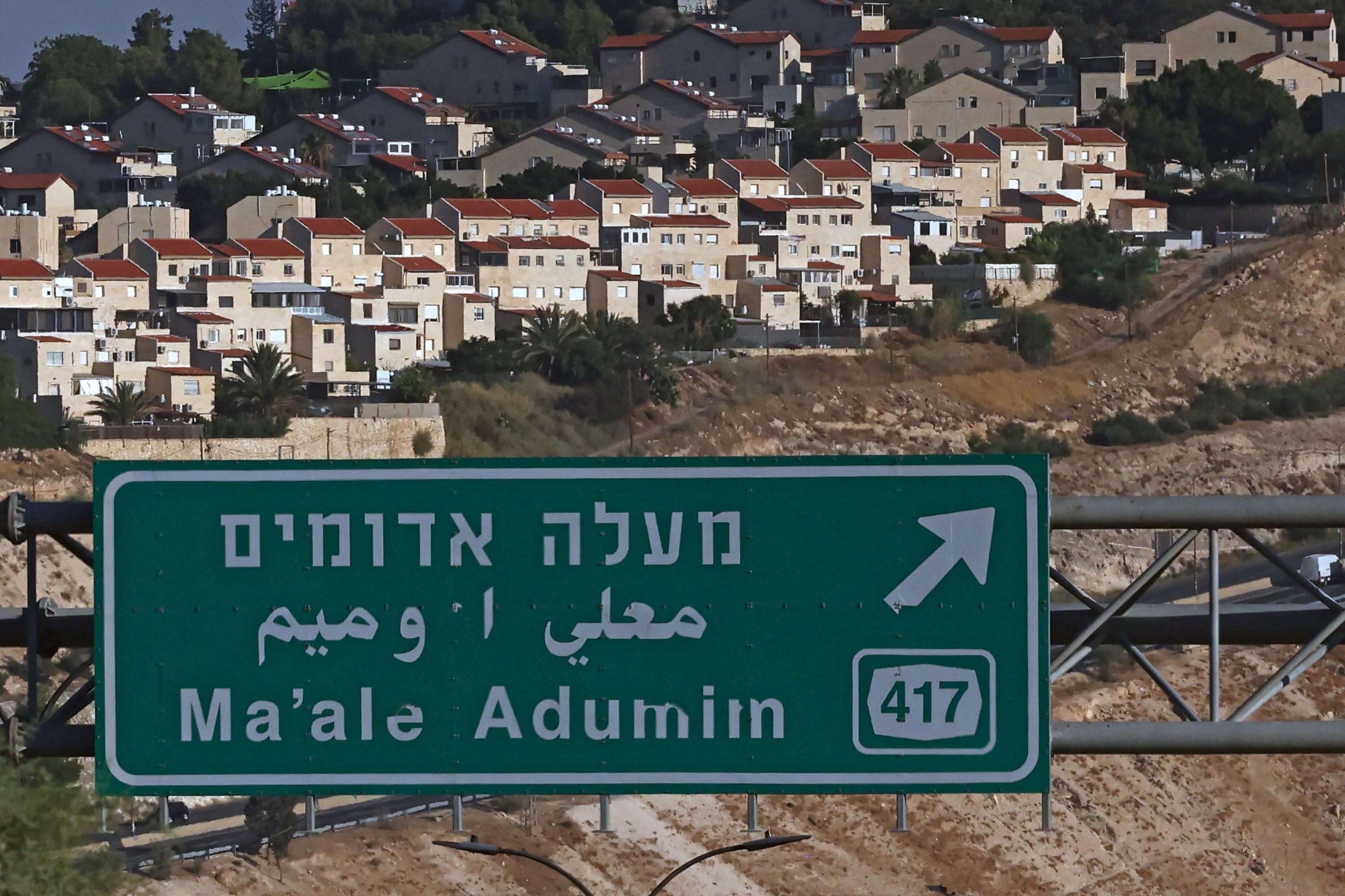
Eleven European countries and Canada announced plans Tuesday to impose national restrictions on trade in goods with illegal Israeli settlements, French Foreign Minister Jean-Noel Barrot said, stepping up economic pressure over Israel's unlawful settlement expansion.
"Today, France, the United Kingdom, Canada, Denmark, Spain, Finland, Ireland, Iceland, Norway, Poland, Portugal and Sweden confirm their intention to impose national restrictions on trade in goods with settlements that are illegal under international law and/or to support European restrictions to this effect," said a joint declaration issued by Barrot.
The statement reaffirmed that the 12 countries are "seriously considering" adopting such restrictions or other measures in accordance with their national procedures.
"In this regard, France, the United Kingdom and Canada welcome the significant measures already taken by Ireland, Spain, the Netherlands, Norway and Belgium, and will propose national measures to prohibit trade in goods originating from settlements," it added.
The declaration decried actions taken by the Israeli government in the West Bank that undermine the possibility of a two-state solution.
"The situation is rapidly deteriorating as settler violence and settlement expansion have reached unprecedented levels, including the unacceptable decision to issue tenders for the E1 settlement project," it underscored.
They also stressed the need for protecting the possibility of a two-state solution and vowed their determination to work for a just and lasting peace.
"We firmly oppose any action resulting in the annexation of Palestinian land and the forced displacement of Palestinian populations," the declaration said.
It further urged Israel to immediately halt the expansion of illegal settlements and civilian administrative powers while ensuring that settlers responsible for violence are held accountable for their actions and investigating allegations involving Israeli forces.
Britain, French and Canadian leaders said Tuesday that sanctions mark a "further turning" point in their approach to protecting the two-state solution, following penalties on illegal Israeli settlers in the occupied West Bank.
Andy Burnham, Emmanuel Macron and Mark Carney said in a joint statement that a two-state solution to the Israeli-Palestinian conflict is "critical" for peace, stability and security in the Middle East and beyond.
They noted that it is a "fundamental national interest" for the U.K., France and Canada to protect and secure that outcome.
"Systematic settlement expansion in the West Bank, including the Government of Israel’s latest decision to progress the E1 settlement, as well as the dramatic increase in settler violence, pose a direct and urgent threat to that vision for peace," it said,
Noting that they recognized the state of Palestine one year ago, the leaders said the time has come to take further action to uphold their commitment to protect the two-state solution, their interests and to stand up for their values, "before it is too late."
"Settlements are illegal under international law. The U.K., France and Canada will therefore take steps to ban the importation of goods from settlements and enforce targeted measures against settlements and those who facilitate them or profit from them."
Referring to the move to impose a trade ban targeting illegal settlements in the occupied West Bank, the statement said Tuesday marks a "further turning point" in their approach to protecting the two-state solution.
"We will co-chair a meeting at the United Nations General Assembly later this month to advance our efforts and pursue peace," it added.