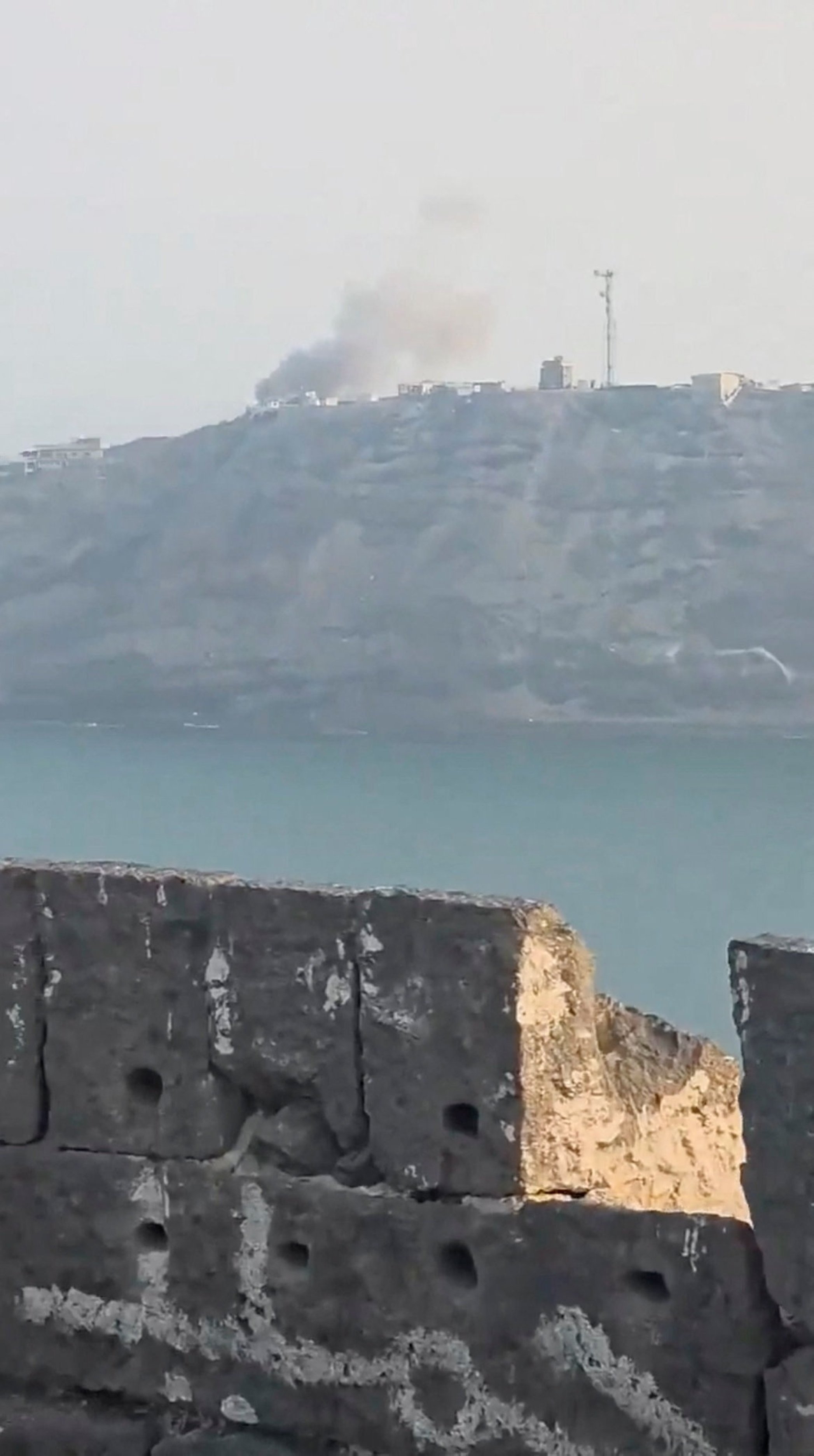
At least five people were killed and 16 wounded Thursday when Yemen's Houthi forces struck the presidential palace complex in the southern city of Aden, as the group also claimed to have hit a Saudi fighter jet amid escalating hostilities with the Saudi-led coalition.
The missile and drone attack targeted Al-Maashiq palace, the headquarters of Yemen's internationally recognized, Saudi-backed government, marking the first such strike on the complex in the latest round of fighting.
Yemeni Health Minister Qasim Buhaibeh said the casualties included security guards and civilian employees, while Information Minister Moammar al-Eryani confirmed that the prime minister and Cabinet members were unharmed.
Houthi military spokesperson Yahya Saree claimed responsibility for the attack, saying the group had targeted what it described as a Saudi military operations headquarters in Aden.
The Houthi-run SABA news agency alleged that Saudi officers operated the facility and that it housed weapons depots, claims that could not be independently verified.
Meanwhile, the Houthis released footage purportedly showing a missile striking a Royal Saudi Air Force Eurofighter Typhoon over Yemen's northern Saada province late Wednesday.
Saree claimed the fighter jet, which reportedly departed from Saudi Arabia's Taif Air Base, had been directly hit and was at risk of crashing.
However, the infrared footage appeared to show a missile detonating near the aircraft rather than striking it directly, with the pilot apparently maneuvering away from the explosion.
A visible trail from the aircraft's left wing raised speculation about possible damage from missile fragments, although neither the extent of any damage nor the authenticity of the footage could be independently confirmed.
Saudi authorities have not confirmed the incident, and there have been no verified reports of a fighter jet being shot down.
The missile involved was believed by some observers to be a Barq surface-to-air missile, a weapon associated with Houthi air defense systems and reportedly linked to Iranian missile technology.
The alleged engagement came as Saudi Arabia accused the Houthis of intensifying missile and drone attacks against airports, ports and energy infrastructure across the kingdom.
Saudi-led coalition spokesperson Turki al-Maliki said Thursday that Houthi forces had launched 20 attacks on King Khalid International Airport in Riyadh this month, killing 17 people and injuring 333 others.
Separate attacks on Abha airport in southwestern Saudi Arabia killed three people and wounded 28, according to the coalition.
Maliki accused the Houthis of acquiring advanced weapons, including ballistic missiles, drones and explosive-laden boats, with assistance from regional actors.
He also said coalition forces had destroyed 127 weapons storage facilities and launch platforms in Yemen.
The coalition separately announced that it had intercepted and destroyed drones over Khamis Mushait and another area in southern Saudi Arabia.
Following the developments, the Houthis warned airlines that Saudi airspace and airports were unsafe, excluding the airspace above the holy cities of Mecca and Medina.
The renewed violence follows the collapse of a prolonged lull in Yemen's civil war, which began in 2014 when the Houthis seized the capital, Sanaa, prompting a Saudi-led military intervention the following year.
Fighting resumed last month amid a broader regional conflict that erupted following U.S. and Israeli strikes on Iran in February.
Yemeni government forces have since launched operations to recapture Houthi-held territory, including areas near the strategic Bab el-Mandeb Strait, a vital route for international shipping.
Humanitarian organizations have warned that the renewed fighting risks worsening Yemen's already severe humanitarian crisis.