Just months ago, Saudi Arabia, the United Arab Emirates and Qatar rolled out camel parades and royal pageantry to welcome President Donald Trump.
Today, those same leaders are united in outrage after an Israeli strike in Doha targeted Hamas figures.
Saudi Crown Prince Mohammed bin Salman called for “an Arab, Islamic and international response to confront the aggression” and deter what he described as Israel’s “criminal practices.”
In a striking shift, the UAE’s Sheikh Mohammed bin Zayed Al Nahyan flew to Qatar to embrace its emir – a scene unthinkable only a few years ago, when Saudi Arabia and the UAE spearheaded a boycott of Doha over allegations it backed terrorist groups, a charge Qatar has long denied.
The Israeli strike in Qatar violated “all international laws and norms,” Sheikh Mohammed said.
The attack has revived the Gulf’s deepest fear: that Washington may no longer guarantee their security against regional aggressors, whether once Saddam Hussein of Iraq or now Israeli Prime Minister Benjamin Netanyahu.
Such concerns threaten to derail Trump’s regional agenda – from ending the Gaza war and expanding the Abraham Accords, which established Israeli ties with the UAE, Bahrain and Morocco, to countering the growing clout of China and Russia.
Netanyahu’s ambition for broader normalization across the Gulf has rarely looked more distant.
Trump appears to have registered the anger of Gulf leaders.
He distanced himself from the strike, saying it “does not advance Israel or America’s goals” and promising Qatar it would not be repeated.
But his strong support for an Israeli government that has increasingly defied international norms in wars following Hamas’ Oct. 7 incursion remains a source of Gulf concern.
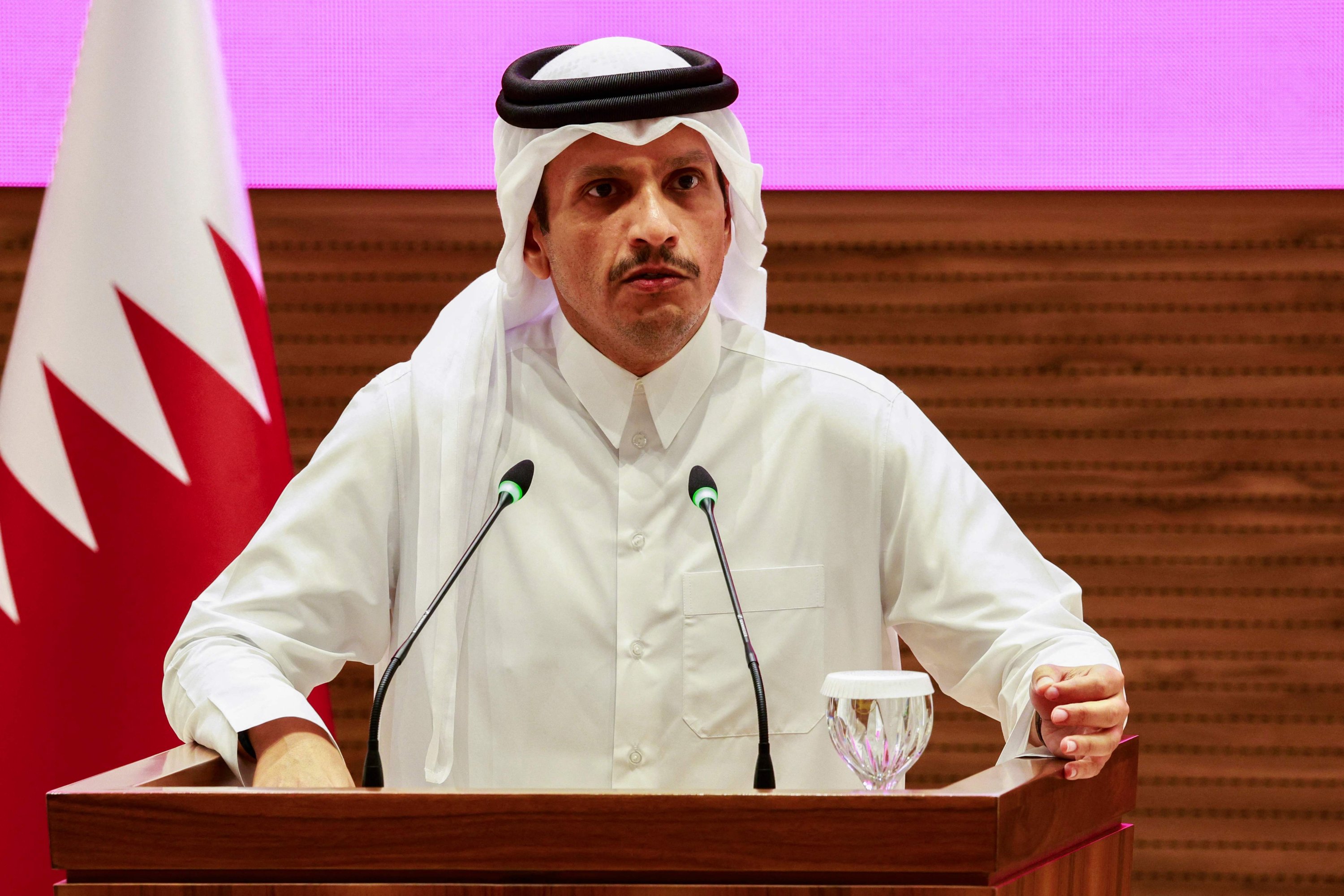
Qatar’s prime minister, Sheikh Mohammed bin Abdulrahman Al Thani, called the strike an act of “state terror” and singled out Netanyahu by name, accusing him of “barbarism.”
He also questioned the future of Qatar’s mediation efforts, saying there was nothing “valid” about the current talks after the strike. Israel targeted Hamas leaders as they were weighing a U.S. cease-fire proposal, killing at least five lower-ranking members and a member of Qatar’s security forces.
Netanyahu, meanwhile, has threatened to strike again if Qatar continues hosting Hamas in its role as a regional mediator – something it has done for years with U.S. knowledge and support.
“I say to Qatar and all nations who harbor terrorists, you either expel them or you bring them to justice,” Netanyahu said Wednesday. “Because if you don’t, we will.”
Those comments were denounced on Thursday by the UAE’s Foreign Ministry.
Aggression against any member of the Gulf Cooperation Council – a six-nation bloc that includes the UAE and Qatar – “constitutes an attack on the collective Gulf security framework,” the ministry said in a statement.
Asked about Netanyahu’s comments, a White House official said Trump made clear he was “not thrilled about the situation” following Tuesday’s strikes.
The official, who was not authorized to comment publicly and spoke on the condition of anonymity, added that Trump believes “unilaterally bombing inside Qatar, a sovereign nation and close ally of the U.S. that is working very hard and bravely taking risks with us to broker peace, is at odds with both Israel and U.S. goals.”
The UAE was the driving force behind the 2020 Abraham Accords.
It led other Arab nations in normalizing relations with Israel in agreements brokered by Trump that were widely seen as the biggest foreign policy achievement of his first term. Netanyahu has repeatedly expressed hope of expanding those deals, even after this week’s attack in Qatar.
The Israel-UAE agreement has held through two years of regional wars but could be in danger if Israel stays on its current course.
Last week, the UAE warned Israel that any move to annex the occupied West Bank would be a “red line,” without specifying what action it might take.
Israel’s decision to pause annexation plans five years ago was billed as a concession to the UAE in the talks leading up to the accords. Now Netanyahu’s far-right coalition partners are pressing for it after presiding over a dramatic expansion of Jewish settlements.
Trump, in his first term, lent unprecedented support to Israel’s claims to territory seized in war. It is unclear if he will apply the brakes this time.
Both Trump and Netanyahu hope to reach a similar normalization deal with Saudi Arabia, a regional powerhouse and custodian of Islam’s two holiest sites.
The Biden administration seemed close to brokering such a deal on the eve of Hamas’ Oct. 7, 2023, incursion.
Since then, it has appeared increasingly unlikely.
Saudi Arabia says it will only normalize ties with Israel if it opens a path to an independent Palestinian state in Gaza, the West Bank and east Jerusalem, territories Israel seized in the 1967 Mideast war.
Israel’s current government and most of its political class opposed Palestinian statehood before the war and now say it would reward Hamas.
The Saudi crown prince has stuck by his demands and ramped up his rhetoric, accusing Israel of “genocide” last year.
He has also pursued warmer ties with Iran, Israel’s chief regional foe, which Saudi Arabia itself long viewed as a menace.
All three Gulf nations still have powerful incentives to uphold the bargain struck with the United States after the 1991 Gulf War – when they agreed to host American bases and help stabilize energy markets in exchange for U.S. military protection.
That arrangement was strained in Qatar after a June attack by Iran targeting a base hosting U.S. troops.
But Israel’s strike is widely seen as an even greater violation of those understandings. That could make future deals harder to reach.