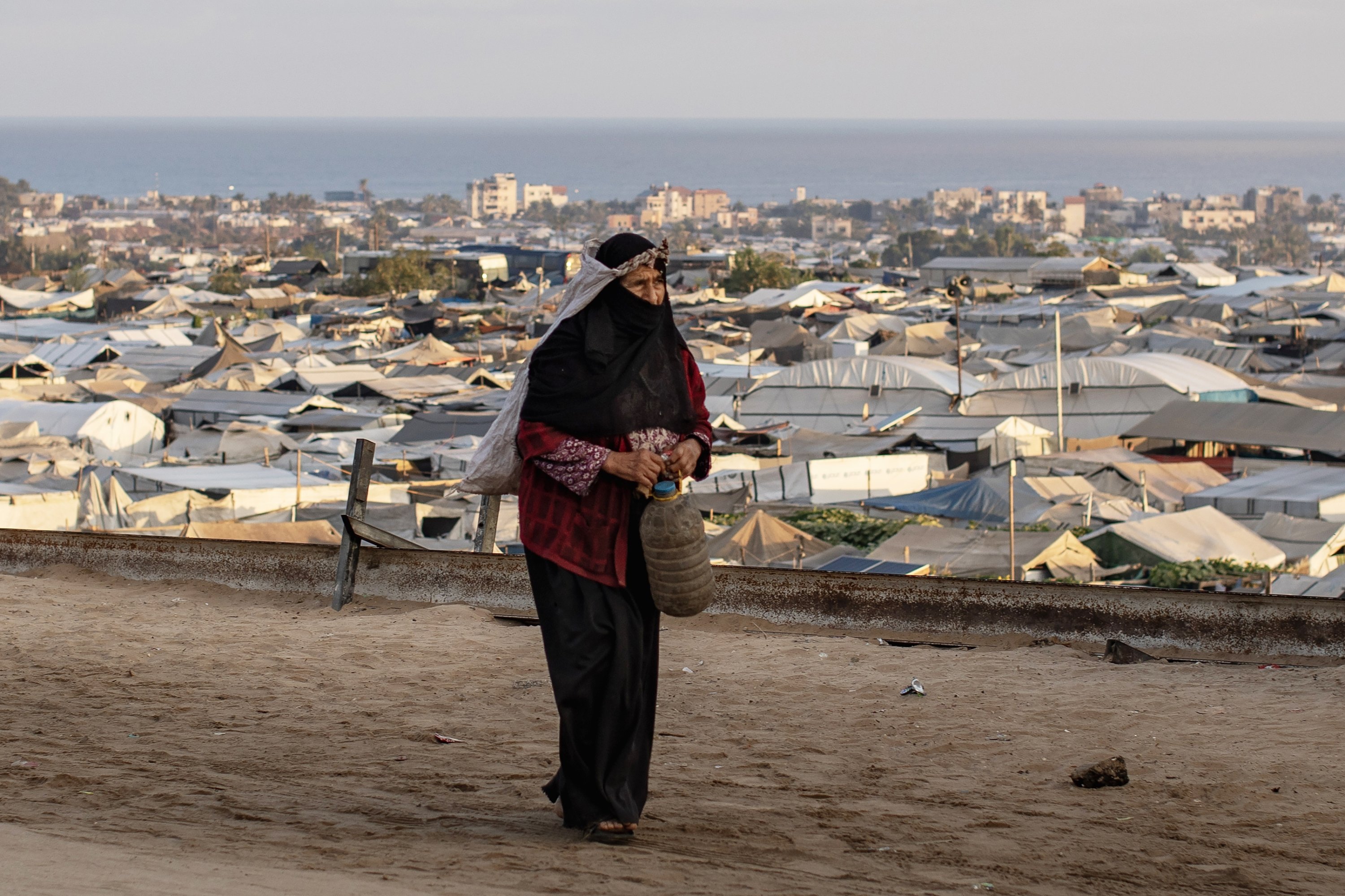
The European Union has helped mobilize 900 million euros ($1 billion) in pledges for Gaza's early rebuilding and recovery following two years of Israeli heavy bombardment that left much of the Palestinian enclave in ruins, a senior EU official said Monday.
How much of the money will be delivered, and when reconstruction of Gaza can begin, is unclear. The cease-fire between Israel and Hamas that took effect in October is effectively stalled.
European Commissioner for the Mediterranean Dubravka Suica announced the fund after a meeting in Brussels of the Palestine Donors Group, which includes the EU and Middle East nations, along with international organizations and financial institutions.
"The cease-fire in Gaza remains fragile, and the situation on the ground for civilians is not getting better," Suica said. She said the money will move through "trusted partners," but didn't give details.
Few places in the Palestinian territory of over 2 million people have been left unscathed, and the U.N., World Bank and EU estimate that reconstruction will cost $70 billion.
The U.N. has said Gaza has more than 60 million tons of rubble, enough to fill nearly 3,000 container ships. It will take over seven years to clear, with additional time for demining.
The meeting also brought together Nickolay Mladenov, the head of the Board of Peace set up by U.S. President Donald Trump to lead Gaza's reconstruction; Trump’s son-in-law, Jared Kushner; Ali Shaath, the head of the new Palestinian committee meant to administer Gaza’s daily affairs but still unable to enter; and Palestinian Authority Prime Minister Mohammad Mustafa.
Mladenov has made clear that the next steps in implementing the cease-fire are stalled over the issue of disarming Hamas in Gaza.
"We are investing not only in the Palestinian future but also in the regional stability, shared security and just and lasting peace for everyone together," Mustafa said, calling for "a resilient, sovereign, contiguous and viable Palestinian state," something that Israel's current government has opposed.
The Palestinian Authority seeks a role in Gaza’s reconstruction, but the U.S. 20-point plan only makes a reference to the possibility of a future Palestinian state.
Separately, top diplomats from the 27-nation EU debated how to respond to increased Israeli settler violence in the occupied West Bank.
The bloc's executive, the European Commission, has tabled options including cutting off trade with Israeli settlements in the territory.
Nations like Ireland and Spain are calling for forceful action. Czechia, Germany and others, alongside the commission, are more cautious, seeking to apply incremental pressure. Some nations have signaled they would veto sanctions.
Do sanctions "have a meaningful impact or not? What role could they play as a political message, and would this be escalatory in wrong direction?" said Bulgarian Foreign Minister Velislava Petrova-Chamova.
The EU's foreign policy chief, Kaja Kallas, said the European Council's legal service had found that severing trade ties with Israeli settlements in the West Bank, which technically do not constitute sanctions, would require a majority vote and not total unanimity from bloc members.