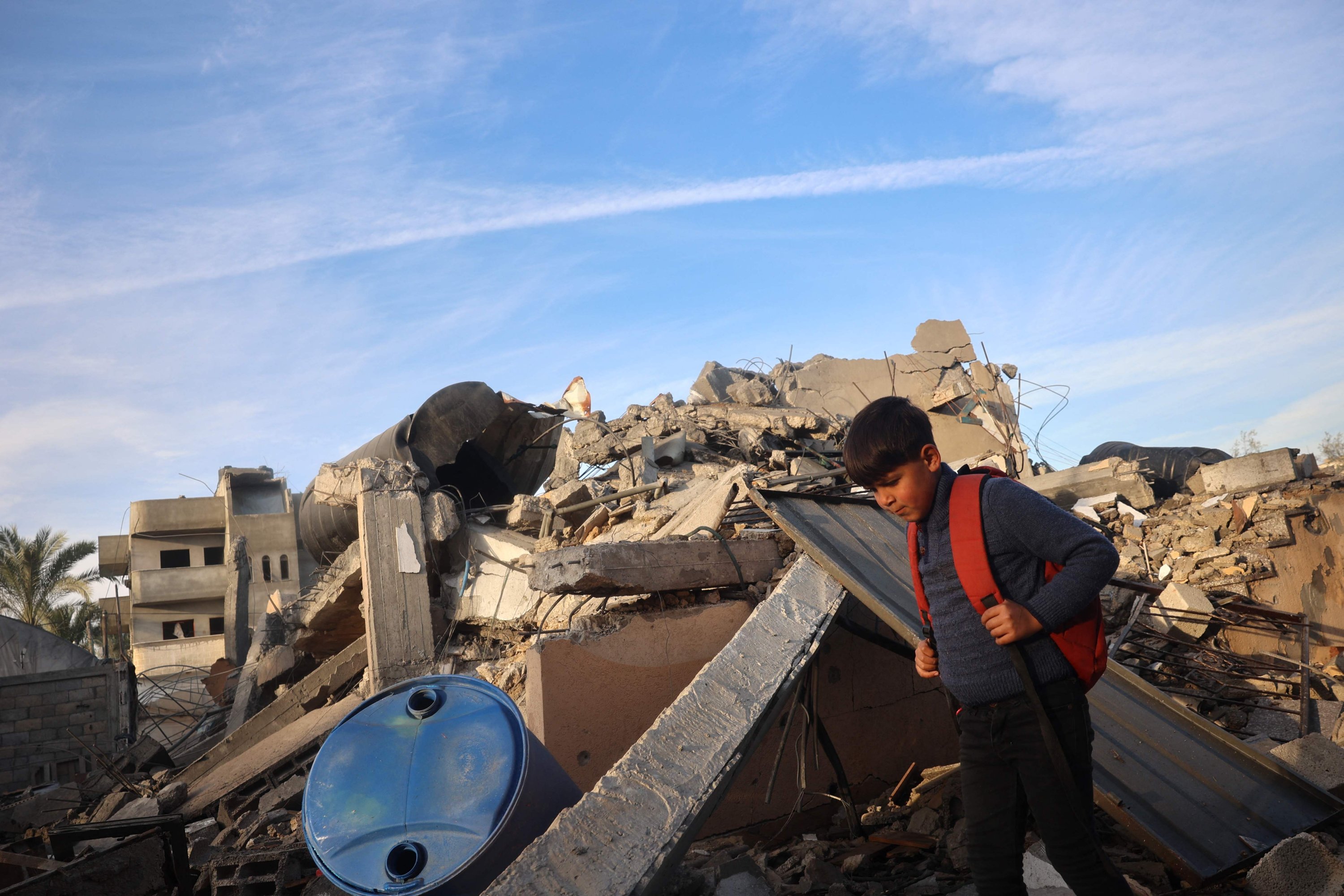
Mediators intensified efforts Wednesday to finalize a Gaza truce and hostage release deal, with a Qatari official expressing optimism that an agreement was imminent.
Qatar, Egypt and the United States have intensified efforts to broker a cease-fire and enable the release of hostages taken during the Hamas incursion of Israel on Oct. 7, 2023.
U.S. President Joe Biden and his Egyptian counterpart Abdel-Fattah el-Sissi said in a phone call Tuesday that both Israel and Hamas needed to show flexibility to get a deal over the line, according to a statement from his office.
Israeli Prime Minister Benjamin Netanyahu met with top security officials late Tuesday to discuss the deal, his office said, while U.S. Secretary of State Antony Blinken said the "ball is now in Hamas's court."
"If Hamas accepts, the deal is ready to be concluded and implemented," said Blinken.
An Israeli source familiar with negotiations said that talks were continuing in Doha on Wednesday.
Qatar's Foreign Ministry spokesman Majed al-Ansari said Tuesday that negotiations were in their "final stages" and mediators were hopeful they would lead "very soon to an agreement."
Israeli Foreign Minister Gideon Saar said there was a "true willingness from our side to reach an agreement."
After months of failed efforts to end Israel's genocidal war on Gaza, the latest progress comes days ahead of Donald Trump's inauguration as U.S. president.
The Oct. 7 Hamas incursion caused 1,210 deaths and took 251 people hostage, 94 of whom are still being held in Gaza, including 34 the Israeli military says are dead.
Israel's genocidal war on Gaza, in comparison, has killed over 46,707 people, mostly women and children, according to the Health Ministry.
Relatives of Israeli hostages and war-weary Palestinians in Gaza were anxious for the deal to be finalized.
"Time is of the essence," said Gil Dickmann, cousin of former hostage Carmel Gat whose body was recovered in September.
"Hostages who are alive will end up dead. Hostages who are dead might be lost," Dickmann told AFP. "We have to act now."
Umm Ibrahim Abu Sultan, displaced from Gaza City to Khan Younis in the south, said that she had "lost everything" in the war.
"I am anxiously awaiting the truce," said the mother of five.
Israeli government spokesman David Mencer said the first phase of a deal would see 33 Israeli hostages freed while two Palestinian sources close to Hamas told AFP that Israel would release about 1,000 Palestinian prisoners in exchange.
A source close to Hamas said that the initial hostage release would be "in batches, starting with children and women."
Negotiations for a second phase would commence on the truce's 16th day, an Israeli official said, with media reports saying it would see the release of the remaining captives.
Under the proposed deal, Israel would maintain a buffer zone inside Gaza during the first phase, according to Israeli media.
Hamas said it hoped for a "clear and comprehensive agreement," adding it had informed other Palestinian factions of the "progress made."
An official from Palestinian Islamic Jihad, whose members have fought alongside Hamas in Gaza, said a delegation had reached Qatar to join the discussions.
Among the sticking points in talks have been disagreements over the permanence of any cease-fire, the withdrawal of Israeli troops and the scale of humanitarian aid for the Palestinian territory.
The U.N.'s Palestinian refugee agency UNRWA, facing an Israeli ban on its activities set to take effect later this month, said it will continue providing much-needed aid.
Netanyahu has firmly rejected a full withdrawal from Gaza and has opposed any Palestinian governance of the territory.
But Blinken said Tuesday Israel would ultimately "have to accept reuniting Gaza and the West Bank under the leadership of a reformed" Palestinian Authority and embrace a "path toward forming an independent Palestinian state."
Blinken said the "best incentive" to achieve Israeli-Palestinian peace remained the prospect of normalization between Israel and Saudi Arabia.
Palestinian Prime Minister Mohammed Mustafa, also speaking in Oslo, said the latest push for a Gaza cease-fire showed that international pressure on Israel "does pay off."