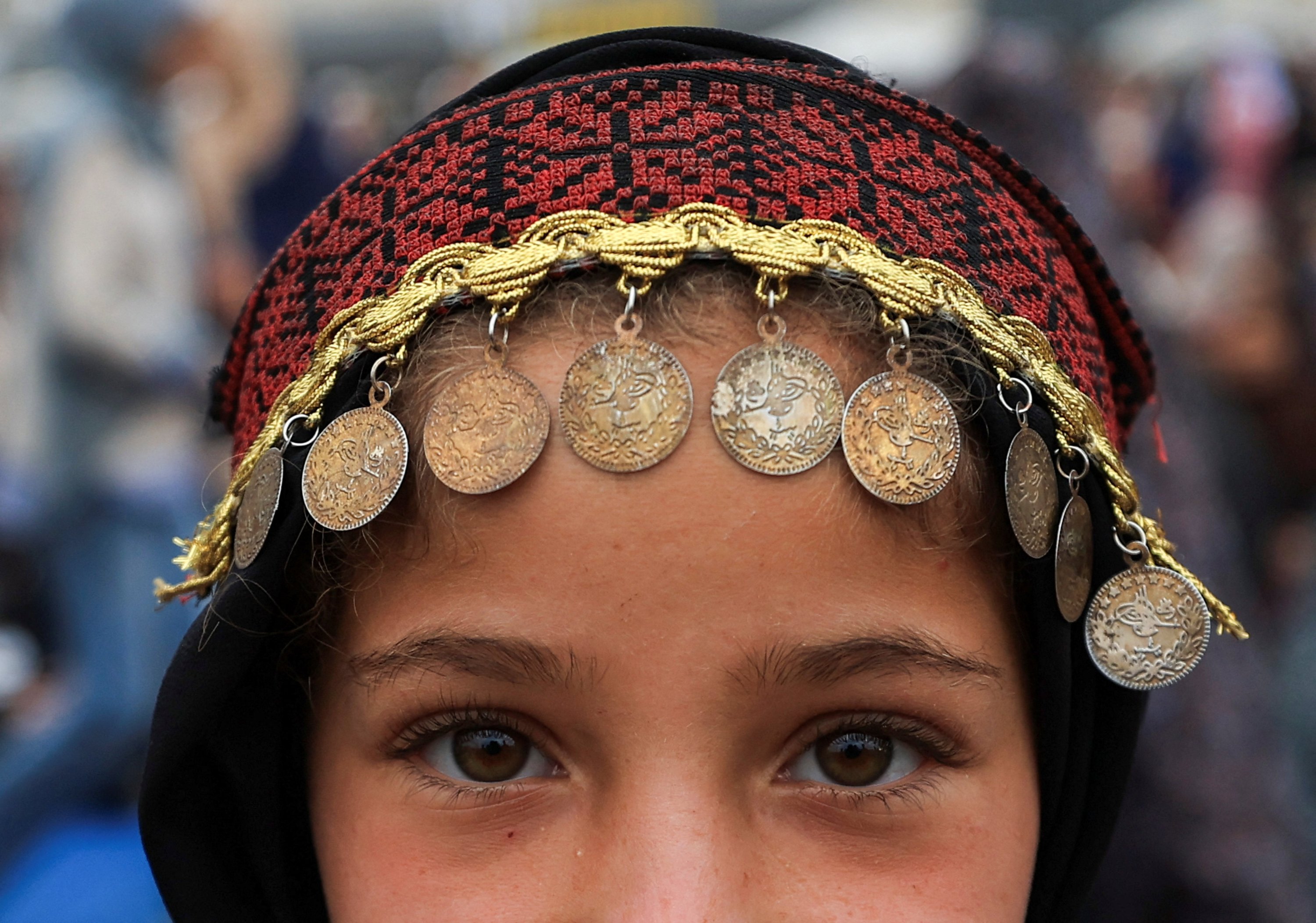
Majda was left with nothing. Her husband and eldest son were killed in Israeli airstrikes, and she was forced to live in a tattered tent in Gaza, surrounded by rats and the stench of sewage. Unable to provide for her children, she feared her daughters would be harassed on their way to communal latrines in a crowded displacement camp.
In desperation, she made a decision she now deeply regrets. She married off her 13- and 14-year-old daughters to men who promised protection and financial support.
“I thought I was protecting them,” she said. “Fear was slaughtering me.”
The devastation caused by Israel’s military campaign in Gaza has contributed to a rise in child marriage, according to experts and official data. With nearly the entire population displaced and living in overcrowded, unsanitary camps dependent on aid, some families have turned to early marriage in search of security and stability for their teenage daughters.
For many girls, that choice has meant the abrupt end of childhood and limited prospects for the future, along with heightened health risks from early pregnancy.
For Majda’s daughters, it led to severe physical abuse.
Before the war, child marriage had been slowly declining in Gaza, according to the Palestinian Central Bureau of Statistics. In 2022, the latest data released by the bureau, 17.8% of marriages involved a girl under the age of 18, down from more than 22% in 2015.
The minimum legal age for marriage in Gaza is 17, with some exceptions allowed. The U.N. and most humanitarian groups classify marriages involving girls under 18 as early marriage.
That trend appears to have reversed.
After an Associated Press (AP) request, the Supreme Shariah Court in Gaza, where marriages are registered, compiled data from court employees. According to its figures, 20.6% of the 35,474 marriages recorded in 2024 and 2025 involved girls under 18, including 627 marriages of girls under 15.
The true rate could be higher because many marriages went unregistered during the chaos of war, said Amal Siyam, director of the Women’s Affairs Center in Gaza. The number of marriage contracts recorded by the court dropped 35% in 2024, the first full year after Oct. 7, 2023.
The AP spoke to six girls in Gaza who married between the ages of 13 and 16, and their parents, all on condition they not be identified by their full names due to the sensitivity of the issue. The AP does not identify victims of sexual violence. Majda agreed to be identified by her first name only.
All of the parents said that if not for the war, they would not have married off their daughters so young.
After her husband and son were killed in separate strikes in April 2024, Majda fell into severe depression.
She begged doctors for sedatives, which kept her asleep for days at a time. She could not care for her daughters in their patched-up tent by the sea, battered by wind, cold and rain in winter. Charity kitchens they relied on for food were scarce and irregular.
“I was entirely shaken from the inside,” Majda said.
Two brothers in their 20s, from a family that had been their neighbors in Gaza City before both families were displaced, asked to marry her daughters.
Majda, who was married at 14, did not want a similar fate for her own children. But her father joined the brothers’ family in insisting it was the only way. They promised, she said, that they could sign the marriage contracts but wait until after the war to bring the girls to live with their husbands.
“I was not in my right mind. I am still not in my right mind,” Majda said. “I don’t know how I agreed to this.”
Majda’s eldest daughter, 14 at the time, initially refused.
“I felt lost,” she said. “I thought if I got married, someone would be financially responsible for me. I truly regretted it.”
Most of the girls who spoke said they were not directly coerced by their parents, but felt a responsibility to ease the burden on their families.
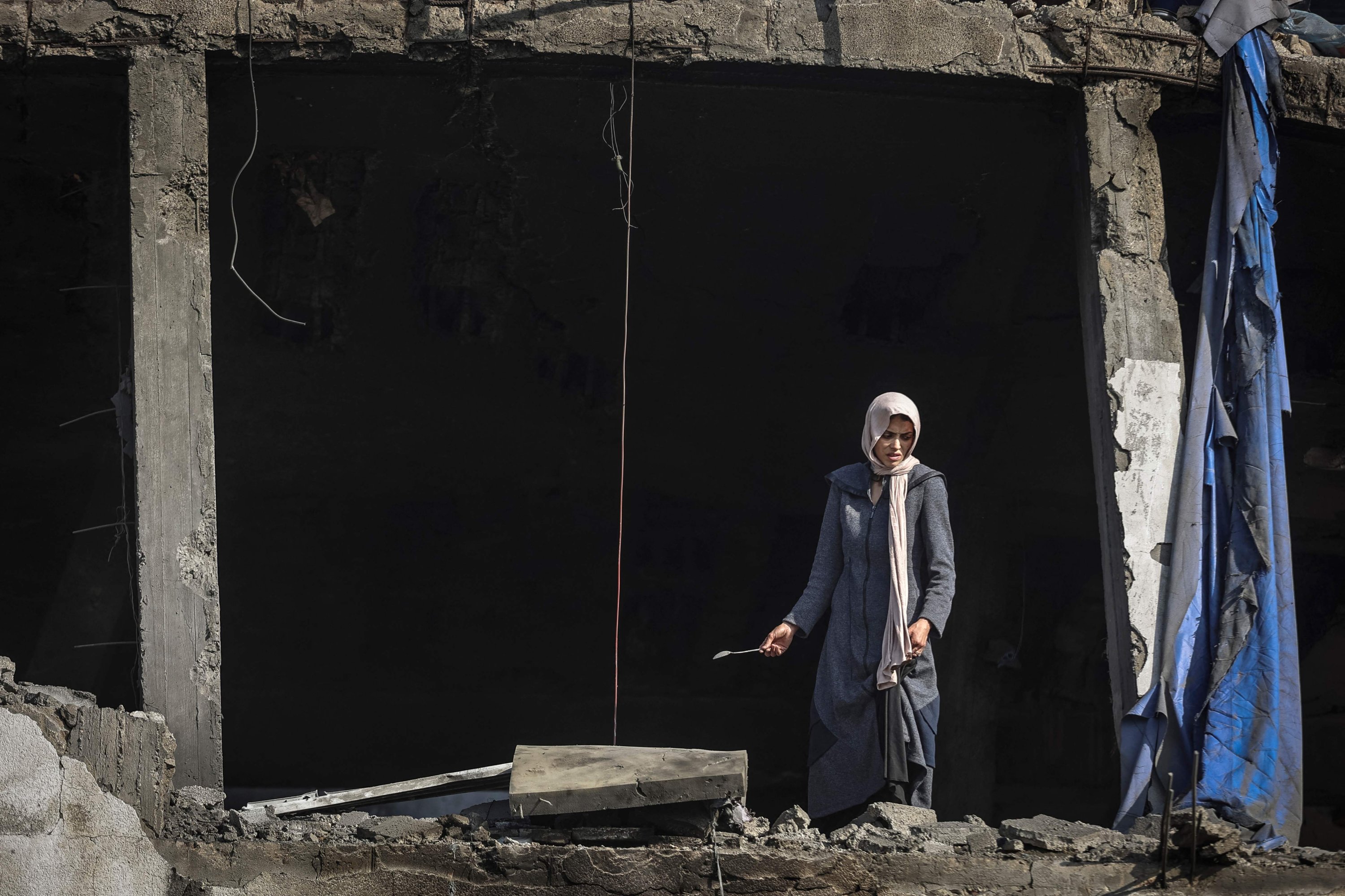
By marrying, they were counted with their husbands as separate aid units, rather than remaining under their parents’ ration allocations. Several also said that with schools largely shut during the war, they saw little hope of continuing their education.
One girl said she and her family, including seven siblings, were displaced more than 25 times during the war. Her father had opposed early marriage and wanted her to attend university, but the family’s desperation led him to accept a suitor.
She agreed. She was 16.
“I couldn’t forgive myself for taking a share of the little food my family had,” she said. She also feared she and her siblings would be left without support if their parents were killed in an airstrike. Now 17, she was five months pregnant when she spoke.
Another girl said repeated displacement and financial strain led her to accept marriage. While sheltering in a hospital in Khan Younis, a 25-year-old man staying there proposed. She was 17.
“Marriage felt like the only sense of normalcy I could restore to my life,” she said.
The law in Gaza allows exceptions to the minimum age of 17 with parental consent and judicial approval. The Supreme Shariah Court bars approval of exceptions below 14 years and seven months.
But some families enter informal agreements without registering the marriage. Two mothers who spoke did so, including one whose daughter was 14 when an official refused to approve the union.
In the Israeli-occupied West Bank, the Palestinian Authority in 2019 raised the minimum marriage age to 18, and early marriages have since fallen to about 5%, according to official data.
Siyam said that in times of widespread displacement, some Palestinians see marriage as a way to restore stability for daughters.
“Wars and conflicts lead to a return to more conservative traditions,” she said.
Younger brides are more vulnerable to rape and violence, including abuse from in-laws who assign heavy household chores, Siyam said. Because divorce rates in early marriages are high, “the girl ends up returning home with one or two children.”
Majda said the in-laws broke their promise and soon demanded her eldest daughter be sent to live with her 23-year-old husband in Deir al-Balah.
For the first 10 days, the girl screamed whenever her husband approached her.
“I kept screaming and he hit me,” she said.
Eventually, his mother tied her hands above her head, she said. Her husband then raped her.
After that, she said, she was repeatedly threatened with being restrained again if she resisted. She described multiple assaults and said she was hospitalized at one point due to bleeding.
Months later, the family took her 13-year-old sister to live with her 21-year-old husband. She screamed that she did not want to marry, Majda recalled.
The younger sister said she was also restrained by her mother-in-law and raped by her husband. She said she suffered two miscarriages after being kicked while pregnant.
Majda’s elder daughter later gave birth to a son. In November, she fled, carrying her child for 15 kilometers (9 miles) back to her mother’s tent.
Soon after, her younger sister also returned. They later discovered she was pregnant again.
The maternity ward at Awda Hospital in central Gaza has seen an increase in teenage pregnancies during the war, said ward head Yasser Shaaban. Many suffered severe complications due to early pregnancy, he said.
He added that most were malnourished as aid restrictions pushed Gaza’s population toward the brink of famine.
Four of the girls had given birth, all describing dangerous pregnancies or deliveries. Three had at least one miscarriage.
One nearly died from severe bleeding during childbirth, her mother said. She was 16 and severely malnourished.
“I was unconscious for many days after birth, and I couldn’t hold my daughter for a while,” the girl said.
Back with their mother, Majda’s daughters feared any talk of returning to their husbands. The younger said returning would be like “death.”
Majda said her younger daughter had once been talkative and playful, but now “she does not talk to anyone, not to her husband and not to me.”
The girls had returned to school, but the elder said she felt isolated and ashamed, as the only student who was married with a child. She described herself as a child raising a child.
“I am tired,” she said. “I want to die.”
Majda said she was under pressure from her father and in-laws, who argued she could not support her daughters, her grandson and the unborn child.
While women can seek divorce in Gaza, the process is costly and complicated. Divorce also carries social stigma and can make remarriage difficult.
The in-laws assured Majda the girls would be treated well.
Feeling she had no choice, she agreed. The girls returned to their husbands in Gaza City in early May. Majda has not been able to contact them since.
“They did not want to return,” she said. “They were crying.”