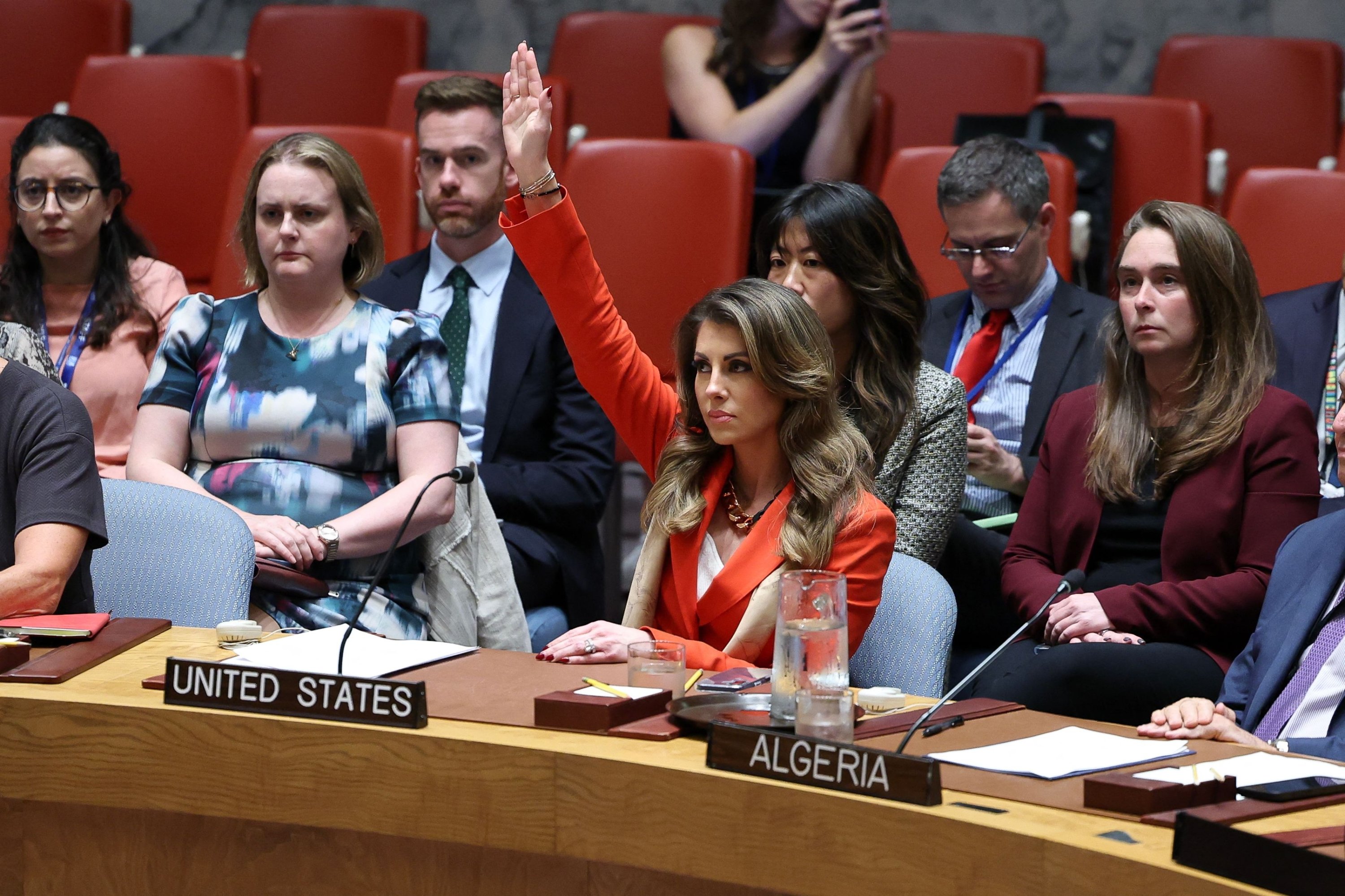
The United States on Thursday once again blocked a U.N. Security Council resolution demanding an immediate, unconditional cease-fire in Gaza and the release of hostages, sparking widespread international criticism and highlighting Washington’s isolation on the world stage.
All 14 other members of the Council voted in favor, denouncing the "catastrophic" humanitarian situation in Gaza and calling on Israel to lift restrictions on aid to the territory’s 2.1 million civilians.
Diplomats, aid groups, and human rights advocates framed the veto as a dramatic failure of international diplomacy at a moment of escalating violence.
Morgan Ortagus, senior U.S. policy adviser, defended the decision, saying the resolution “fails to condemn Hamas or recognize Israel’s right to defend itself” and risks legitimizing Hamas’ narrative.
But her words did little to quiet the chorus of outrage from other Council members.
Palestinian Ambassador Riyad Mansour called the veto “deeply regrettable and painful,” arguing it left Gaza civilians unprotected amid what independent U.N. investigators describe as genocide.
“Violence is an impasse. A cease-fire saves the lives of Palestinians and Israelis, hostages and prisoners,” Mansour said, warning against selective acknowledgment of suffering.
Algeria’s U.N. ambassador Amar Bendjama opened the session with an apology to Palestinians, invoking Rwanda and Bosnia as historical reminders of Council failures.
“Forgive us, because the world speaks of rights but denies them to you,” he said.
Bendjama warned that without decisive action, the Security Council risks repeating history. Pakistan’s envoy Asim Iftikhar Ahmad called the veto a “dark moment,” stressing that it blocked the Council from responding to “unprecedented brutality, mass displacement, and manmade famine.”
Other diplomats voiced similar concerns.
Denmark’s envoy described the vote as a stand for peace, insisting that a permanent cease-fire is essential to prevent “a generation being lost not only to war but to hunger and despair.”
Guyana’s representative labeled ongoing impunity in Gaza as genocide, citing the findings of the U.N.-mandated Independent International Commission of Inquiry.
China and Russia also criticized the veto, with Russia highlighting how a single delegation’s will can paralyze the Council.
The veto came as Israeli forces escalated a ground offensive in Gaza City. Tanks, artillery, and airstrikes have pushed thousands of Palestinians southward, intensifying civilian suffering.
Israel has said the offensive aims to “destroy Hamas’ military infrastructure,” but its scope and duration remain unclear.
Danny Danon, Israel’s ambassador to the U.N., dismissed the resolution as unbalanced, arguing it failed to address Hamas’ role in the conflict, including its Oct. 7 attacks that triggered the war.
“Israel will continue to fight Hamas and protect its citizens, even if the Security Council prefers to turn a blind eye to terrorism,” Danon said.
Meanwhile, reports from U.N.-mandated human rights experts label Israel’s conduct in Gaza as genocide, warning that without immediate action, the humanitarian crisis could become irreversible.
Aid agencies report famine conditions spreading across Gaza, further compounded by blockade restrictions and continuous bombardment.
The repeated veto underscores growing international frustration with the United States’ position.
While Washington argues that cease-fires unlinked to the unconditional release of hostages would embolden Hamas, critics contend that the veto effectively shields Israel from accountability, leaving civilians to bear the cost.
Public opinion in the U.S. reflects a growing unease: nearly half of Americans say Israel’s military response has “gone too far,” yet the appetite for pressing the U.S. government to negotiate a cease-fire has waned, particularly among Republicans.
Diplomats warn that this disconnect between domestic opinion and foreign policy could further isolate the U.S. at the upcoming U.N. General Assembly, where discussions on Palestine are expected to dominate.
For Mansour, Bendjama, and other critics, the veto is not merely a procedural act – it is a moral failure with real consequences. “Israel’s impunity is fueling its folly,” Mansour said. “Shielding it is allowing it to persist on a horrific path that will never lead to peace, security, or justice.”