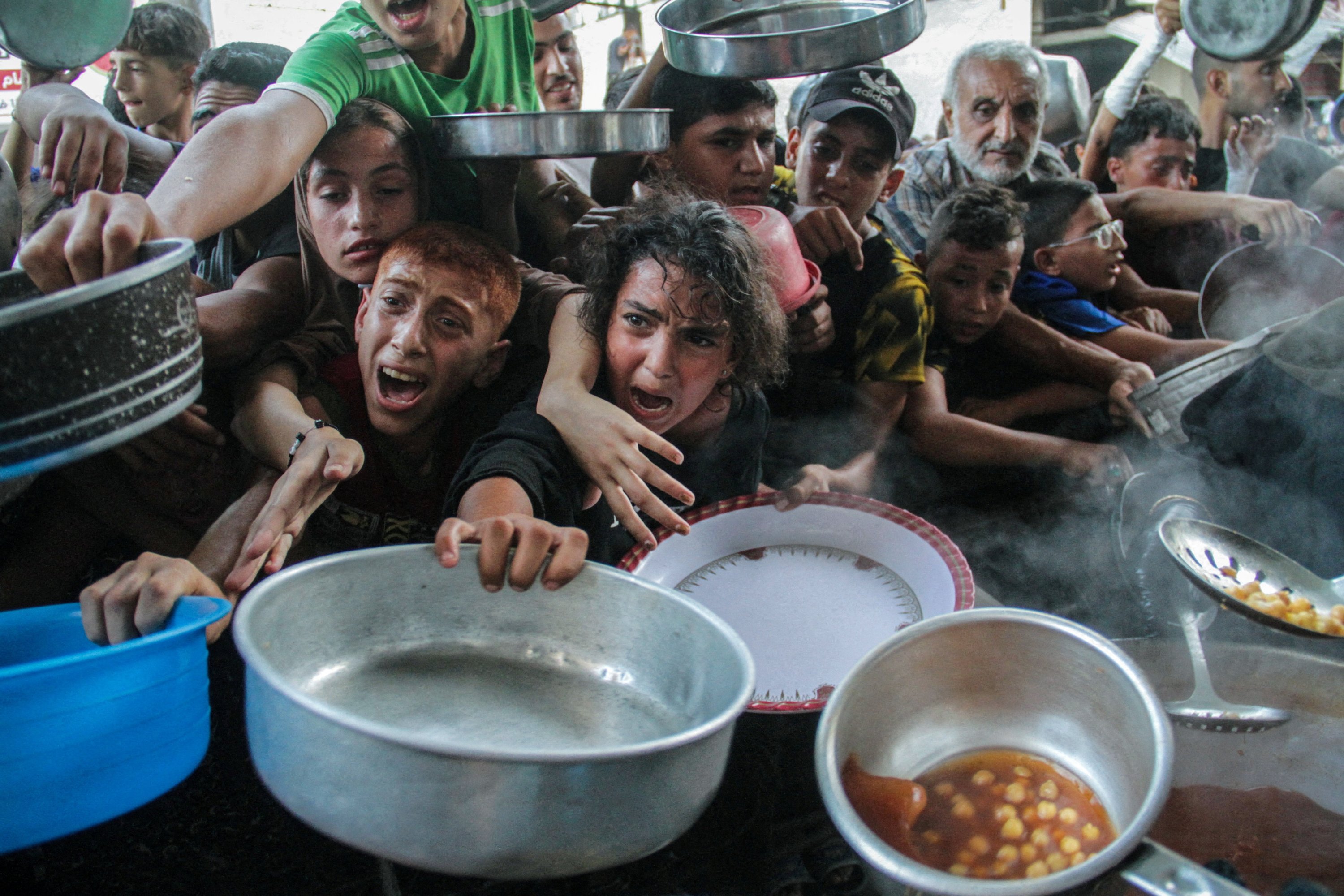
The International Court of Justice on Wednesday ordered Israel to facilitate the delivery of humanitarian aid into Gaza, emphasizing its legal obligation as an occupying power to ensure Palestinians receive essential goods for survival, while rejecting Israeli claims that UNRWA, the U.N. agency for Palestinian refugees, was tied to Hamas.
The ICJ’s wide-ranging advisory opinion came as aid agencies struggle to expand relief operations under a fragile cease-fire agreed earlier this month. Though not legally binding, the court said its opinion carried “great legal weight and moral authority.”
ICJ President Yuji Iwasawa said Israel was “under an obligation to agree to and facilitate relief schemes provided by the United Nations and its entities,” explicitly naming UNRWA, which Israel banned after accusing some of its staff of participating in the Oct. 7, 2023, Hamas attack that triggered the war. The court ruled that Israel “has not substantiated its allegations that a significant part of UNRWA employees are members of Hamas or other terrorist organizations,” and found no evidence of discrimination in the agency’s aid distribution.
“The occupying power may never invoke reasons of security to justify the general suspension of all humanitarian activities in occupied territory,” the court said, stressing that Israel’s duty to facilitate aid was “unconditional.” It reiterated that Israel, as an occupying power, must respect both the law of occupation and international humanitarian law, and is obligated not to use starvation as a method of warfare.
Israel did not participate in the proceedings. Before the hearing, an Israeli official told reporters the case was “an abuse of international law,” insisting Israel “cooperates with international organizations” but “will not cooperate with UNRWA.” The court, however, rejected Israel’s argument that the request “weaponized” the international judicial process.
On the eve of the ruling, the World Food Programme said 530 trucks carrying over 6,700 tonnes of food had entered Gaza since the cease-fire, enough to feed nearly half a million people for two weeks. The agency said around 750 tonnes of aid were now entering daily, still well below its target of 2,000 tonnes.
The U.N. had asked the court to clarify Israel’s obligations regarding the unhindered provision of essential supplies to Palestinians. Judges heard a week of testimony in April from dozens of states and organizations, much of it focused on UNRWA’s role. The United States raised “serious concerns” about the agency’s neutrality and alleged Hamas used its facilities, though the ICJ noted UNRWA “cannot be replaced on short notice without a proper transition plan.”
The opinion is separate from other ICJ cases involving Israel’s actions in Gaza. In July 2024, the court ruled that Israel’s occupation of the Palestinian territories was “unlawful” and must end as soon as possible. Meanwhile, the International Criminal Court has issued arrest warrants for Israeli Prime Minister Benjamin Netanyahu and Hamas commander Mohammed Deif over alleged war crimes and crimes against humanity.
Reaffirming international law, the ICJ concluded: “Israel, as an occupying power, is not entitled to sovereignty over any part of the occupied Palestinian territory, including East Jerusalem.”