Iran has threatened strikes on recreational and tourist sites worldwide, insisting it continues to build missiles.
The defiant show on Friday came nearly three weeks after U.S.-Israeli attacks killed several of Tehran’s top leaders and severely damaged its weapons and energy infrastructure.
Amid the region observing one of the holiest days on the Muslim calendar, Iran fired on Israel and energy sites in neighboring Gulf Arab states.
Domestically, Iranians marked Nowruz, the Persian New Year, a normally festive holiday muted this year by the ongoing conflict.
Details on the extent of damage to Iran’s military, nuclear, and energy facilities since the war began Feb. 28 remain scarce, and the question of who truly holds power in Tehran is still uncertain.
Yet Iran has demonstrated it can still launch attacks capable of disrupting oil supplies and rattling the global economy, driving food and fuel prices higher far beyond the Middle East.
The U.S. and Israel have offered shifting rationales for their strikes, from attempting to spark an uprising to dismantling Iran’s nuclear and missile programs. No signs of internal revolt have emerged, and Iran’s remaining capabilities and the conflict’s eventual outcome remain unclear.
Iran’s top military spokesman warned Friday that “parks, recreational areas and tourist destinations” worldwide will not be safe for Tehran’s enemies.
Gen. Abolfazl Shekarchi made the threat as Iran continues to be hit by U.S. and Israeli airstrikes, renewing concerns that Iran may revert to using militant attacks beyond the Middle East as a pressure tactic.
U.S. and Israeli leaders have said that weeks of strikes have decimated Iran’s military. Airstrikes have also killed its supreme leader, the head of its Supreme National Security Council, and a raft of other top-ranking military and political officials.
On Thursday, Israeli Prime Minister Benjamin Netanyahu claimed Iran’s navy was sunk and its air force in tatters, adding that its ability to produce ballistic missiles had been taken out. Iran's paramilitary Revolutionary Guard disputed the missile claim Friday.
“We are producing missiles even during war conditions, which is amazing, and there is no particular problem in stockpiling,” spokesman Gen. Ali Mohammad Naeini was quoted as saying in Iran’s state-run IRAN newspaper.
Naeini added that Iran had no intention of seeking a quick end to the war. “These people expect the war to continue until the enemy is completely exhausted,” he said.
A short time after the statement was released, Iranian state television said Naeini was killed in an airstrike.
The country’s new Supreme Leader Ayatollah Mojtaba Khamenei also released a rare statement, saying Iran’s enemies need to have their “security” taken away.
Khamenei has not been seen since he succeeded his father, the 86-year-old Ayatollah Ali Khamenei, who was killed in an Israeli airstrike on the first day of the war.
Iran has stepped up its attacks on energy sites in Gulf Arab states after Israel bombed Iran’s massive South Pars offshore natural gas field earlier in the week.
Two waves of Iranian drones attacked a Kuwaiti oil refinery early Friday, sparking a fire. The Mina Al-Ahmadi refinery, which can process about 730,000 barrels of oil per day, is one of the largest in the Middle East. It was damaged Thursday in another Iranian attack.
Bahrain said a fire broke out after shrapnel from an intercepted projectile landed on a warehouse, and Saudi Arabia reported shooting down multiple drones targeting its oil-rich Eastern Province.
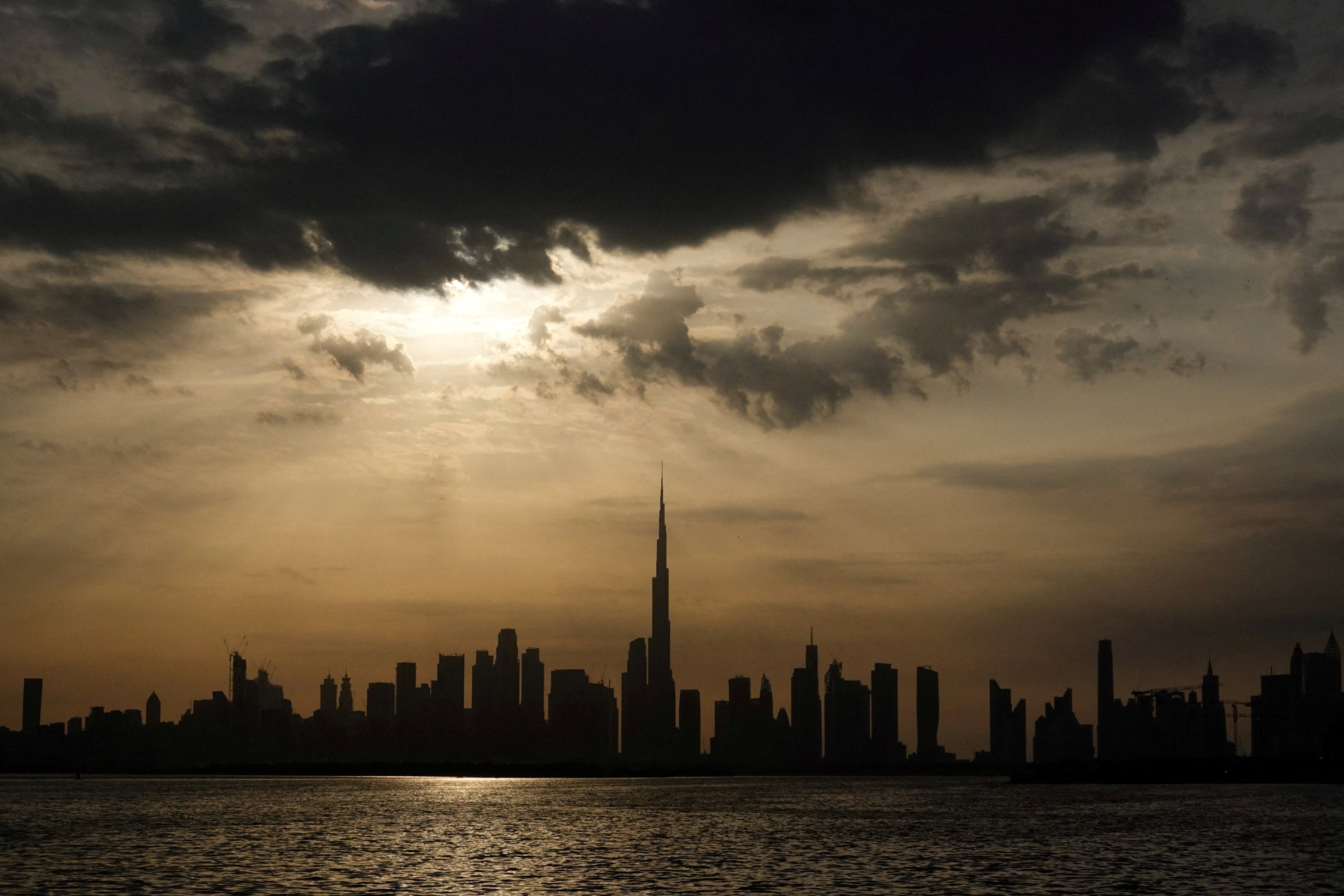
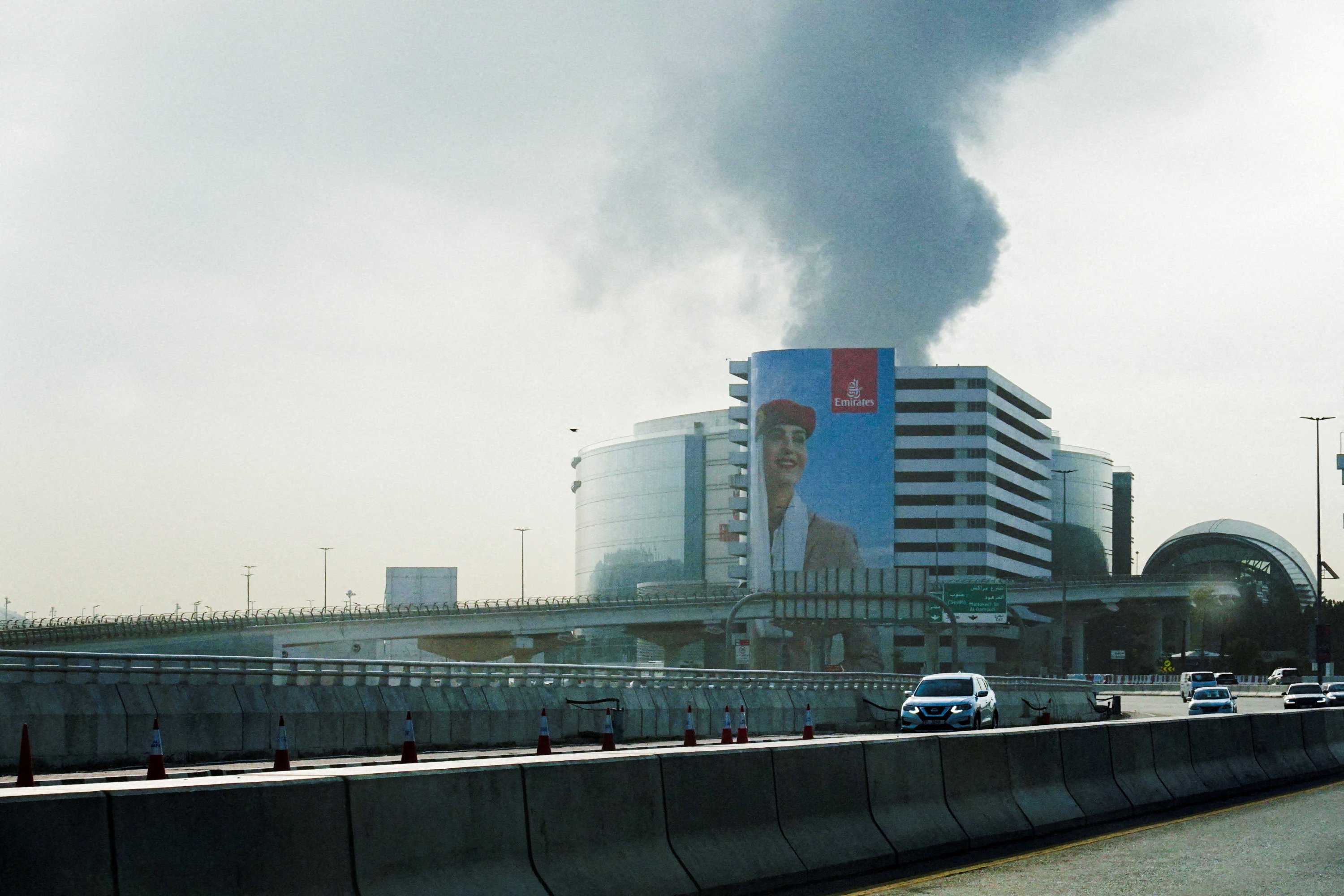
Heavy explosions shook Dubai as air defenses intercepted incoming fire over the city, where people were observing Eid al-Fitr, the end of the holy Muslim fasting month of Ramadan.
In Iran, meanwhile, many were marking Nowruz even as Israel said it had launched new strikes, and explosions were heard over Tehran. The Persian New Year, which coincides with the spring equinox, is a tradition observed across southwestern Asia that dates back thousands of years.
Loud explosions were also heard in Jerusalem after the Israeli army warned of incoming Iranian missiles. First responders said they treated two people, both around 70, who were lightly wounded.
In addition to steadily striking Iran, Israel has regularly hit Lebanon, targeting Iran-backed Hezbollah members who have been firing rockets and drones into Israel.
On Friday, Israel broadened its attacks to Syria, saying it hit infrastructure there in response to what it described as attacks on the minority Druze population. Syria’s state-run SANA news agency did not immediately acknowledge the attack.
More than 1,300 people have been killed in Iran during the war. Israeli strikes in Lebanon have displaced more than 1 million people, according to the Lebanese government, which says more than 1,000 have been killed. Israel says it has killed more than 500 Hezbollah members.
In Israel, 15 people have been killed by Iranian missile fire. Four people were also killed in the occupied West Bank by an Iranian missile strike.
At least 13 U.S. military members have been killed.
Iran’s attacks on energy infrastructure in the Gulf, combined with its stranglehold on shipping in the Strait of Hormuz, a strategic waterway through which a fifth of the world’s oil and other critical goods are transported, have raised concerns of a global energy crisis.
Brent crude oil, the international standard, has soared during the fighting and was around $107 in morning trading Friday, up more than 47% since the start of the war.
Surging fuel prices come as many world leaders were already struggling to bring down high prices of food and other consumer goods. Asia is being hit hard, as most of the oil and gas exiting the Strait of Hormuz is transported there.
The price shocks are reverberating throughout the global economy. Key raw materials, such as helium used in making computer chips and sulfur, a raw material in fertilizer, have been obstructed and could be in short supply soon, raising prices of goods across the supply chain.