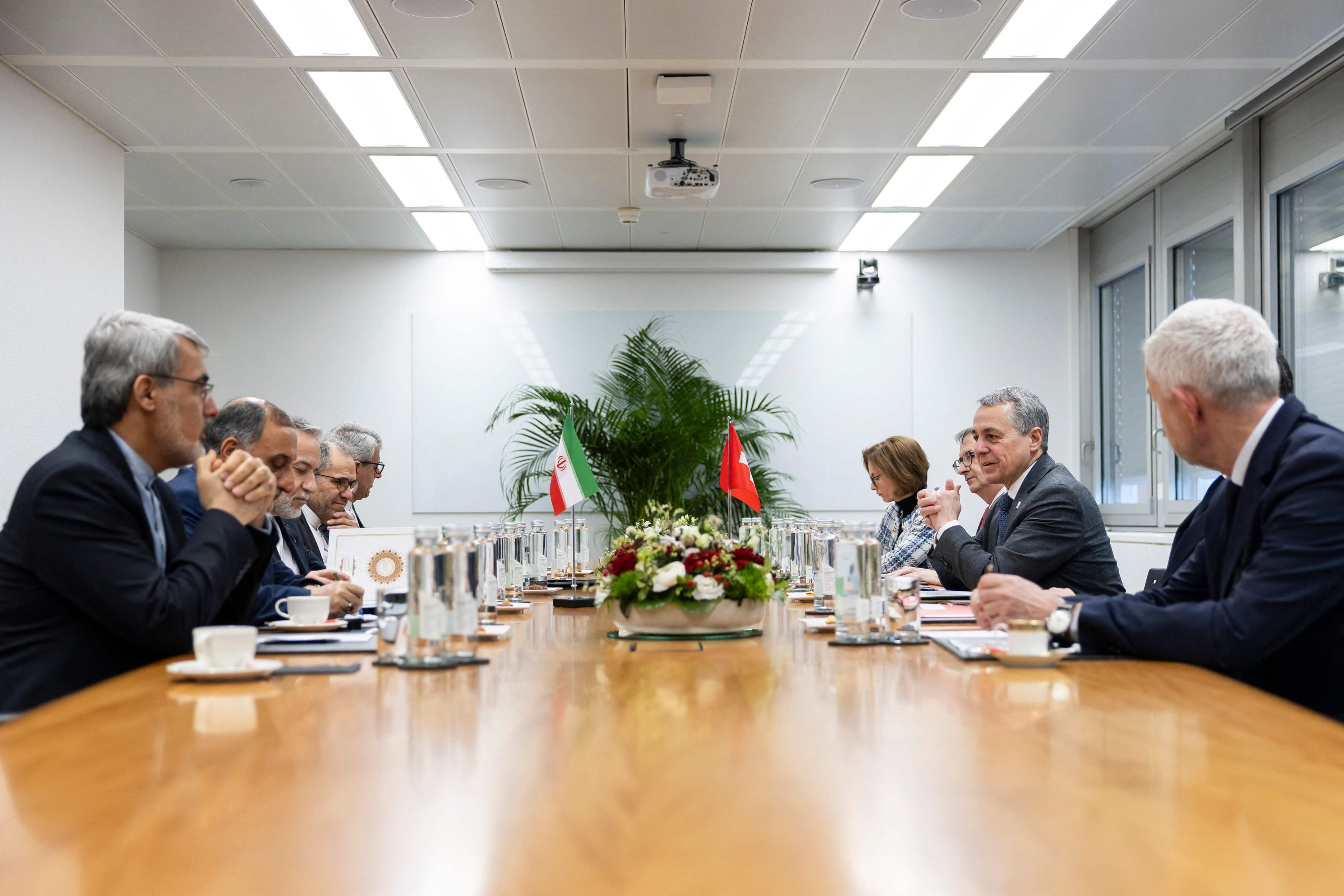
Iran will present detailed proposals within the next two weeks aimed at narrowing remaining differences in nuclear negotiations with the United States, a U.S. official said Tuesday.
"Progress was made, but there are still a lot of details to discuss," said the official, who declined to be identified, detailing discussions in Geneva.
"The Iranians said they would come back in the next two weeks with detailed proposals to address some of the open gaps in our positions.”
Vice President JD Vance said Tehran had not yet acknowledged all of Washington's red lines.
The Omani-mediated talks were aimed at averting the possibility of U.S. military intervention to curb Iran's nuclear program, weeks after the cleric-run state killed thousands of people as it crushed mass demonstrations.
Iran's supreme leader had warned earlier in the day that the country had the ability to sink a U.S. warship recently deployed to the region, after President Donald Trump alluded to "consequences" should the two sides fail to strike a deal.
"Ultimately, we were able to reach broad agreement on a set of guiding principles, based on which we will move forward and begin working on the text of a potential agreement," Foreign Minister Abbas Araghchi told state television after Tuesday's talks, which he described as "more constructive" than the previous round earlier this month.
He added that once both sides had come up with draft texts for an agreement, "the drafts would be exchanged and a date for a third round (of talks) would be set."
In Washington, Vance also appeared to indicate that the United States preferred diplomacy, but painted a more mixed picture.
"In some ways, it went well; they agreed to meet afterwards," Vance said in a Fox News interview.
"But in other ways, it was very clear that the president has set some red lines that the Iranians are not yet willing to actually acknowledge and work through," Vance told "The Story with Martha MacCallum" program.
"We're going to keep on working it. But of course, the president reserves the ability to say when he thinks that diplomacy has reached its natural end," Vance said.