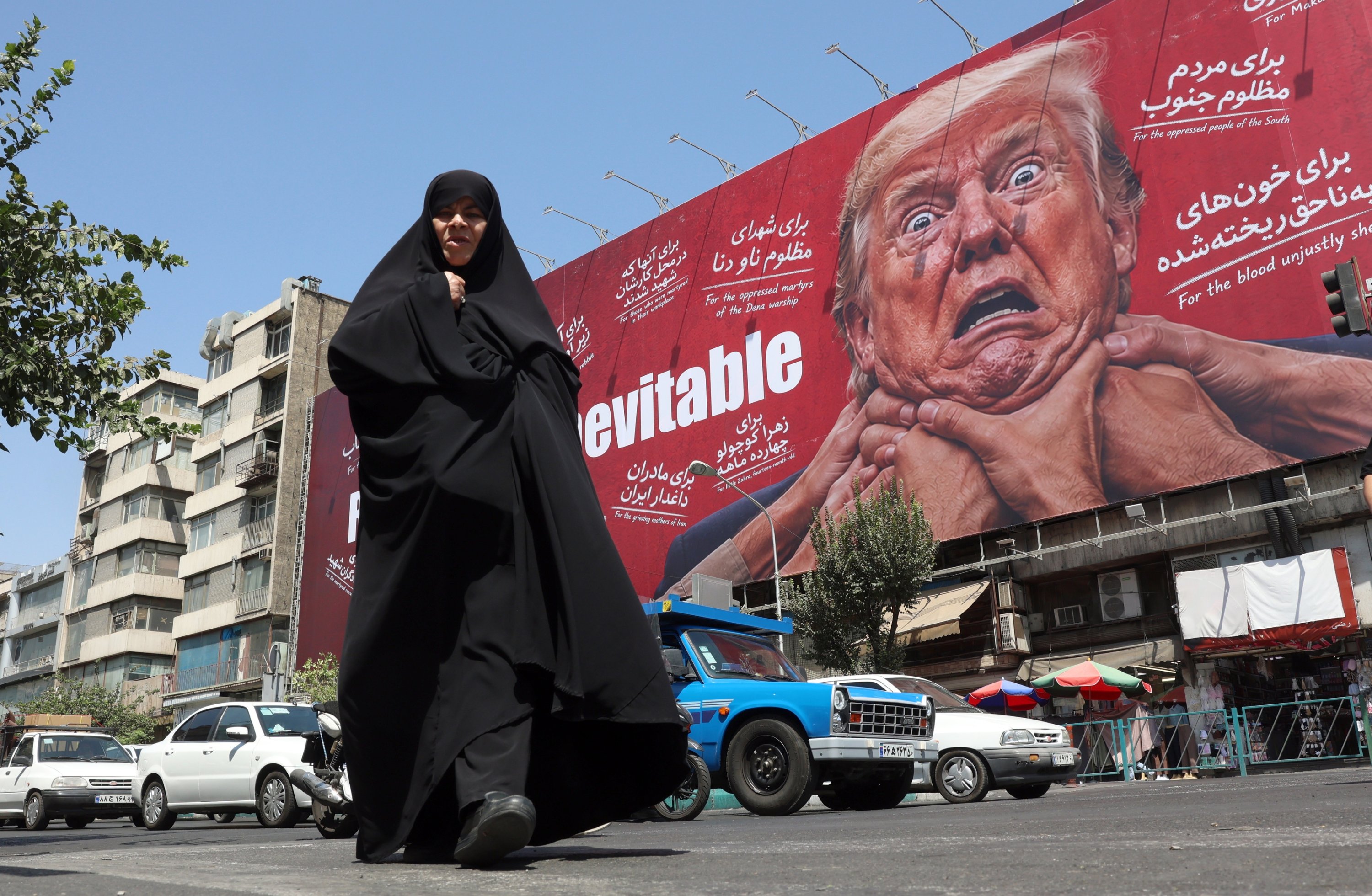
Iran vowed Friday to strengthen its economy and withstand what it called “unjust sanctions,” a day after U.S. Treasury Secretary Scott Bessent threatened the toughest-ever financial measures against Tehran.
Iranian Parliament Speaker Mohammed Baqer Qalibaf, one of the country’s most influential political figures and a senior negotiator in talks with the United States, said economic resilience and national security were closely connected.
Speaking to Iranian and Iraqi business representatives in Baghdad, Qalibaf accused the United States and Israel of waging economic and “cognitive” warfare after failing to defeat Iran through direct military confrontation.
“If you look at the resources and raw materials of Muslim countries, you will realize that our enemies come to plunder them,” Qalibaf said, according to a statement posted on his Telegram channel. “Therefore, we must make plans to deal with the unjust sanctions so that we can overcome them.”
Qalibaf also called for closer economic cooperation between Iran and Iraq, including greater use of their national currencies in bilateral trade to reduce dependence on the U.S. dollar.
His comments came as Washington prepared a new round of economic pressure against Tehran following months of conflict that have killed thousands of people, disrupted energy markets and threatened one of the world's most important oil shipping routes.
Bessent said Thursday that the United States would unveil details of what he called “the toughest sanctions in history” on Iran at a news conference Monday.
He suggested the campaign could reduce the likelihood of another major military escalation.
“I’m not sure why oil has popped up on this,” Bessent told CNBC. “If we are doing the maximum economic pressure, then that means that likely there will not be a large-scale kinetic restart,” he said, using a term for military action.
The announcement followed President Donald Trump’s warning Wednesday that Washington would pursue “Economic Warfare” and impose severe consequences on any country that helps Iran.
Trump said any country allowing its financial institutions, businesses, airports or government entities to provide “any type of lifeline” to Iran would face what he described as “TREMENDOUS Economic Consequences.”
The threats have added further uncertainty to global energy markets. Oil prices climbed to more than a three-week high Thursday as traders assessed the potential impact of tighter sanctions on Iranian exports and the wider Middle East.
The conflict has already disrupted the movement of oil through the Strait of Hormuz, a vital waterway that previously carried roughly one-fifth of global oil trade. Iran has demonstrated its ability to restrict shipping through the strait, raising fears that any renewed military confrontation could trigger another major energy shock.
The United States and Iran have announced ceasefire agreements twice, in April and June, in efforts to restore shipping through the waterway and move toward an end to the conflict. Both agreements, however, quickly unraveled.
Iran has lived under extensive U.S. sanctions for nearly five decades, dating to the 1979 Islamic Revolution. Tehran has repeatedly accused Washington of using economic pressure to undermine the country’s sovereignty and political system.
Iran’s Foreign Ministry condemned the latest U.S. measures before Bessent’s announcement, describing American economic and trade sanctions as “economic terrorism.”
The ministry said the measures would not weaken Iran’s determination to defend its independence, dignity and national sovereignty.
Bessent said the new sanctions would form part of a broader strategy aimed at putting maximum pressure on Tehran.
“It is a one-two punch. We have the blockade on Iran, and we are going to have the toughest sanctions in history,” he said, referring to a U.S. naval blockade imposed in April and paused for a month in mid-June.
“It is going to work in Iran and we are going to collapse this regime,” Bessent added, calling on U.S. allies and other countries to decide whether they would support Washington’s campaign.
One of the biggest questions is how far the United States will go in targeting countries that continue doing business with Iran, particularly China.
China buys more than 80% of Iran’s seaborne oil exports, according to 2025 data from analytics firm Kpler. But any attempt to impose secondary sanctions on Chinese entities could carry significant consequences for Washington because China is also a major supplier of goods and critical minerals to the United States.
Asked whether Washington could target China over its trade with Iran, Bessent said some discussions would be better handled privately.
“Keep in mind that the Chinese get 50% of their energy from the Gulf,” he said, arguing that Beijing would benefit from cooperating with Washington.
China has rejected the use of sanctions and pressure as a solution to the crisis.
“Sanctions and pressure do not help resolve the problem,” a Chinese Embassy spokesperson in Washington said, calling on the parties involved to pursue political and diplomatic solutions.
Trump’s economic threats have also intensified domestic pressure on his administration to bring the conflict to an end.
Higher fuel prices have added to concerns over the economic impact of the war and could become a political liability ahead of the November midterm elections, when Republicans will defend their control of Congress.
Iranian Foreign Minister Abbas Araqchi accused Trump of using the confrontation with Tehran to divert attention from economic problems at home, including record U.S. debt and rising interest rates.
Araqchi said Washington’s continued reliance on policies Iran considers failed would only produce further setbacks and deepen Iranian resistance.