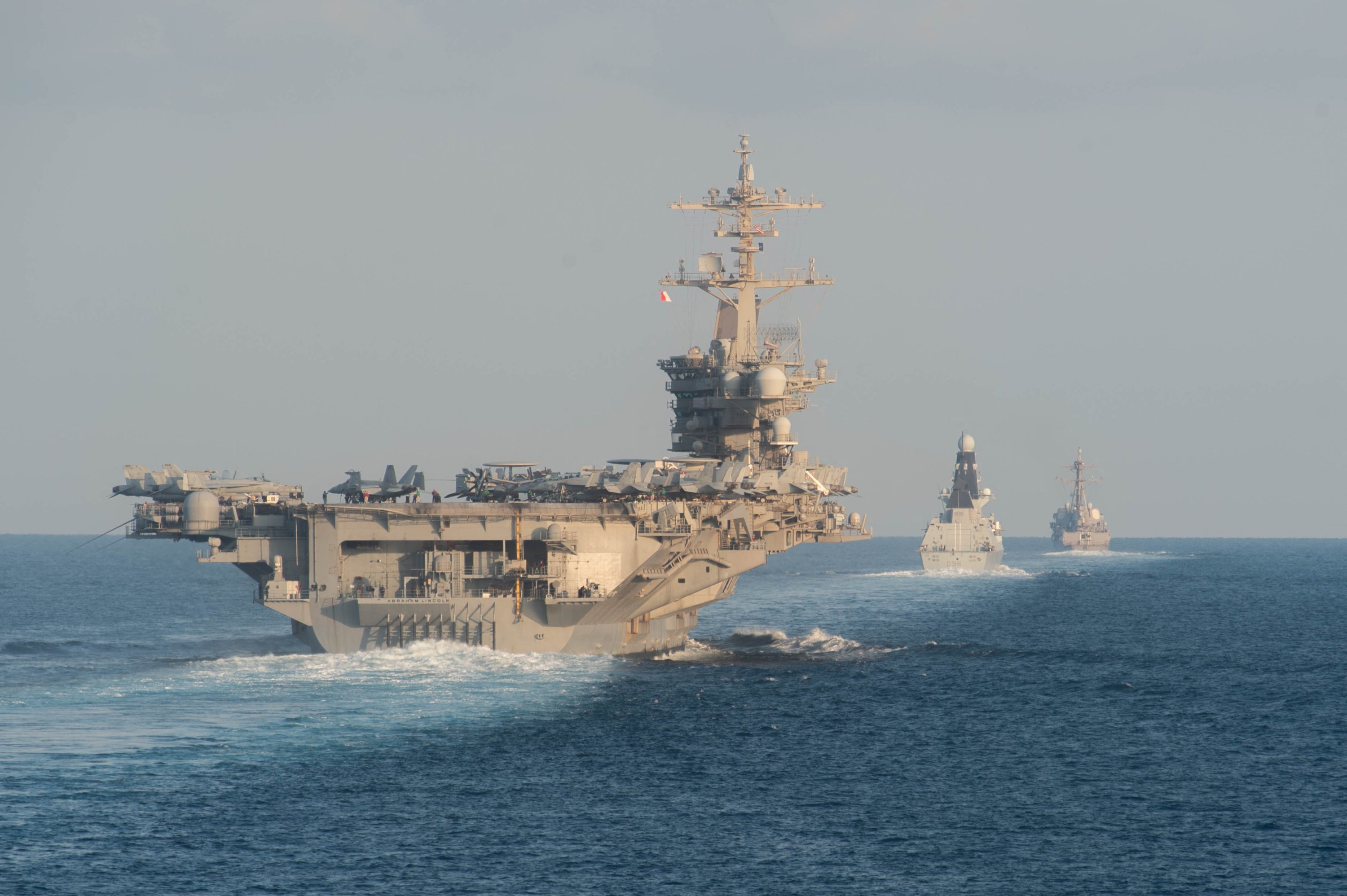
An Iranian commander warned Tuesday that neighboring states would be treated as hostile if their territory is used for attacks on Iran, as President Masoud Pezeshkian accused the United States of stoking regional instability after a U.S. carrier strike group moved into Middle Eastern waters.
“Neighboring countries are our friends, but if their soil, sky or waters are used against Iran, they will be considered hostile,” Mohammad Akbarzadeh, the political deputy of the IRGC naval forces, told the Fars news agency.
The warning came as President Masoud Pezeshkian accused Washington of heightening tensions. In a call with Saudi Crown Prince Mohammed bin Salman, Pezeshkian said U.S. “threats” aimed at Tehran would “achieve nothing other than instability” in the region.
The U.S. has deployed the USS Abraham Lincoln to Middle Eastern waters amid debate inside Washington over whether to increase pressure on Tehran following its deadly crackdown on nationwide protests earlier this month. Rights groups say thousands were killed, though the figures remain unverifiable due to a sweeping internet blackout.
"We have a big armada next to Iran. Bigger than Venezuela," Trump told the Axios news site on Monday, weeks after the US military captured the Latin American nation's president, Nicolas Maduro. But he added: "They want to make a deal. I know so. They called on numerous occasions. They want to talk." Tehran has previously said a channel of communication is open between Foreign Minister Abbas Araghchi and US envoy Steve Witkoff, despite the lack of diplomatic relations between the two foes. Axios said Trump declined to discuss the options presented to him by his national security team, or which he prefers. Analysts say options include strikes on military facilities or targeted attacks against the leadership under supreme leader Ayatollah Ali Khamenei in a bid to bring down the system that has ruled Iran since the 1979 Islamic revolution that ousted the shah.
Iran has expressed concerns about the U.S. military presence in the region. Local newspapers have carried warnings from senior Iranian figures, including claims – later retracted by one outlet – that an American carrier would be targeted if it entered Iranian waters.
Iranian media have also highlighted the possibility of retaliatory measures, including a threat to seize the Strait of Hormuz, a key global energy chokepoint.
Meanwhile, human rights groups continue to document casualties from Iran’s protest crackdown. HRANA, based in the United States, said Tuesday it had confirmed more than 6,000 deaths and over 41,000 arrests, although it warned that the true figures may be far higher. Internet monitor NetBlocks reported only intermittent connectivity, saying access remained heavily restricted.