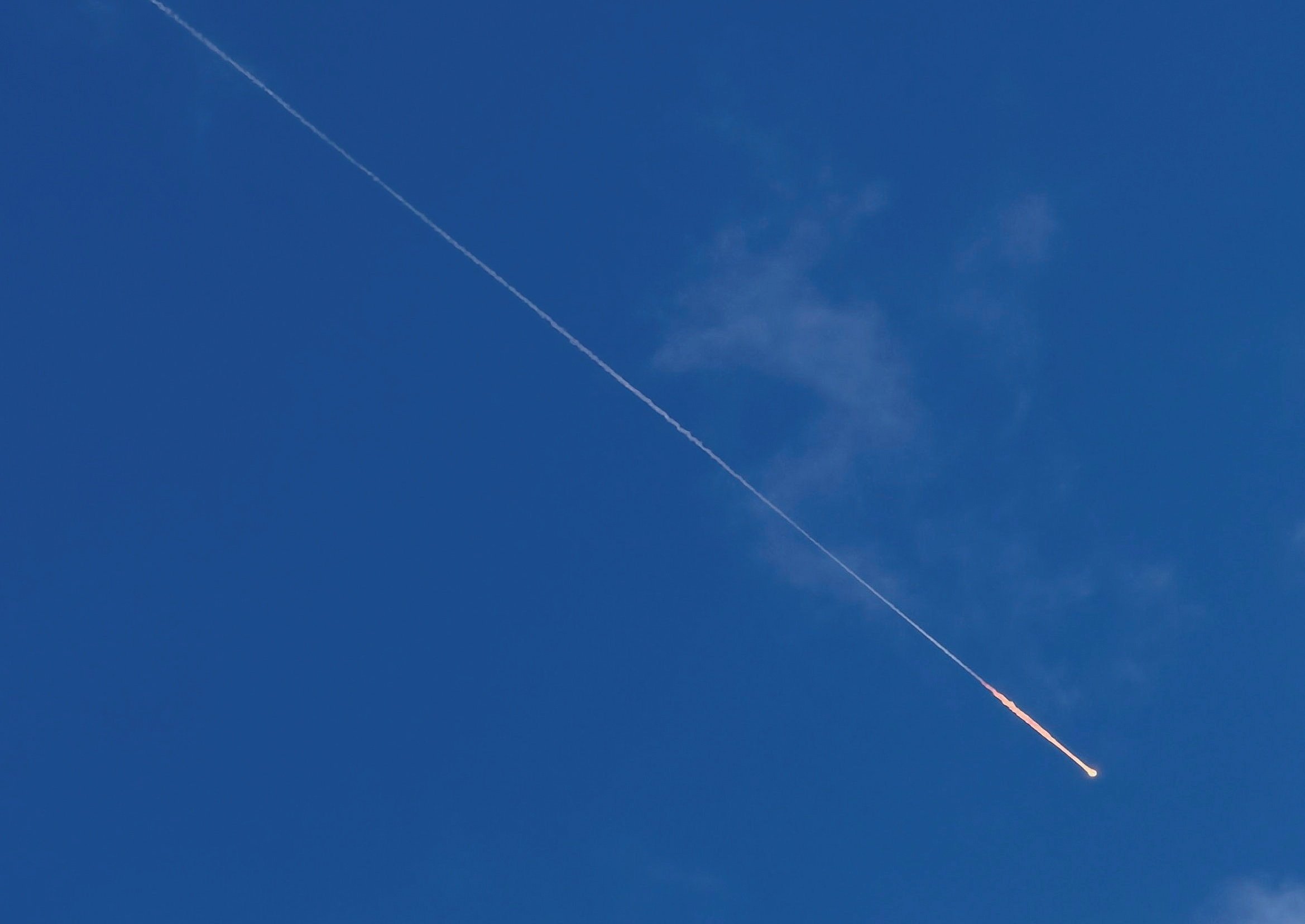
An Iranian envoy said Tehran would respond swiftly and in kind if U.S. President Donald Trump follows through on threats to launch attacks on the country’s “whole civilization.”
Tehran's United Nations representative, Amir-Saeid Iravani, said Trump's threats that a "whole civilization will die" if Iran does not make a deal "constitute incitement to war crimes and potentially genocide."
During a Security Council session on the Strait of Hormuz, Iravani urged the international community to call out Trump's rhetoric before it's too late.
"Iran will not stand idle in the face of such egregious war crimes. It will exercise, without hesitation, its inherent right of self-defense and will take immediate and proportionate reciprocal measures," he said.
Trump threatened Tuesday that a "whole civilization will die tonight" if Iran fails to meet his latest deadline to strike a deal that includes reopening the Strait of Hormuz, while the Islamic Republic urged young people to form human chains around power plants and other potential targets.
Even before the deadline, airstrikes hit two bridges and a train station, and the U.S. hit military infrastructure on Kharg Island. It was the second time American forces struck the island, a key hub for Iranian oil production.
Since the war began, Trump has repeatedly imposed deadlines linked to threats, only to extend them. But the president insisted this one is final and will expire at 8 p.m. in Washington without a major diplomatic breakthrough.
He has also offered contradictory statements about what might actually happen.
Trump has made reopening the strait - through which a fifth of the world's oil transits in peacetime - part of avoiding wider attacks and suggested that the waterway is not as vital to U.S. oil interests as it to other countries. He has also said he would be willing to deploy ground troops to seize Iranian oil, while maintaining that major combat operations in that country could soon conclude.
That means the next moves by the U.S. are largely a mystery, even as rhetoric on both sides has reached a fever pitch.
Meanwhile, Iran's president said 14 million people, including himself, have volunteered to fight. That's despite Trump threatening that U.S. forces could wipe out all bridges in Iran in a matter of hours and reduce all power plants to smoking rubble in roughly the same time frame. He also suggested the entire country could be wiped off the map.
It was not clear if the latest airstrikes were linked to Trump's threats to widen the civilian target list. At least two of the targets were connected to Iran's rail network, and Israeli Prime Minister Benjamin Netanyahu said Israeli warplanes struck bridges and railways in Iran.
Tehran fired on Israel and Saudi Arabia, prompting the temporary closure of a major bridge.
While Iran cannot match the sophistication of U.S. and Israeli weaponry or their dominance in the air, its chokehold on the strait is roiling the world economy and raising the pressure on Trump both at home and abroad to find a way out of the standoff.
Officials involved in diplomatic efforts said talks were ongoing, but Iran has rejected the latest American proposal.
"A whole civilization will die tonight, never to be brought back again," if a deal isn't reached, Trump said in an online post Tuesday morning. But he also seemed to keep open the possibility of an off-ramp, saying that "maybe something revolutionarily wonderful can happen."