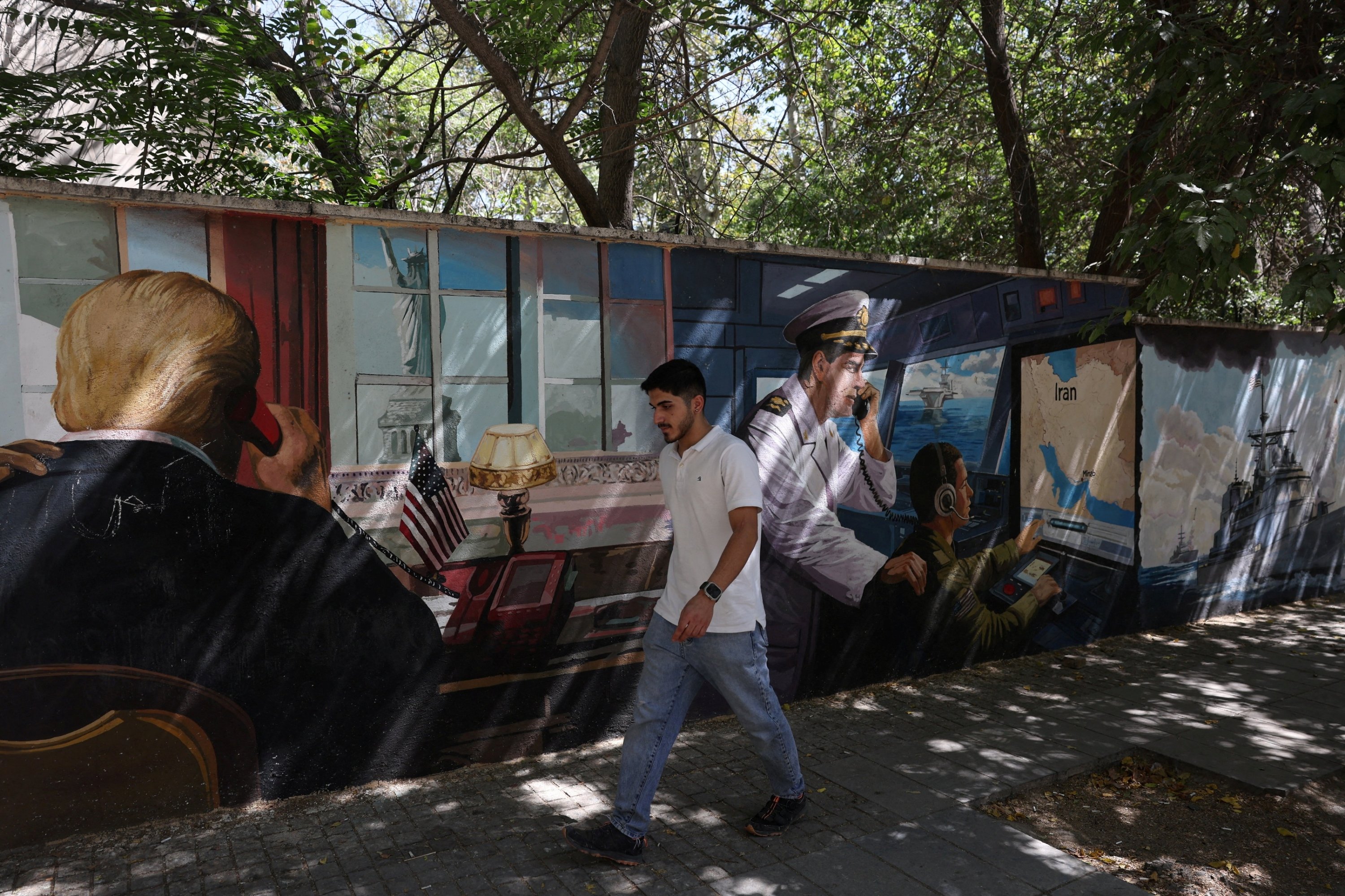
An adviser to Iran’s Supreme Leader Mojtaba Khamenei warned Thursday that Tehran could expand the Middle East war to the Indian Ocean if the U.S. attacks again.
"Since the conflict has spread from the Persian Gulf and Strait of Hormuz to the Red Sea, it is possible that, in response to more war, the front will expand even further, reaching the Indian Ocean and perhaps beyond," said Yahya Rahim Safavi in a video released by Iran's Fars news agency.
Yemen's Houthis, fighting Saudi-backed government forces, recently took control of the Red Sea coastline, tightening their grip on the strategic Bab el-Mandeb Strait, which links Asia to Europe via the Suez Canal.
Iran has long provided military support to the Houthis but denies any involvement in the Yemen conflict.
The Islamic republic has also locked down the Strait of Hormuz off the Iranian coast, in retaliation for U.S.-Israeli strikes that triggered the Middle East war at the end of February.
Iran and the United States are now vying for control of Hormuz, through which much of the world's oil and gas passed before the war.
Iranian officials had already threatened to expand the geographic scope of the conflict if U.S. strikes resume.
But Thursday's warning is the first time an adviser to Iran's supreme leader explicitly mentioned the Indian Ocean, home to a strategic U.S.-British military base at Diego Garcia, nearly 4,000 kilometers from Iran.
Officials from both countries held talks in New York this week on the sidelines of the U.N. General Assembly in a further attempt to end the conflict.
Iran has put forward its conditions for ending the war, including the lifting of sanctions targeting its economy and the unconditional release of its frozen assets abroad.
In an exclusive interview with AFP Tuesday, a spokesman for Iran's Revolutionary Guards, Hossein Mohebi, also mentioned ending the war in Yemen.
Mohebi said that Iran had hardened its conditions for ending the war with the United States following the collapse of a June deal, adding Washington now had "no choice" but to accept its demands.
Iran had previously agreed with the United States to a memorandum of understanding laying out a pathway to a permanent settlement of the conflict, only for the deal to later unravel as each side accused the other of violating it.
"They broke the agreement and committed another vicious act. We have therefore toughened our conditions," Mohebi told AFP in a rare exclusive interview in Tehran, noting that if the US persisted with its current course, "they will only make things difficult for themselves".
"We are not their playthings, and they cannot unilaterally violate an agreement they signed whenever they please."
During the interview, Mohebi outlined Iran's view of the nearly seven-month Middle East war and the prospects for ending it as diplomatic efforts stall.
"We believe we have won this war, and we are currently consolidating that victory into a total deterrent force," he added.
The June memorandum of understanding included Iranian demands on the lifting of US oil sanctions, removing its naval blockade on Iranian ports, unfreezing Iranian assets abroad, and ending the war on all fronts, including Lebanon.
Since it fell apart, however, Mohebi said Iran had toughened its demands, including by seeking the release of the full $24 billion in frozen Iranian assets up front before negotiations, rather than in stages.
Meanwhile, top Pakistani and Iranian diplomats met in New York to discuss the latest developments, following recent talks between Washington and Tehran, an official statement said Thursday.
The meeting between Foreign Minister Ishaq Dar and his Iranian counterpart Abbas Araghchi was held on the sidelines of the U.N. General Assembly, a statement from Pakistan's Foreign Ministry said.
It comes a day after the U.S. and Iranian negotiators held hourslong talks in New York to discuss ways to reopen Hormuz and revive the long-stalled direct talks under the Islamabad Accord.
The two counterparts discussed bilateral relations and exchanged views on regional and international developments.
Dar underscored the importance of dialogue, diplomacy and sustained engagement in promoting regional peace and stability.
Both sides agreed to remain in "close" contact, the statement concluded.