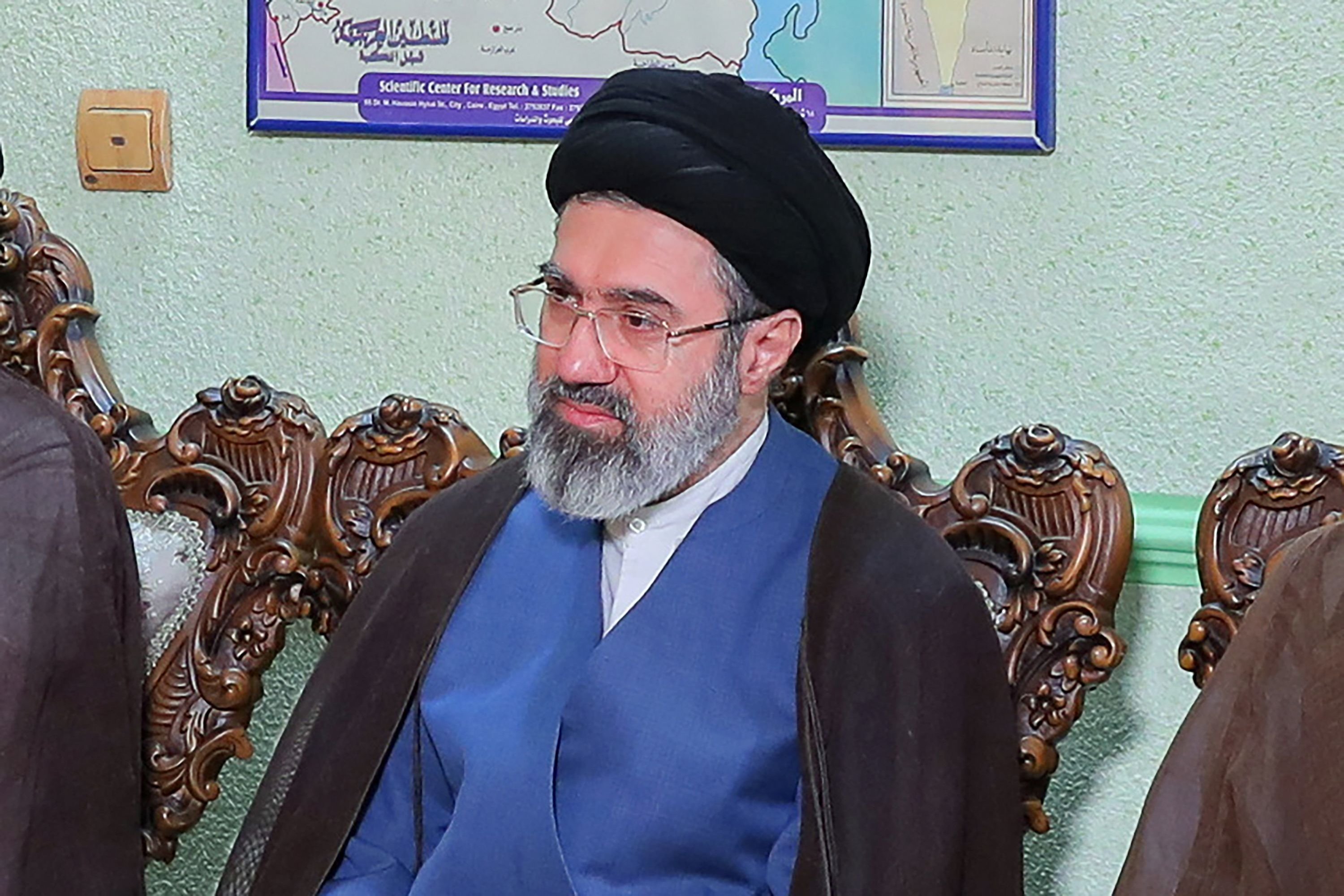
Mojtaba Khamenei, the son of Iran’s late supreme leader Ali Khamenei, has been appointed as the new head of the Islamic Republic, emerging as a discreet yet influential figure expected to carry forward his father’s hardline legacy.
The 56-year-old held no formal government post during his father’s decades in power. Still, he was widely believed to wield significant influence behind the scenes, quietly shaping decisions at the center of Iran’s political and security establishment.
Long seen as close to conservative factions, Mojtaba Khamenei is particularly known for his ties to the powerful Islamic Revolutionary Guard Corps, which quickly pledged allegiance following his appointment.
Iran’s third supreme leader also received swift endorsements from Masoud Pezeshkian, as well as backing from the armed forces and the judiciary within hours of the announcement.
Because he has rarely appeared in public or spoken extensively in the media, Mojtaba Khamenei’s real influence has long been the subject of speculation among Iranians and foreign diplomats alike.
He was named supreme leader by Iran’s top clerical body, the Assembly of Experts, in a statement published shortly after midnight Monday (9:30 p.m. GMT Sunday).
Although the Iranian Revolution ended a multicentury royal dynasty headed by the shah, the council opted for the kind of hereditary transition that Ali Khamenei had rejected on principle in 2024.
Born Sept. 8, 1969, in the holy city of Mashhad in eastern Iran, Mojtaba Khamenei is the only one of the late supreme leader’s six children to hold a public position.
Ali Khamenei was killed at age 86 during the first wave of U.S.-Israeli airstrikes on Tehran that triggered the war in the Middle East on Feb. 28.
Mojtaba Khamenei, a cleric with a salt-and-pepper beard and the black turban of the “seyyed,” descendants of the Prophet Muhammad, is a veteran of the Iran-Iraq War in the 1980s.
The United States imposed sanctions on him in 2019 during the first term of Donald Trump, saying Khamenei represented his father “despite never being elected or appointed to a government position aside from work in the office of his father.”
Ali Khamenei had “delegated a part of his leadership responsibilities” to his son, “who worked closely” with Iranian security forces “to advance his father’s destabilizing regional ambitions and oppressive domestic objectives,” the U.S. Treasury said at the time.
Opponents have accused the younger Khamenei of playing a role in the violent crackdown that followed the reelection of ultraconservative President Mahmoud Ahmadinejad in 2009, which triggered a vast protest movement.
According to an investigation by Bloomberg, which cited anonymous sources and Western intelligence reports, Mojtaba Khamenei has amassed wealth estimated at more than $100 million.
Money from oil sales had been channeled into investments in luxury British real estate, hotels in Europe and property in Dubai through shell companies in tax havens, according to the investigation.
On the religious front, Mojtaba Khamenei studied theology in the holy city of Qom, south of Tehran, where he also taught.
He had attained the rank of Hujjat al-Islam but was presented as ayatollah, a higher clerical rank held by his father and by revolutionary leader Ruhollah Khomeini, upon his appointment as supreme leader.
Mojtaba Khamenei’s wife, Zahra Haddad-Adel, died in the U.S.-Israeli strikes that killed the former supreme leader, according to Iranian authorities.
Israel issued a stark warning to the new supreme leader and whoever selected him, saying “the hand of the State of Israel will continue to follow any successor and anyone who seeks to appoint a successor.”
The Assembly of Experts has 88 members who are elected every eight years.
It has overseen two leadership transition processes to date: this week and in 1989, when Ali Khamenei was selected following the death of Ruhollah Khomeini.