Israel said Wednesday it killed the newly appointed head of Hamas’ military wing, Qassam Brigades, in Gaza City, marking another high-profile strike in its sustained campaign to dismantle the group’s leadership amid the ongoing war and an increasingly fragile ceasefire environment.
Israeli officials said airstrikes carried out Tuesday in western Gaza City killed Mohammed Odeh, who had reportedly assumed command of Hamas’ armed wing only days earlier following the killing of his predecessor, Ezzedine al-Haddad, on May 16.
Defense Minister Israel Katz and the Israeli military said Odeh played a central role in Hamas’ military structure and was linked to the Oct. 7, 2023, attacks that triggered the war.
The Israeli military, working alongside the Shin Bet internal security agency, said the operation was based on intelligence confirming Odeh’s presence at the strike site.
Katz described him as a senior architect of Hamas’ military operations and said Israel has now eliminated multiple successive heads of the group’s armed wing since the start of the war.
Hamas has not issued an official confirmation of Odeh’s role or death.
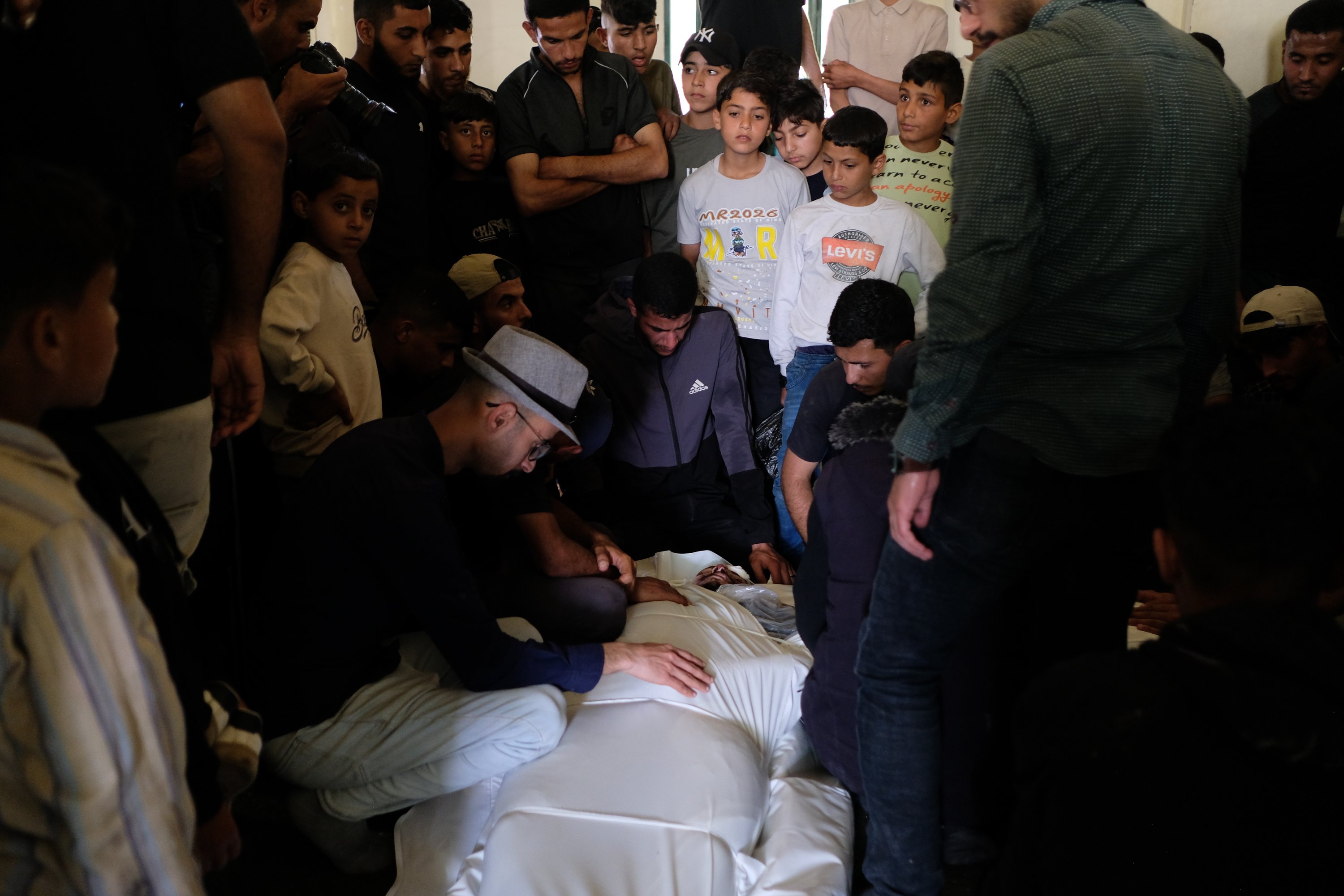
A man identified by relatives as Mohammed Odeh was confirmed killed in the strike, but his family did not verify his position within Hamas. A Hamas source told AFP that his wife and two children were also killed, underscoring the wider civilian toll reported from the attack.
Local authorities in Gaza said at least three people were killed and 12 others injured in the strike, which hit a densely populated area of Gaza City as residents were preparing for Eid al-Adha, one of Islam’s most important holidays.
Katz defended the operation and repeated Israel’s position that it would continue targeting those involved in planning or facilitating the Oct. 7 attacks.
In a post on X, he said those responsible were “marked for death wherever they may be,” and framed the campaign as part of an ongoing effort to prevent Hamas from re-establishing civilian or military control in Gaza.
Prime Minister Benjamin Netanyahu has echoed similar language, reinforcing Israel’s stated objective of eliminating the leadership behind the Oct. 7 assault.
The latest strike comes as Netanyahu faces domestic political pressure ahead of elections expected in the fall, with security policy and the Gaza war remaining central issues.
The timing of the operation added to its political and symbolic weight. It occurred on the eve of Eid al-Adha, a holiday typically associated with large family gatherings, communal prayers, and celebrations across the Muslim world.
In Gaza, however, the observance has again taken place under conditions of widespread displacement, destruction, and food insecurity.
In Gaza City, Khan Younis, and other heavily damaged areas, residents gathered for Eid prayers among rubble and in displacement camps.
Few signs of celebration were visible beyond isolated decorations, while many attendees described grief overshadowing the holiday.
Humanitarian conditions remain severe across the territory. United Nations estimates indicate that around 90% of Gaza’s more than 2 million residents have been displaced since the start of the war.
Many now live in overcrowded tent camps with limited sanitation, amid shortages of clean water, food, and medical supplies.
“This is not Eid,” said Mahmoud Saqer, a displaced resident from Khan Younis. Others expressed similar sentiments, saying the holiday had lost meaning amid ongoing loss of life and the absence of family members killed or displaced during the conflict. One displaced woman, Ayda Al-Banna, said she prayed alongside her granddaughter and described Eid as belonging only to those who had not suffered such loss.
The strike is the latest in a series of targeted killings of senior Hamas figures. Israeli officials say Odeh is the fourth head of Hamas’ military wing they claim to have killed since Oct. 7, 2023. Previous targets include Mohammed Deif, Yahya Sinwar, Ismail Haniyeh, and Mohammed Sinwar, all of whom held senior leadership roles in either Hamas’ political or military structure.
The broader conflict began after Hamas’ Oct. 7, 2023, attack on Israel, which killed about 1,200 people and saw 251 others taken hostage, according to Israeli figures.
Israel’s subsequent military offensive in Gaza has killed more than 72,700 Palestinians, according to Gaza’s Health Ministry.
A ceasefire reached in October 2025 has held only unevenly, with continued Israeli strikes and accusations of violations from both sides.
Palestinian health officials say more than 900 Palestinians have been killed since the agreement, while Israel says its operations are responses to Hamas threats.
The war has also reshaped Gaza’s geography and daily life. Large parts of the enclave remain under Israeli control, while most civilians are confined to coastal and southern displacement zones.
Infrastructure damage has left entire neighborhoods uninhabitable, with sewage, debris, and collapsed buildings defining much of the urban landscape.