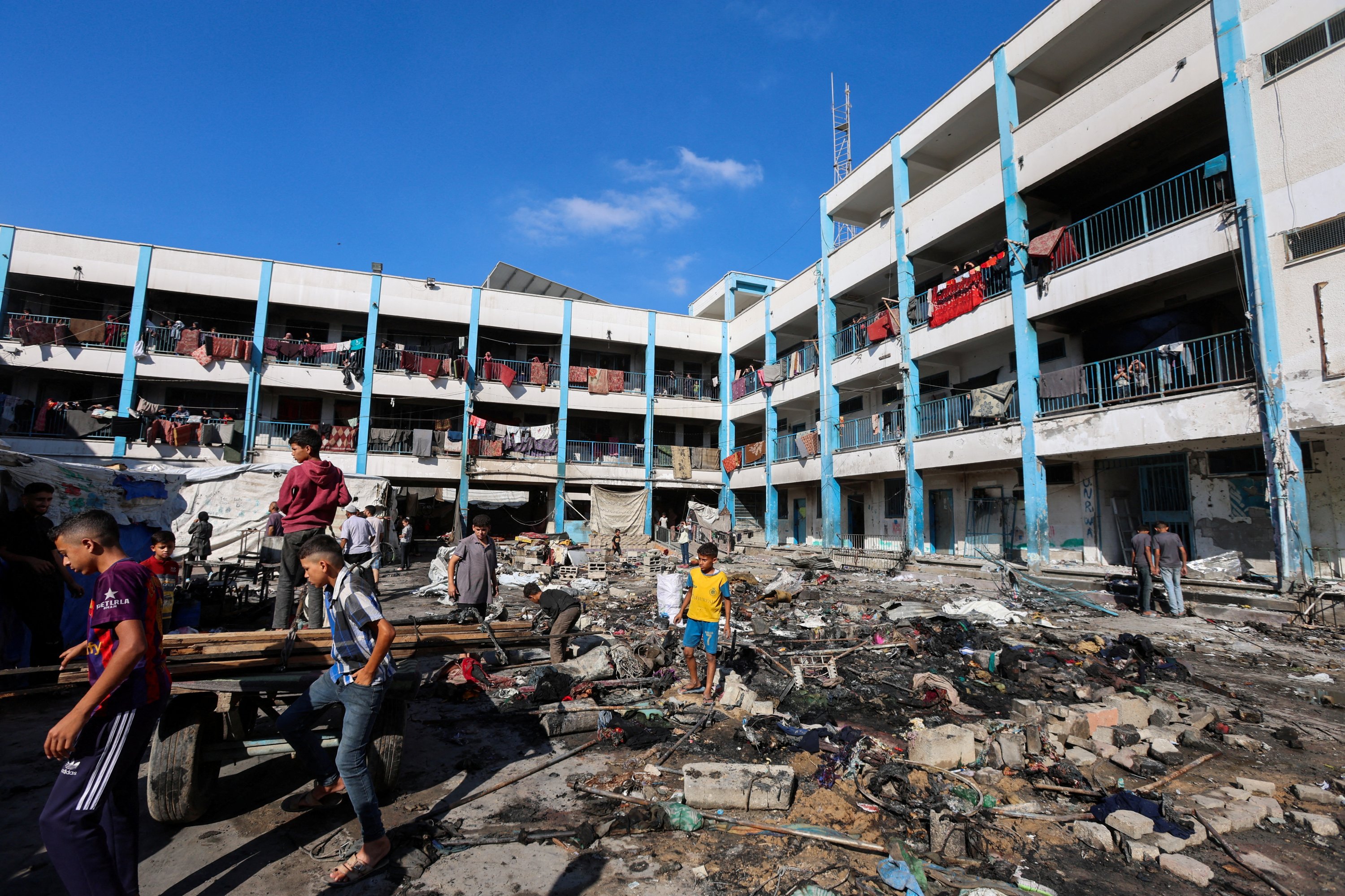
Israel's defense minister has reportedly outlined a controversial plan to confine hundreds of thousands of Palestinians to a closed zone in Gaza’s southern city of Rafah, along the border with Egypt — a move widely criticized as a potential violation of international law and likened by rights groups to a modern-day concentration camp.
According to Israeli media, Defense Minister Israel Katz said the plan involves constructing a so-called “humanitarian city” in Rafah to which up to 2 million Palestinians would be gradually transferred. The displaced population would be restricted from leaving the zone once inside.
The remarks, made in a closed-door briefing to military reporters on Monday, reflect Israel’s inhumane efforts to reshape the demographic reality in Gaza following its genocidal assault that has rendered large parts of the besieged enclave uninhabitable.
Israel’s military would begin by relocating 600,000 Palestinians from a current so-called “humanitarian zone,” with plans to transfer the remaining population in phases. The plan is expected to proceed under the pretext of a humanitarian initiative, though rights groups warn it amounts to forced displacement.
Katz’s office did not respond to requests for comment. He reportedly added that construction of the “city” could begin during the 60-day cease-fire currently being discussed between U.S. President Donald Trump and Israeli Prime Minister Benjamin Netanyahu in Washington.
Critics say the initiative, paired with calls for “voluntary emigration” to third countries, echoes dark chapters of history. Tania Hary, executive director of Israeli rights group Gisha, said the proposal amounts to “forcing people into what resembles a large concentration camp,” noting Israel’s clear intent to push Palestinians out of their homeland.
Palestinians view Gaza as an inseparable part of their national territory and have rejected any plans to uproot them. Fears persist that those who flee temporarily will never be allowed to return — a repeat of the mass displacement seen during the 1948 Nakba.
Trump, who has voiced support for a cease-fire, has also endorsed the idea of forced Palestinian displacement. Netanyahu, during a White House meeting on Monday, claimed that Palestinians should have a “free choice” on whether to stay or leave, despite policies that human rights groups say are designed to pressure them into exile.
Meanwhile, an Israeli- and U.S.-supported aid distribution program in Rafah has sparked widespread concern. Hundreds of Palestinians have reportedly been killed or injured while trying to access humanitarian sites run by the Gaza Humanitarian Foundation (GHF), which operates in Israeli-controlled zones off-limits to independent journalists.
Palestinian health officials and eyewitnesses say Israeli forces have repeatedly opened fire near the sites, causing deadly chaos. GHF has denied any violence near its facilities and any connection to the population transfer plans.
Still, during a press conference in May, Netanyahu appeared to link the aid operation to Israel’s broader demographic ambitions, saying the goal was to create a “sterile zone” in southern Gaza, free of Hamas, where the population would be relocated under Israel’s continued control.
The Israeli government has ruled out any future role for the internationally recognized Palestinian Authority in Gaza, signaling its intent to maintain unilateral control over the war-torn territory.