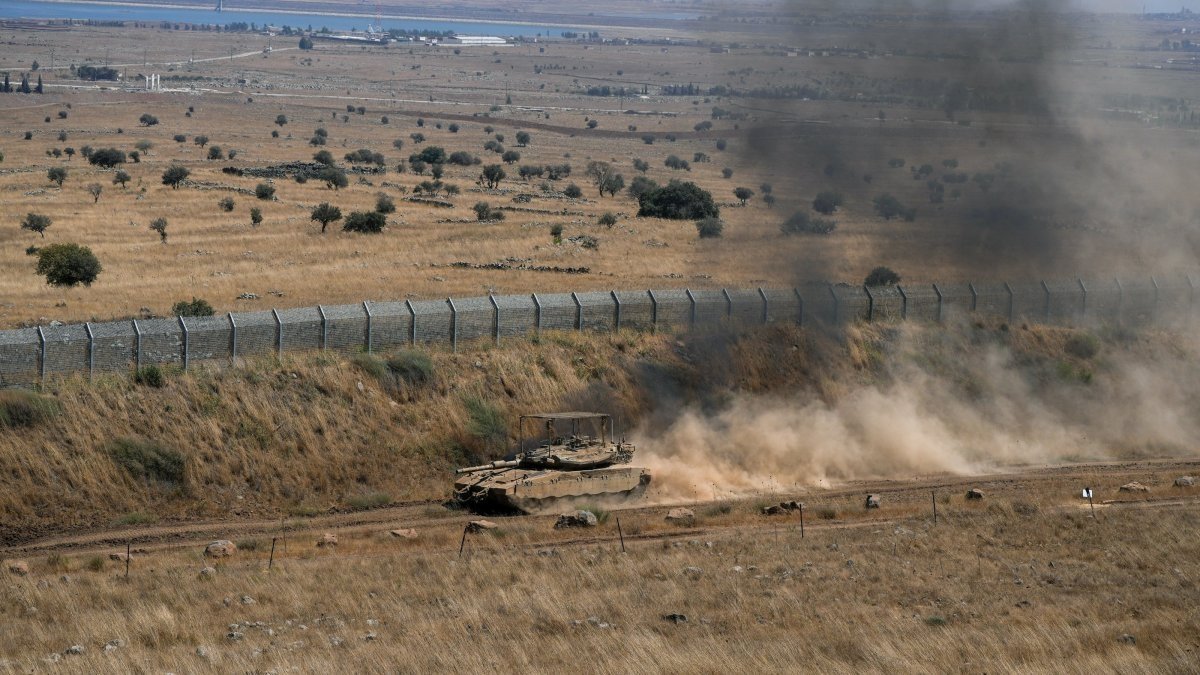
Israeli incursions and aggression against Syria have intensified since the beginning of 2026, particularly in the governorates of Quneitra and Daraa and the Damascus countryside, according to monitoring by Anadolu Agency (AA) and documentation by the Sijil Center of Israeli violations.
Both sources reported that these areas witnessed growing Israeli violations from Jan. 1 through Sept. 27, while AA’s monitoring alone recorded violations on at least 150 days out of 256 days through Sept. 14.
In January, violations were recorded on at least 15 days. They included the demolition of buildings in the old city of Quneitra, including the old Golan Hospital and al-Andalus Cinema, as well as bombardments of areas in the Quneitra and Daraa countryside and the dispersal by Israeli aircraft of unknown substances over agricultural and forested areas.
In February, violations were recorded on 16 days, including incursions into southern Quneitra and the Yarmouk Basin west of Daraa, as well as the detention of six young men in the western Daraa countryside.
In March, the number rose to 21 days, the highest during the period under review. The incidents included the detention of children while tending livestock in the Quneitra countryside. In April, 20 days of violations were recorded, including the killing of a young man by an Israeli tank shell that targeted a civilian car west of al-Za’aroura farm in the southern Quneitra countryside, as well as fortification work at Tall al-Ahmar al-Sharqi.
In May, 19 days of violations were recorded, including an incursion into Jbata al-Khashab and the shelling of the area around Taranja with more than 10 mortar shells.
June saw violations on 19 days, including incursions into two villages in the Yarmouk Basin and the establishment of checkpoints that delayed students from reaching their exams. In July, monitoring recorded 20 days of violations, including the incursion of five vehicles into Tall al-Ahmar al-Sharqi and the dropping of sound bombs by drones along the Abdeen-Maariya road.
In August, 12 days of violations were recorded, including the bombing of Abu al-Duhur military airport in northern Syria and one person being wounded in a strike targeting a car in Beit Jinn in the western Damascus countryside.
With the beginning of September, incursions, bombardments and raids continued. On Sept. 12 and 13, the Sijil Center documented an escalation in the Damascus countryside, Quneitra and Daraa: An Israeli force comprising more than 10 vehicles, including two tanks and a bulldozer, entered agricultural land around Beit Jinn, followed by the movement of an infantry force near Tall Bat, alongside the shelling of Tall Harboun with seven artillery shells. Quneitra also saw movements around Kudna, Tall al-Ahmar and Al-Rafid.
During the second half of the month, the Sijil Center documented the continuation of operations on an almost daily basis. From Sept. 15 to 21, the center recorded at least 64 violations in Quneitra, Daraa and the Damascus countryside. On Sept. 21 alone, it documented 17 violations, including bombardments, incursions, raids and aerial activity.
On Sept. 22, the center documented 11 violations, including two bombardments, one detention, one raid, two incursions and aerial overflights. On Sept. 24, the number rose to 13 violations, including bombardments, six incursions and four aerial overflights. The center recorded seven violations on Sept. 25, nine on Sept. 26 and 10 on Sept. 27, including three raids, three incursions and three aerial overflights.
The effects of these military operations are not limited to material damage. Residents have reported damage to homes and property, as well as panic and fear among women and children during nighttime raids.
Local sources also reported that increasing numbers of young people were leaving their villages for fear of being detained or harassed by Israeli forces.
The Israeli military previously announced that its forces had carried out operations in Syrian territory over the previous three months, during which they detained several people, destroyed “terrorist infrastructure,” in its description, and found quantities of weapons and ammunition, according to its statements.
Meanwhile, Damascus is maintaining the diplomatic track and the 1974 disengagement agreement, and is seeking a security agreement with Israel that would end Israeli attacks and ensure the withdrawal of Israeli forces to the lines in place before Dec. 8, 2024.