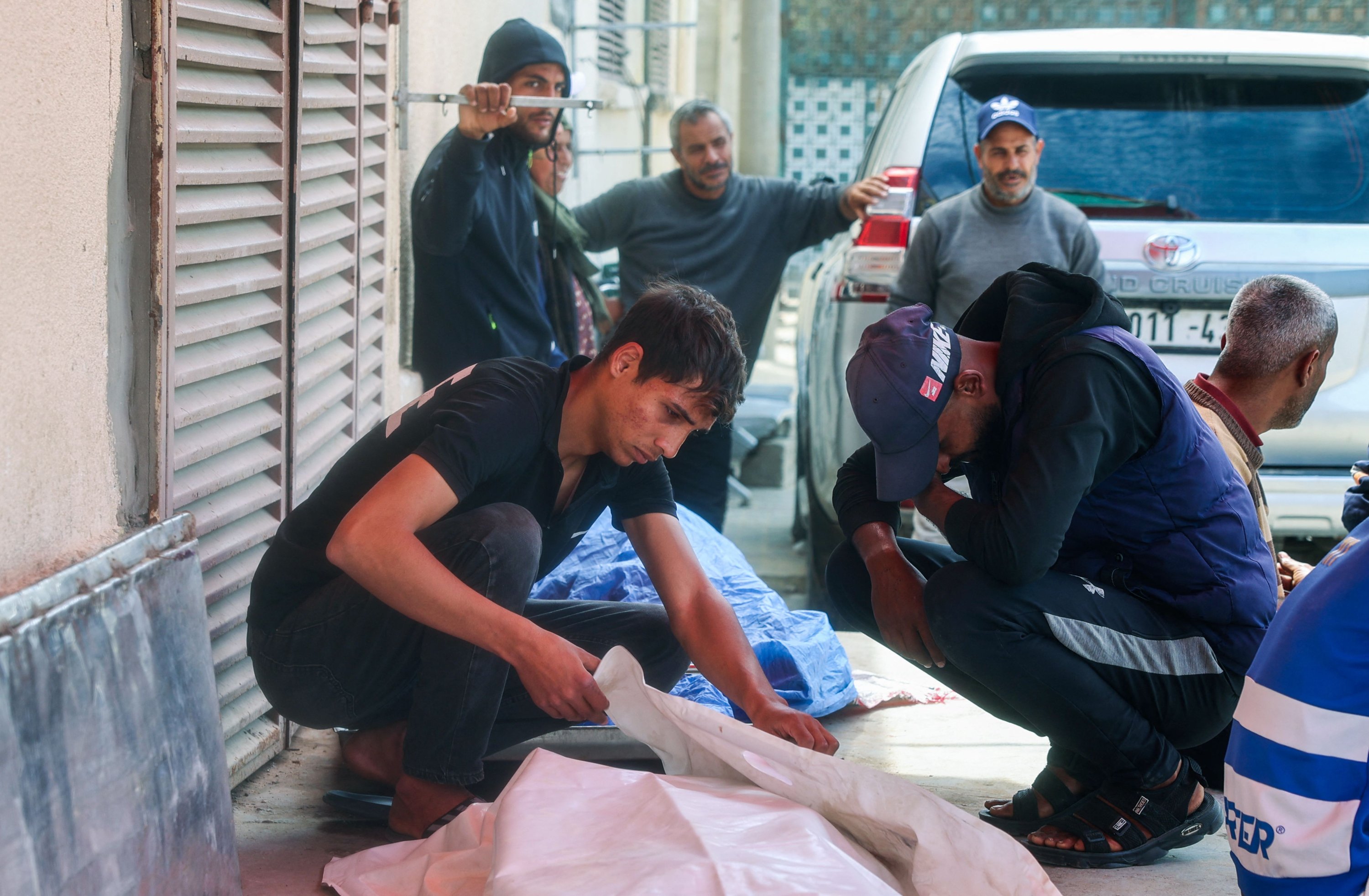
An Israeli airstrike killed three Palestinian men in Gaza on Monday as they tried to gather firewood, local medics said, while two more people were killed in an attack on a school despite the fragile cease-fire agreement and no sign on progress from renewed talks between Israel and Hamas.
In the latest bloodshed to underline the fragility of the Gaza war's three-stage truce, the three, all from the same family, had left their homes in central Gaza to collect the wood for cooking.
That has become a daily task for many Gazans as Israel has continued to ban fuel, food, and medical goods from entering Gaza for over two weeks, residents said.
At Al-Aqsa Martyrs' hospital in Gaza's Deir Al-Balah, relatives rushed to pay farewell to the three white-shrouded bodies.
"They were targeted – and when their cousins and others in the area came to rescue them, the drone targeted them with bombs," said Jabr Abou Hajeer, the father of one of the victims.
Later on Monday, medics said an Israeli airstrike killed a father and his son inside a school sheltering displaced families in Bureij camp, near the site of the earlier strikes, raising the day's death toll to five.
Three more Palestinians were injured in another strike targeting a group of civilians in the Jneina neighborhood east of Rafah in southern Gaza, the source said, as per an Anadolu Agency (AA) report.
Meanwhile, the Civil Defense Agency said its teams extinguished a fire that erupted near Palestinian tents in the Tel Al-Sultan neighborhood in Rafah after Israeli shelling.
There was no immediate Israeli comment.
Ismail Al-Thawabta, director of the Hamas-run Gaza government media office, said Israel's "violations" could "undermine all efforts for de-escalation."
He put the number of Palestinians killed since the January cease-fire at 150.
Israel's suspension of goods entering Gaza for 16 days has increased pressure on Gaza's 2.3 million people, most of whom have been made homeless by the war.
Several bakeries have recently closed and food prices are rising, while the electricity cut could deprive people of clean water.
Israel wants to extend the first phase of the cease-fire mediated by Qatar, Egypt and the U.S., a proposal backed by U.S. envoy Steve Witkoff. Hamas says it will resume freeing hostages only under the second phase that was due to begin on March 2.
Israel and Hamas have been holding successive talks with Egyptian mediators in Cairo.
Hamas spokesperson Abdel-Latif Al-Qanoua said on Monday that while his group was complying with the terms of the truce, Israel "seeks to foil the agreement and impose new conditions."
On Friday, Hamas said it had agreed to release American-Israeli soldier Edan Alexander and four bodies of the hostages if Israel agreed to begin talks immediately on implementing the second phase of the agreement.
Israeli Prime Minister Benjamin Netanyahu's office said negotiators had been instructed to be ready to continue talks based on the mediators' response to a U.S. proposal for the release of 11 living hostages and half of the dead captives.
Monday's attacks were the latest Israeli violations of the cease-fire and prisoner exchange agreement that took hold in Gaza in January, halting Israel's brutal war, which has killed nearly 48,600 Palestinians, most of them women and children, and left the enclave in ruins.
The cease-fire, underway since January consists of three phases.
Despite the cease-fire, the Gaza local authorities reported almost daily cease-fire violations by the Israeli army.
Last November, the International Criminal Court (ICC) issued arrest warrants for Netanyahu and his former Defense Minister Yoav Gallant for war crimes and crimes against humanity in Gaza.
Israel also faces a genocide case at the International Court of Justice (ICJ) for its military campaign.