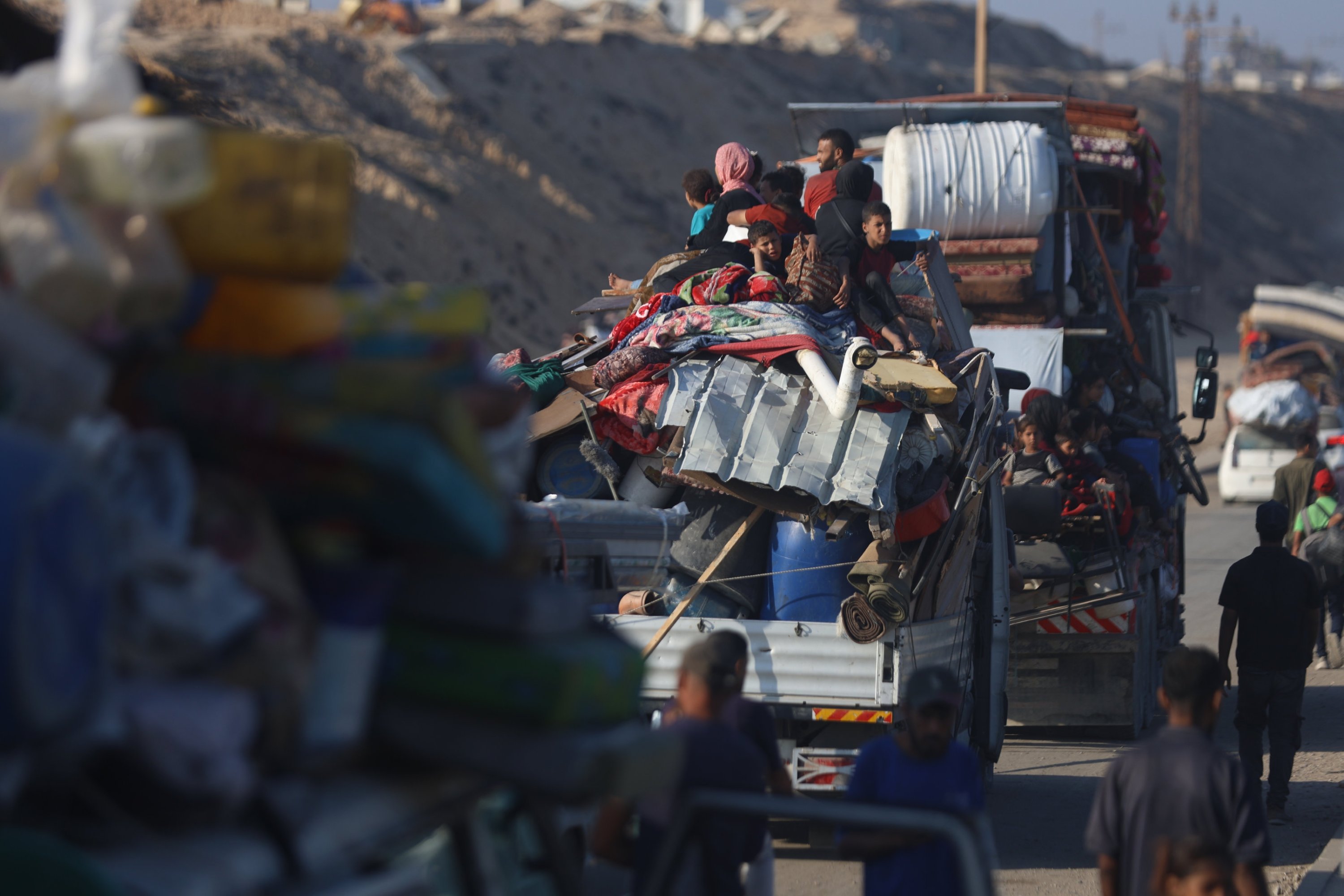
Israeli tanks pushed into two gateway neighborhoods of Gaza City on Thursday as residents reported a communications blackout across the enclave, signaling an imminent escalation of ground operations.
Israeli forces control Gaza City's eastern suburbs and, in recent days, have been pounding the Sheikh Radwan and Tel al-Hawa areas, from where they would be positioned to advance on central and western areas where most of the population is sheltering.
"The disconnection of internet and phone services is a bad omen. It has always been a bad signal, something very brutal is going to happen," said Ismail, who only gave one name. He was using an e-SIM to connect his phone, a dangerous method as it requires seeking higher ground to receive a signal.
"The situation around me is very desperate. People in tents and in houses are very worried for their lives. Many can't afford to leave, but many do not want to," he said, speaking from a coastal area in the west of the city.
At least 14 Palestinians were killed by Israeli strikes or gunfire across the Gaza Strip on Thursday, including nine in Gaza City, local health authorities said.
The Palestinian Telecommunications Company said in a statement that its services had been cut off "due to the ongoing aggression and the targeting of the main network routes."
In its latest statement to the media, the Israeli military said troops were expanding their operations in Gaza City, dismantling alleged Hamas infrastructure. The statement did not mention the telecoms blackout or give any details of tank movements.
It also said the military was continuing to operate in Khan Younis and Rafah in the south.
Hundreds of thousands of Palestinians have fled Gaza City since Israel announced on Aug. 10 it intended to take control, but a greater number are staying put, either in battered homes among the ruins or in makeshift tent encampments.
The military has been dropping leaflets urging residents to flee toward a designated so-called "humanitarian zone" in the south of the territory, but conditions there are dire, with insufficient food, medicine and space and inadequate shelter.
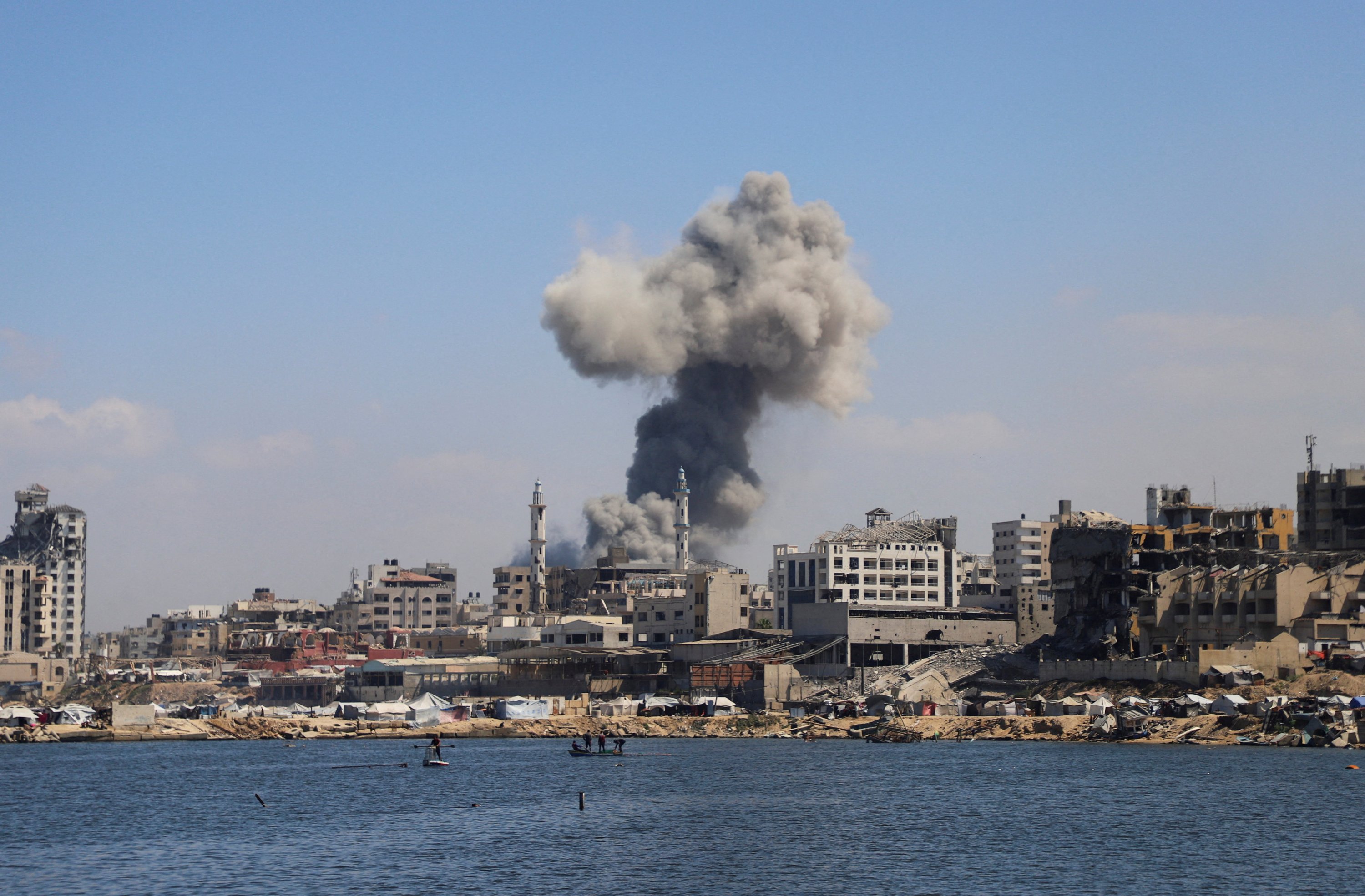
Israel says it wants to smash the Palestinian resistance group Hamas in its strongholds and free the last hostages still being held in Gaza, but its latest major offensive after two years of genocidal war has drawn international condemnation.
In Sheikh Radwan, which is north of the city center and has come under heavy bombardment in recent days, residents said they had seen tanks in the heart of their neighborhood.
They also said Israeli forces had detonated four driverless vehicles full of explosives and the blasts had destroyed many houses.
Similar explosions had rocked Tel al-Hawa, which is located southeast of the city center, and residents there also reported seeing tanks in the streets.
Israel announced on Tuesday it was launching the main phase of its ground assault, but the bombardment of several Gaza City areas had begun in previous days.
It said on Wednesday that it was opening an additional route out of the city for 48 hours, urging civilians to move south.
Data from international aid agencies indicates that over 55,000 people fled northern Gaza between Sunday and Wednesday, but over half a million have not left, according to both Israeli and Hamas estimates.
The total Palestinian death toll from the two-year war between Israel and Hamas surpassed 65,000 on Wednesday, according to the Gaza health authorities. Palestinian officials and rescue workers say the true figure is likely higher as many remains are trapped under the rubble of destroyed buildings.
The war was triggered by the Hamas-led incursions on southern Israel on Oct. 7, 2023, which caused around 1,200 deaths and took 251 hostages, according to Israeli tallies.
Much of Gaza City was laid waste early in the war, but around 1 million Palestinians had returned there to homes among the ruins due to the awful conditions in displacement areas.