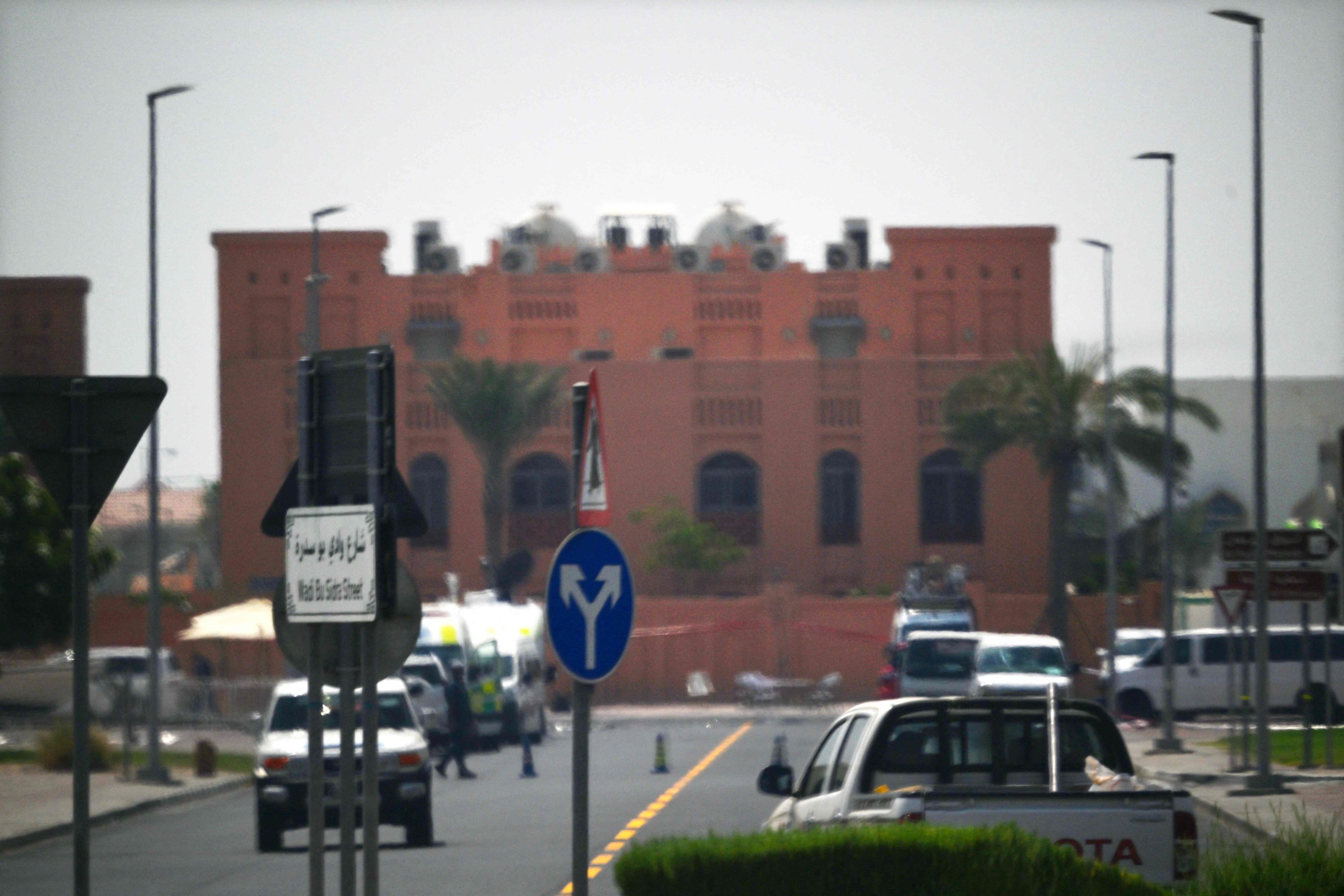
Israel's recent attack on the Hamas cease-fire delegation in Qatar's capital Doha this week attempted to derail ongoing negotiations, but will not alter Hamas's conditions for ending the war in Gaza, an official from the Palestinian resistance group said Thursday.
Israel attempted to kill the political leaders of Hamas with an airstrike on Doha on Tuesday, in what U.S. officials described as a unilateral escalation that did not serve American or Israeli interests.
In a televised address, Hamas official Fawzi Barhoum said the strike was not only an attempt to assassinate the negotiating delegation, but a deliberate blow to the entire process and a clear message rejecting any cease-fire deal.
He also accused Israel of targeting the mediation efforts of Qatar and Egypt.
"This attack was a blatant confirmation by Netanyahu and his criminal gang of their refusal to reach any agreement and their insistence on derailing all regional and international efforts aimed at halting the genocide", Barhoum said.
However, the group has not officially announced that it would close the door on future talks.
Barhoum said the strike targeted the group's negotiating delegation while they were discussing a new cease-fire proposal delivered by the Qatari prime minister just a day earlier.
"At the moment of the terrorist attack, the negotiating delegation was in the process of discussing its response to the proposal," he said.
Barhoum reaffirmed Hamas's key demands: a full cease-fire, the withdrawal of Israeli forces from Gaza, a real prisoner-for-hostage exchange, humanitarian relief and reconstruction of the enclave.
Israeli Prime Minister Benjamin Netanyahu is pushing for an all-or-nothing deal that would see all of the hostages released at once and Hamas surrendering.
Hamas said five of its members had been killed in the attack, including the son of Hamas's exiled Gaza chief Khalil al-Hayya.
It was unclear whether al-Hayya or other top officials attended the funeral of those killed in the strike. However, images distributed by Hamas showed at least two political leaders – Osama Hamdan and Izzat al-Rishq – present at the ceremony.
The funeral, held in the Qatari capital, was attended by Qatar's Emir Sheikh Tamim bin Hamad Al Thani, according to Qatari state media.
Footage from the funeral showed the bodies of five Hamas members wrapped in Palestinian flags, and one security officer draped in a Qatari flag, lying out inside a mosque as dozens of men in traditional white Qatari thobes stood in prayer.
The attack on Doha drew condemnation from regional powers, including Saudi Arabia and the United Arab Emirates, as well as the European Union, and risks derailing U.S.-backed efforts to broker a truce and end the nearly two-year-old conflict.
United Arab Emirates President Sheikh Mohammed bin Zayed Al Nahyan visited Qatar a day after the strike, before traveling to Bahrain and Oman in what his diplomatic adviser described as a tour to coordinate Gulf positions and reinforce the concept of a "common destiny."