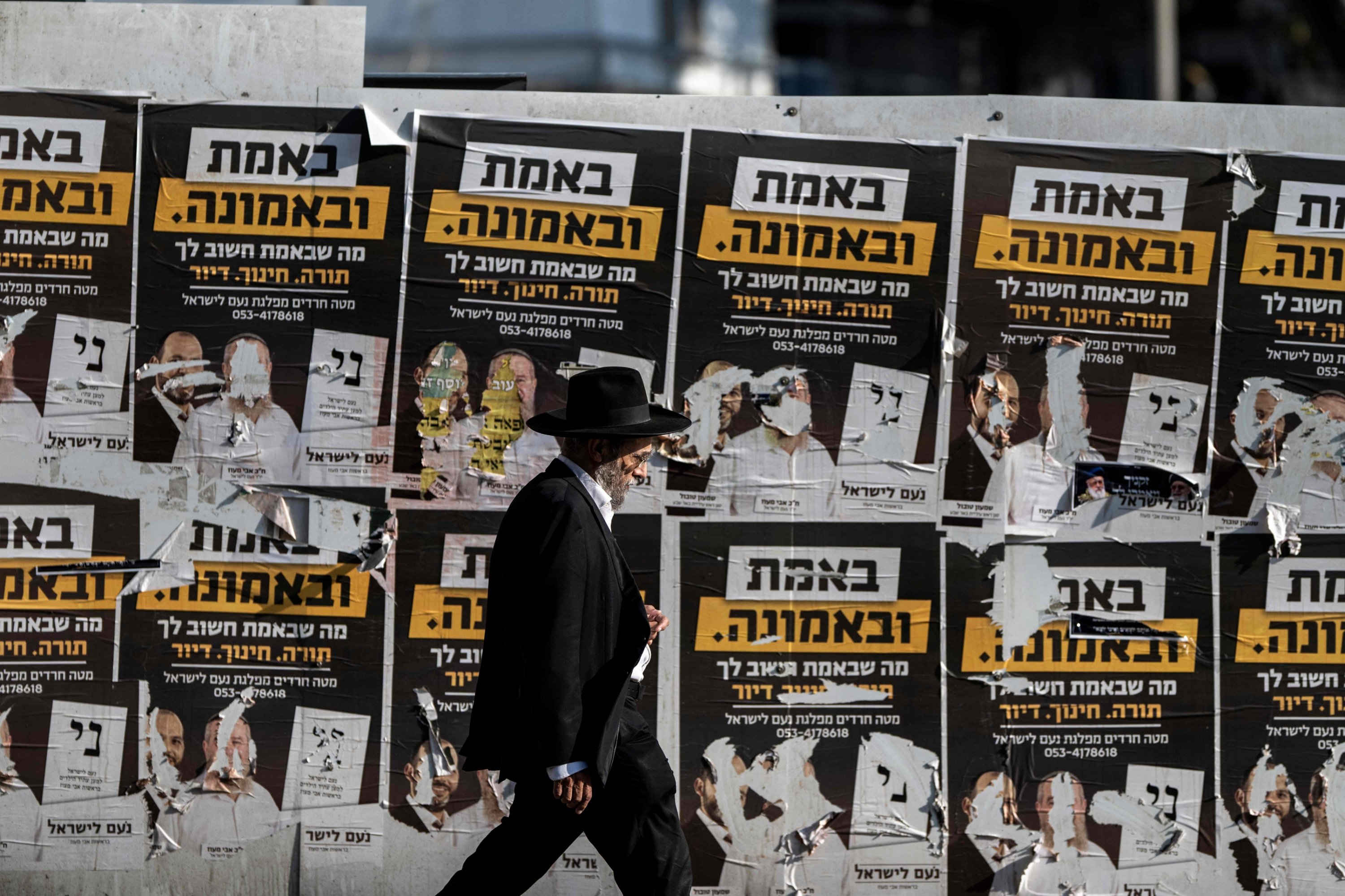
As Israel votes in a pivotal election Tuesday, political analysts and regional policymakers caution that no matter who emerges victorious, the country’s core policies toward the Palestinians, Iran and its position within Middle East are unlikely to experience any significant change.
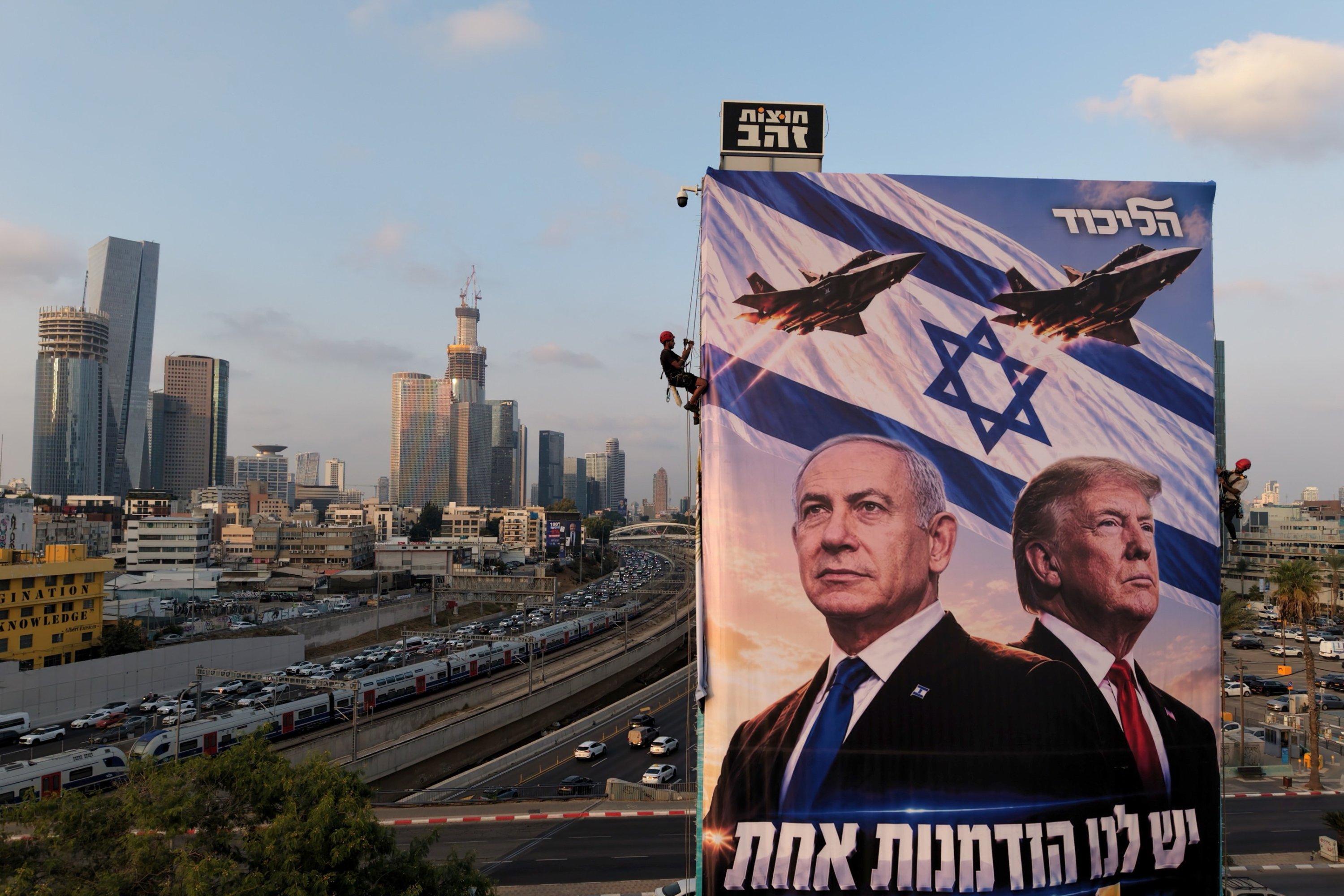
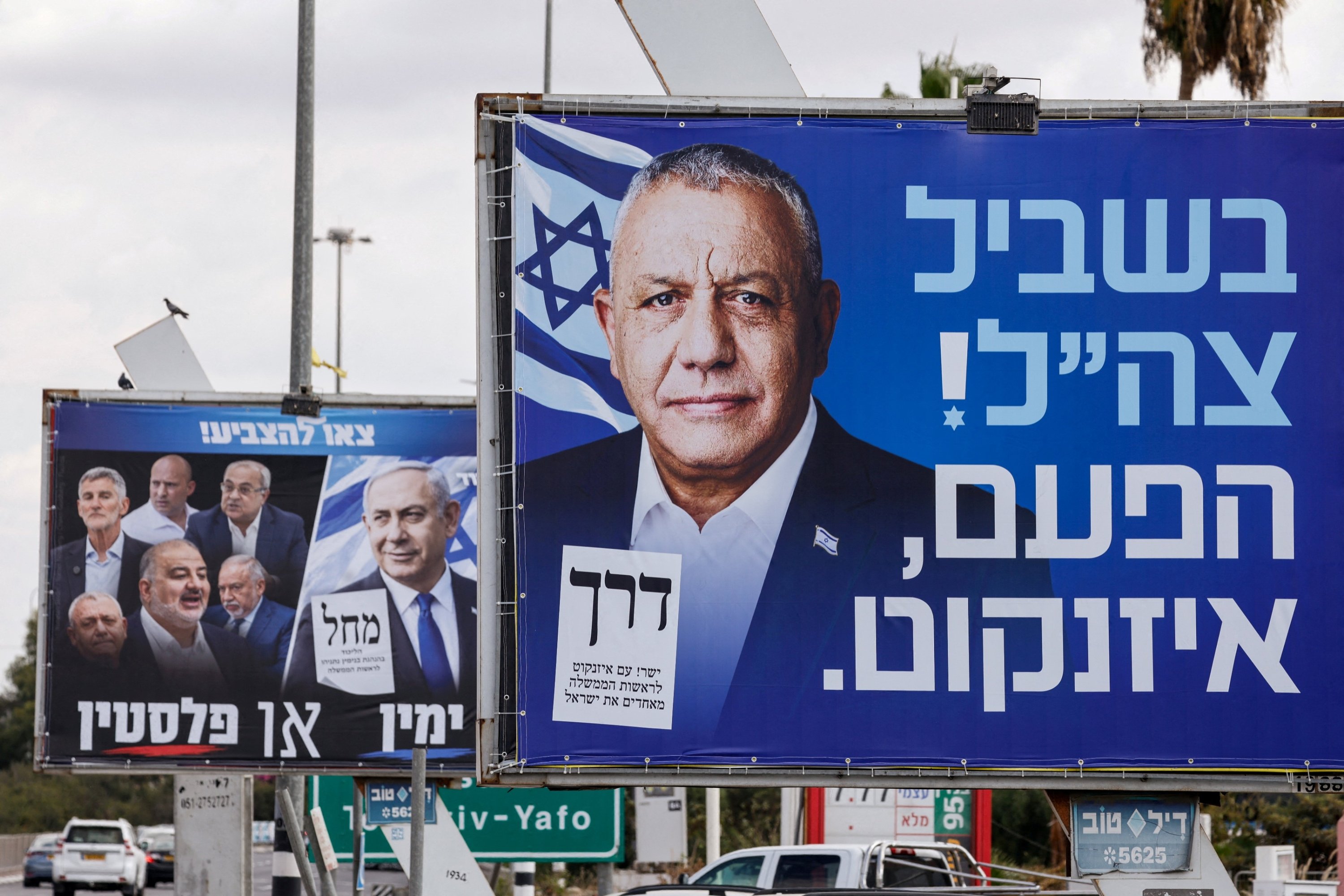
With polls showing a close contest between incumbent Prime Minister Benjamin Netanyahu and opposition leader Gadi Eisenkot, both figures are campaigning on hard-line security platforms and share a host of strategic priorities – most notably, maintaining military pressure on Iran and denying Palestinian statehood.
That consensus, analysts argue, stems at least in part from the Oct. 7, 2023, Hamas incursion and the Israeli genocidal war it triggered, while neighboring Lebanon and Iran became increasingly embroiled on the periphery.
"If Netanyahu is elected, he'll do whatever he thinks he wants to do," said Aviv Bushinsky, a former adviser to Netanyahu. "Expansion of the settlements will continue. The wars against Iran, Hamas and Hezbollah will continue. What you see now is what you'll see after the election, maybe even more aggressively. As long as Iran is in such a situation, it's a waste of time talking about Palestine."
In Bushinsky’s view, echoed by many in Israel’s security establishment and its political class, the electoral contest is less about opposing visions for Israel’s future and more about how far and how fast to push longstanding priorities: confronting Iran, deepening control over the West Bank, and maintaining military deterrence.
Both Netanyahu and Eisenkot – a former military chief now leading the centrist Yashar party – have publicly opposed the establishment of an independent Palestinian state, a stance now shared by nearly all major Jewish-led parties.
This shift away from the internationally backed "two-state solution” has defined the rightward tilt in Israeli politics. "The substance of the policy remains the same: No to a Palestinian state and yes to further settlement expansion. On this, they are all in agreement," said Palestinian analyst Ghassan al-Khatib.
The West Bank, occupied by Israel since the 1967 Middle East War, has seen a rapid expansion of Israeli settlements under Netanyahu. Critics argue that the government has overlooked or outright enabled increasing violence by terrorist Israeli settlers against Palestinians, as hundreds of thousands of settlers have established themselves in the territory.
While Eisenkot, in contrast, favors settlement "in principle,” he calls for compliance with Israeli law and says that settlements built without official authorization should be dismantled. He has pledged to curb settler violence and opposes building in the contested E1 area of the West Bank, which, if developed, would cut the West Bank in two and sever East Jerusalem from the rest of the territory – an outcome seen by many as the death knell for Palestinian statehood aspirations.
Despite these stylistic differences, Eisenkot supports the continuation of Israeli security control "from the Jordan River to the Mediterranean Sea.” The only notable exception among mainstream parties are the Democrats, the reconstituted center-left faction – and even they appear diminished as the center of political gravity has moved right.
Both Netanyahu and Eisenkot have ruled out forming a government with Palestinian-led Israeli parties, which represent about a fifth of the population, foreshadowing the unlikelihood of significant policy reform from any new coalition.
Three years into Israel’s genocidal and a year after a U.S.-brokered cease-fire, Israeli troops now control roughly two-thirds of Gaza, while an estimated 2 million Palestinians remain crowded into the remaining third of the strip. Most live amid the ruins of previous fighting – displaced, under siege, and with little prospect for reconstruction.
Both leading candidates say Israeli forces will remain in Gaza until Hamas is stripped of its weapons and political power, with Eisenkot pledging to replace Hamas’ rule within 18 months, either by international agreement or force of arms. Attempts at negotiating a handover to the Palestinian Authority or a third party have so far failed.
Both Eisenkot and Netanyahu say Israeli troops will not withdraw from Gaza until Hamas is disarmed, and that Israel is prepared to restart fighting to achieve this, according to a Reuters analysis.
Arguably the most intractable aspect of Israel’s future for any new government is its stance toward Iran. Oct. 7 and the subsequent genocide further entrenched the prevailing doctrine: maintaining "forward defense” and using overwhelming force as deterrence against regional adversaries.
Prime Minister Netanyahu has repeatedly made clear his ambitions extend beyond containment: "There is only one way to remove this threat once and for all: overthrow the regime in Iran,” he declared at a recent graduation for military officers, describing Iran as the "head of the venomous octopus” that threatens Israeli and regional security.
Eisenkot, though less fiery in his rhetoric, has promised no dramatic departure from this approach.
As the U.S. continues its policy of pressuring Tehran, a State Department spokesperson reiterated, "as long as Iran devotes its energy revenues to financing attacks on our allies, supporting terrorism around the world, and pursuing other destabilizing actions, we will use all the tools at our disposal to hold the regime accountable.”
The Trump administration also reiterated its opposition to the annexation of the West Bank, describing a "stable West Bank” as crucial to Israeli security and regional peace.
Despite the alarm Netanyahu provokes among Arab leaders – many of whom fear his expansionist agenda – there is a begrudging acknowledgment that his hard line against Iran aligns with their own security calculations.
"Netanyahu’s policies in Gaza, the West Bank, Syria and Lebanon are damaging,” said Abdulaziz Sager, chairman of the Gulf Research Center. "As for Iran, a settlement is needed before the conflict escalates further. If Iran’s role is not curbed, the region could be heading toward 50 years of Iranian hegemony.”
Michael Young of the Carnegie Middle East Center notes that underlying Israeli consensus "reduces the scope for big policy shifts.” Recent years have seen the emergence of a rough stalemate: Hezbollah in Lebanon and Hamas in Gaza weakened, but not eliminated, and Iran’s broader regional influence endures. The Iranians, he argues, bet they can outlast their opponents and retain their ambitions, including pursuit of a nuclear deterrent.
"This is a quagmire,” Young said. "The Iranians can outlast Trump.”
The contours of likely government coalitions reinforce the direction of policy. Netanyahu’s current government depends on support from far-right parties led by settler activists Itamar Ben-Gvir and Bezalel Smotrich, who openly promote annexation and have been sanctioned in some Western capitals for encouraging settler violence. The coalition also includes ultra-Orthodox parties, who demand broad exemptions from military service.
Eisenkot, by contrast, would need to rely on right-wing parties less radical than Netanyahu’s allies, and possibly the Democrats’ small center-left faction. Neither candidate, however, is expected to seek support from Arab-led parties, and Eisenkot’s opposition to military exemptions further complicates coalition arithmetic.
For the region – whether in Tehran, Riyadh, or Ramallah – Tuesday’s ballot is viewed not as a potential turning point, but as a test of whether a long confrontation is becoming permanent. "From Tehran to Riyadh, Tuesday's election is not seen as a potential turning point but as a test of whether the Middle East is settling into a long confrontation, where wars ebb and flow while the underlying conflicts are unresolved,” said one observer.
The coming days may deliver a new Israeli prime minister – or reaffirm Netanyahu’s long rule – but the strategic posture toward Palestinians, Iran, and the wider Middle East, will likely remain unchanged. For many, the only open question is whether the next government chooses to escalate existing conflicts or simply maintain the status quo.