Daily Sabah logo

Politics
Diplomacy Legislation War On Terror EU Affairs Elections News Analysis
TÜRKİYE
Istanbul Education Investigations Minorities Expat Corner Diaspora
World
Mid-East Europe Americas Asia Pacific Africa Syrian Crisis Islamophobia
Business
Automotive Economy Energy Finance Tourism Tech Defense Transportation News Analysis
Lifestyle
Health Environment Travel Food Fashion Science Religion History Feature Expat Corner
Arts
Cinema Music Events Portrait Reviews Performing Arts
Sports
Football Basketball Motorsports Tennis
Opinion
Columns Op-Ed Reader's Corner Editorial
PHOTO GALLERY
JOBS ABOUT US RSS PRIVACY CONTACT US
© Turkuvaz Haberleşme ve Yayıncılık 2025

Daily Sabah - Latest & Breaking News from Turkey | Istanbul

  • Politics
    • Diplomacy
    • Legislation
    • War On Terror
    • EU Affairs
    • Elections
    • News Analysis
  • TÜRKİYE
    • Istanbul
    • Education
    • Investigations
    • Minorities
    • Expat Corner
    • Diaspora
  • World
    • Mid-East
    • Europe
    • Americas
    • Asia Pacific
    • Africa
    • Syrian Crisis
    • Islamophobia
  • Business
    • Automotive
    • Economy
    • Energy
    • Finance
    • Tourism
    • Tech
    • Defense
    • Transportation
    • News Analysis
  • Lifestyle
    • Health
    • Environment
    • Travel
    • Food
    • Fashion
    • Science
    • Religion
    • History
    • Feature
    • Expat Corner
  • Arts
    • Cinema
    • Music
    • Events
    • Portrait
    • Reviews
    • Performing Arts
  • Sports
    • Football
    • Basketball
    • Motorsports
    • Tennis
  • Gallery
  • Opinion
    • Columns
    • Op-Ed
    • Reader's Corner
    • Editorial
  • TV
  • World
  • Mid-East
  • Europe
  • Americas
  • Asia Pacific
  • Africa
  • Syrian Crisis
  • Islamophobia

Israel’s incessant bombing spells environmental disaster for Gaza

by Daily Sabah with Agencies

ISTANBUL Oct 07, 2024 - 2:14 pm GMT+3
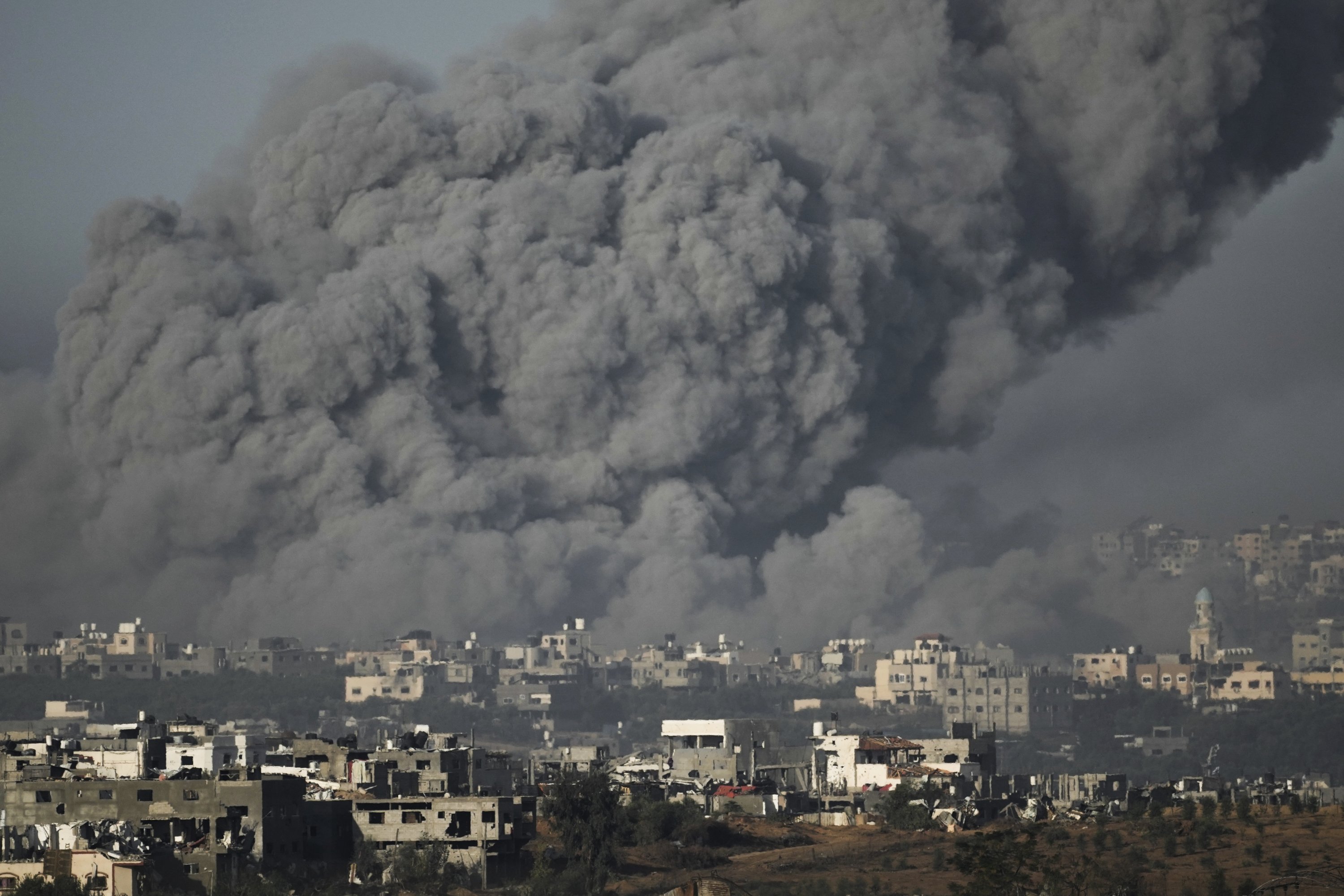
Smoke rises following an Israeli airstrike in the Gaza Strip, as seen from southern Israel, Wednesday, Nov. 22, 2023. (AP Photo)
by Daily Sabah with Agencies Oct 07, 2024 2:14 pm

Israel's indiscriminate bombing of Gaza in the past year as well as the use of banned tactics like white phosphorus bombs have triggered a humanitarian crisis and environmental destruction.

Israel’s attacks, which began on Oct. 7 last year have killed more than 41,800 people, injured over 96,800 and turned most of the Palestinian territory into rubble.

Thousands have been displaced, forced to live in tents or converted shelters such as schools and hospitals set up by humanitarian organizations.

Besides the humanitarian crisis, the bombardments have left behind massive environmental destruction.

On the 200th day of the attacks, Gaza’s government media office said that Israel had dropped 65,000 tons of bombs on the enclave, nearly three times the amount dropped on Hiroshima during World War II.

According to a study conducted by Queen Mary University in London, between 54% to 66% of the buildings in Gaza have been damaged or destroyed in Israeli attacks.

The attacks also caused between 420,000 to 652,000 tons of carbon dioxide emissions in the first 120 days of 2024 alone – surpassing the annual carbon emissions of 26 countries and regions.

One of the most concerning environmental factors has been Israel's use of white phosphorus bombs, which are prohibited in densely populated civilian areas under international law.

Rights group Amnesty International has documented the use of white phosphorus shells by the Israeli military in Gaza's densely populated areas with substantial photographic evidence.

White phosphorus can remain in soil and water for years, initially killing any plants it comes into contact with. In the long term, it can act as a fertilizer, causing excessive growth of plants, algae and other organisms.
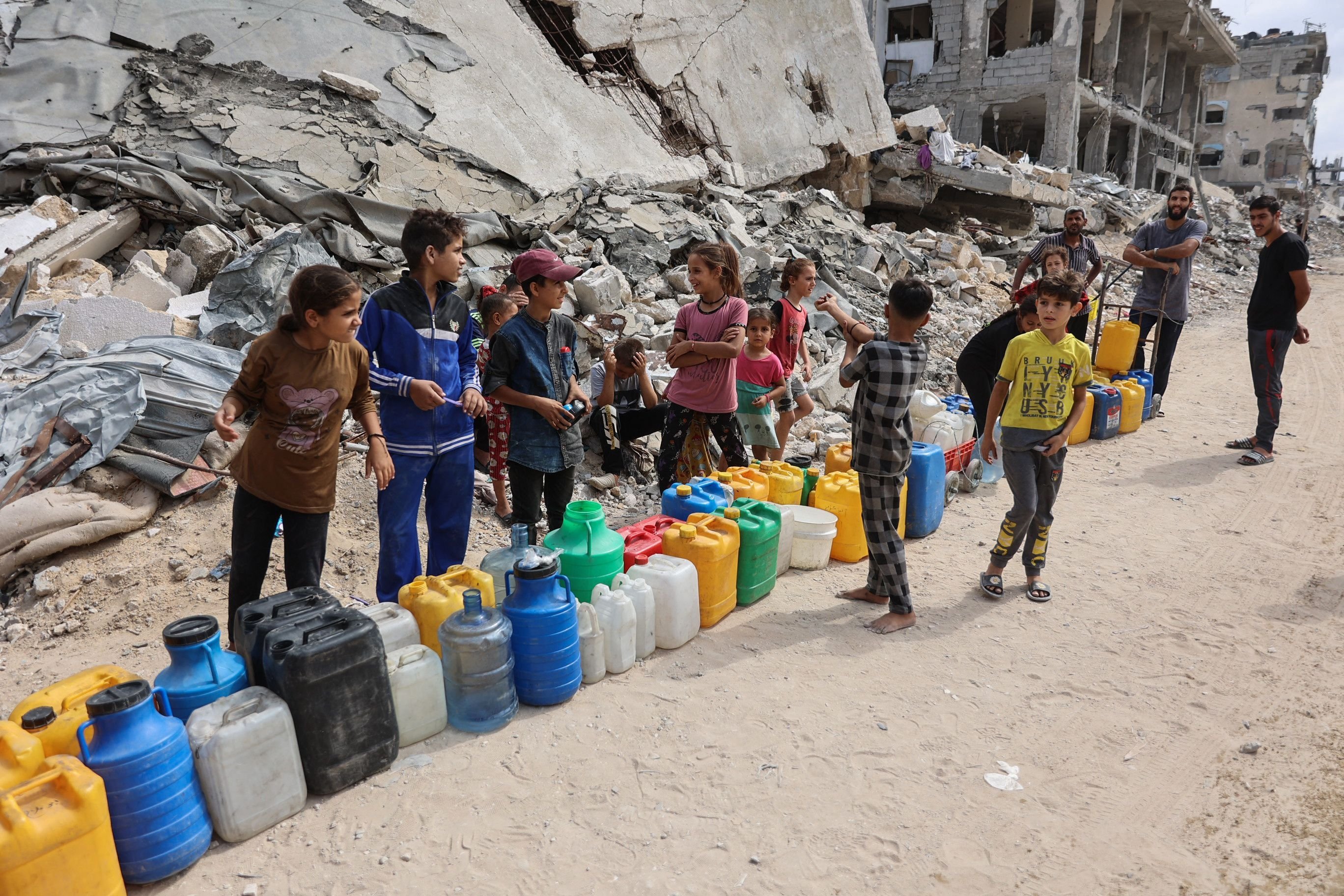
Displaced Palestinian youths queue to fill containers from a water distribution point in the Shujaiya neighborhood of Gaza City, Palestine, Oct. 7, 2024. (AFP Photo)

Water Crisis Deepens

In addition to military targets, Israel has also struck critical infrastructure in Gaza such as power lines, leaving the region in darkness.

The attacks on water lines have also caused a water crisis. The U.N. Agency for Palestinian refugees (UNRWA) reported that by the end of the first eight months of the conflict, around 67% of water and sanitation facilities and infrastructure had been destroyed or damaged.

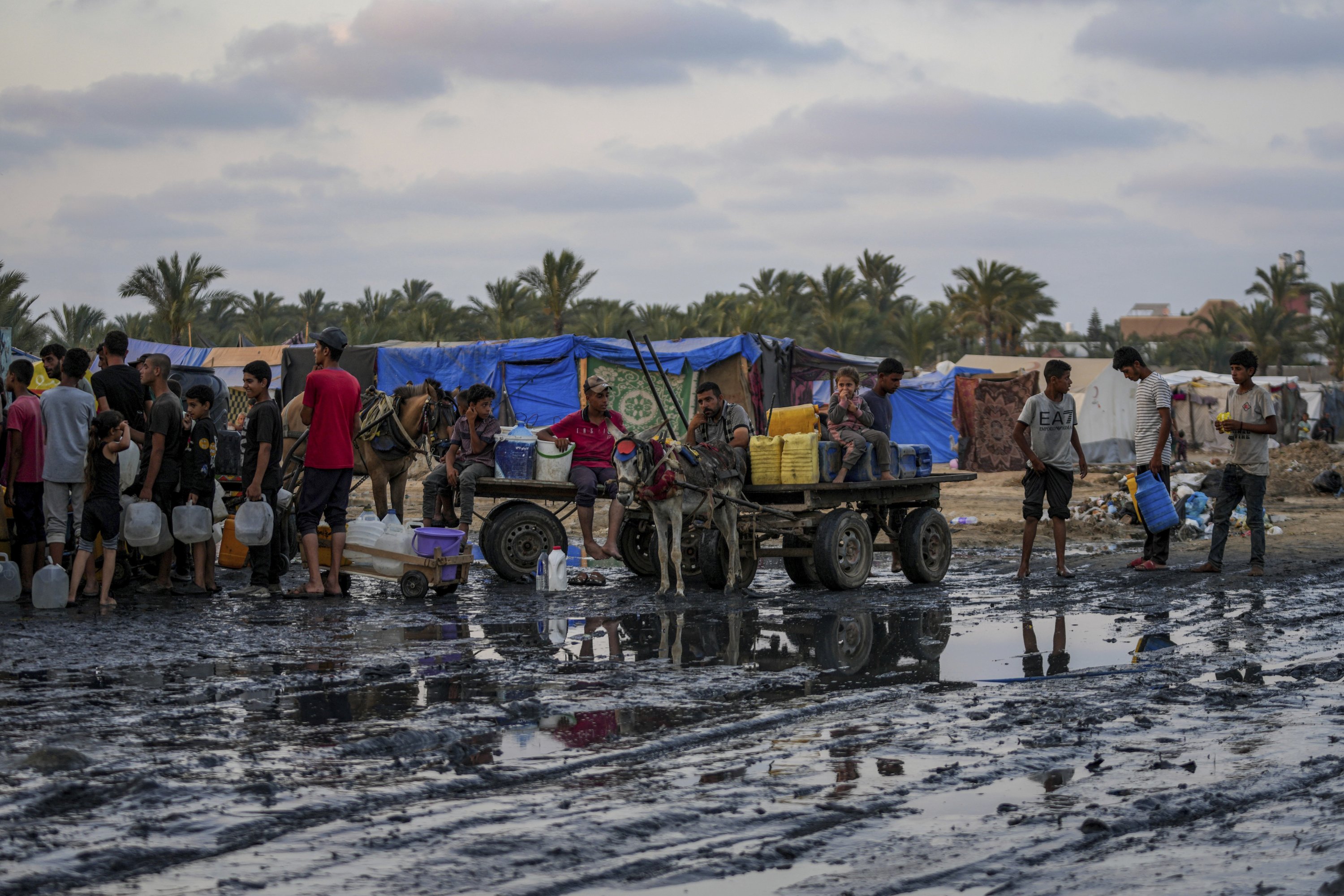
According to a report released in July by the non-governmental organization (NGO) Oxfam, while a person needs 15 liters of water daily for survival during emergencies, Gazans are currently only able to access 4.74 liters for food, hygiene and cleaning. This represents a 94% reduction in water availability compared to pre-conflict levels.

Israel’s blockage of water flow into Gaza has exacerbated the crisis, forcing residents to use contaminated well water. Israeli forces have also attacked water distribution lines multiple times, and on Oct. 17 last year, they killed two children returning home with water jugs.
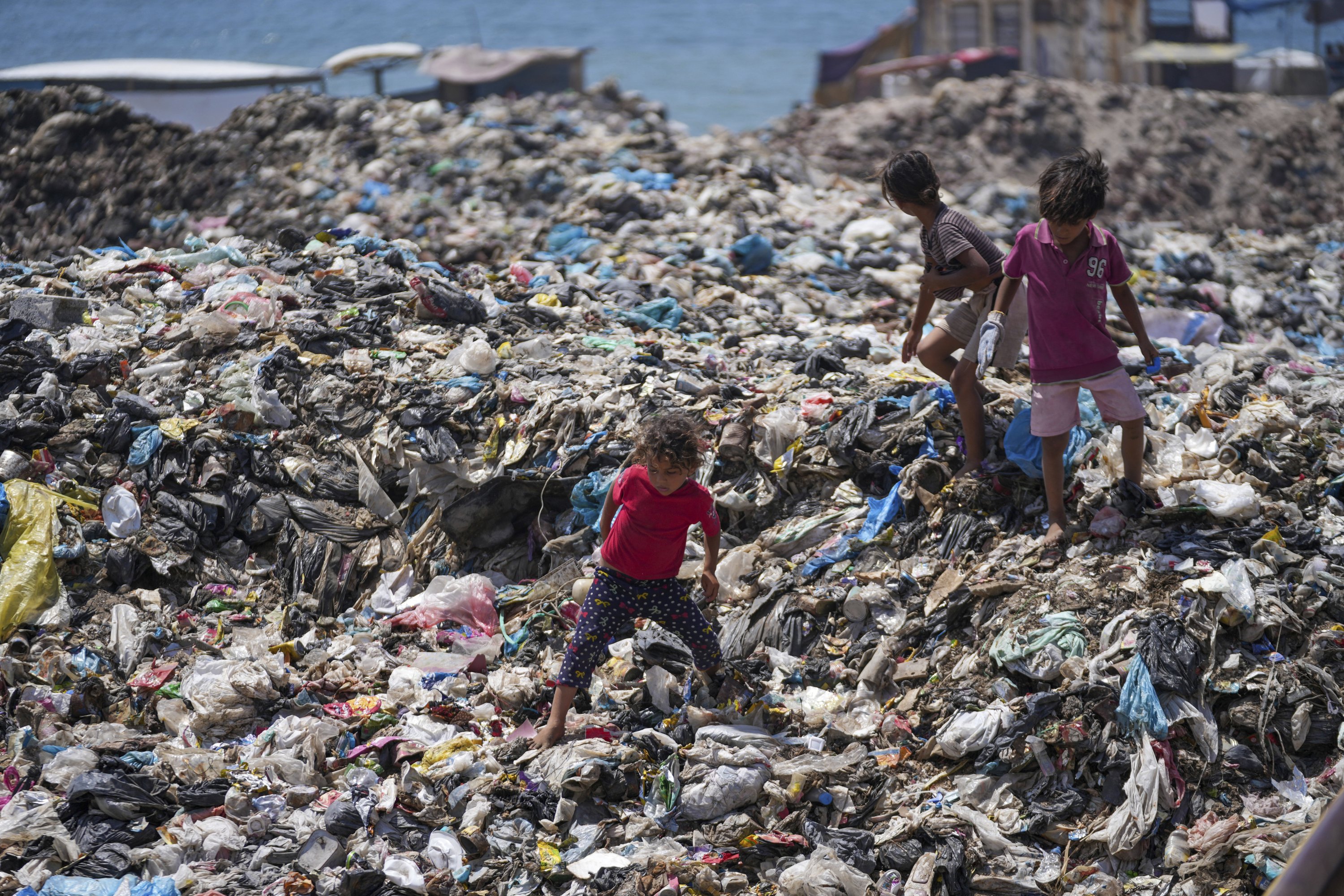
Palestinian kids sort through trash at a landfill in Nuseirat refugee camp, Gaza Strip, Palestine, June 20, 2024. (AP Photo)
Palestinians gather to fill water jugs near one of the strip's few functioning desalination plants in Deir al-Balah, Gaza Strip, June 20, 2024. (AP Photo)

Waste accumulation, disease outbreaks

A report published in June by the Dutch NGO PAX for Peace highlighted the accumulation of hundreds of thousands of tons of solid waste across the region due to damaged waste collection vehicles and restricted access to waste collection areas by the Israeli army.

The conflict has displaced more than 85% of Gaza’s population and 62% of the enclave’s buildings have been turned into rubble. Data from the Gaza Municipality shows that at least 100,000 tons of solid waste have piled up across the city.

Medical waste, chemicals and radioactive materials leaching into the soil and underground water have led to the spread of diseases such as Hepatitis B and Hepatitis C.

The contamination of soil and water also affects the food chain, exposing humans and animals to harmful chemicals.

On March 4 this year, the Gaza Health Ministry said that about 1 million cases of infectious diseases had been recorded in the enclave, where about 2.3 million Palestinians live, with insufficient medical resources for treatment.
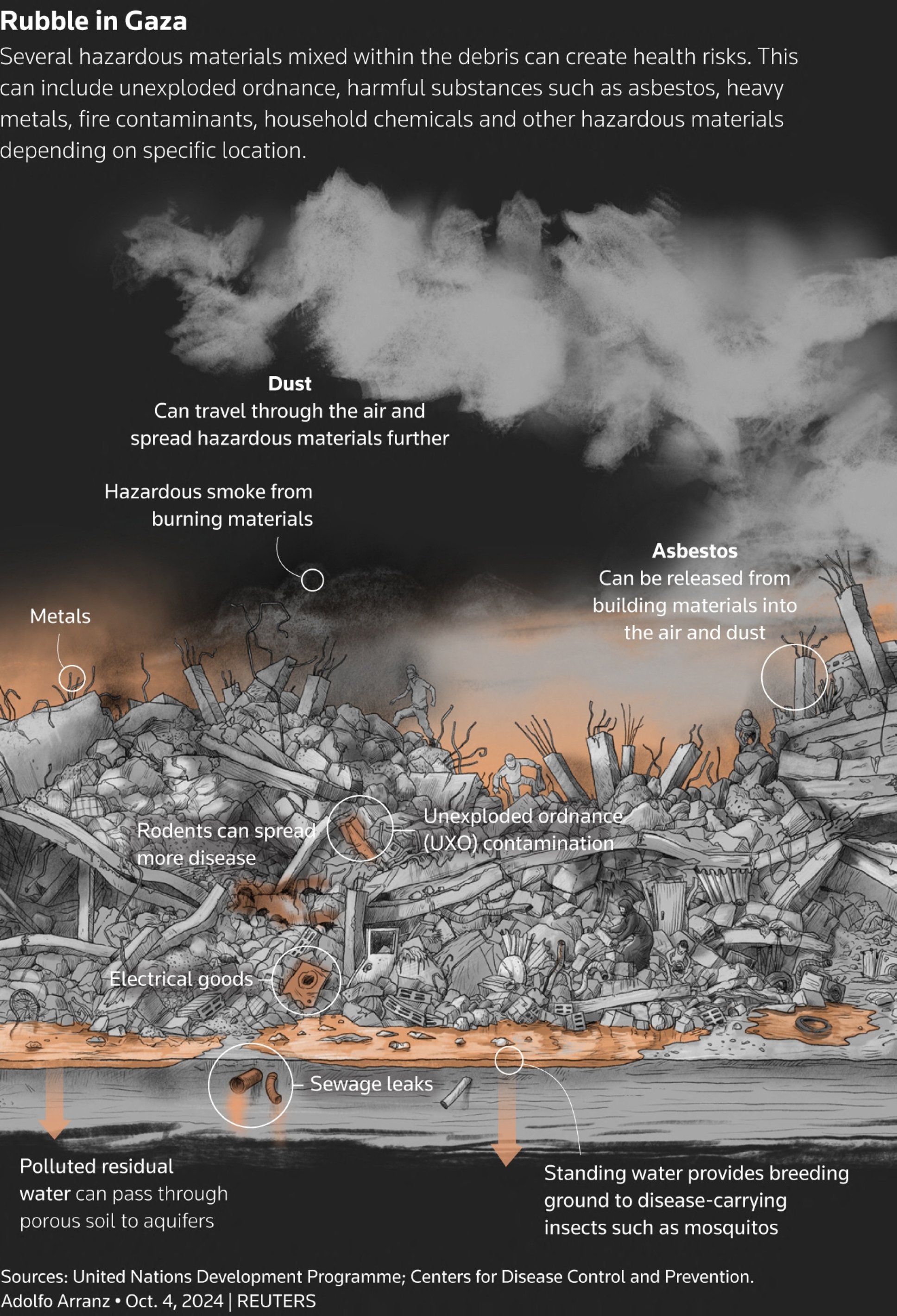
The United Nations estimates that at least 42 million tonnes of debris are piled up in Gaza.

Carbon load from destruction

The U.N. has warned that it could take years to remove the 23 million tons of debris resulting from Israel’s attacks on Gaza.

It estimates that between 156,000 and 200,000 buildings including civilian homes, hospitals and schools have been damaged or destroyed.

The reconstruction of these structures is expected to result in 46.8 million to 60 million tons of carbon dioxide emissions-equivalent to the annual emissions of more than 135 countries and regions and comparable to the emissions of Sweden and Portugal combined.


  • shortlink copied
  • Last Update: Oct 07, 2024 5:23 pm
    KEYWORDS
    israeli-palestinian conflict environmental disaster gaza strip palestine israel
    The Daily Sabah Newsletter
    Keep up to date with what’s happening in Turkey, it’s region and the world.
    You can unsubscribe at any time. By signing up you are agreeing to our Terms of Use and Privacy Policy. This site is protected by reCAPTCHA and the Google Privacy Policy and Terms of Service apply.
    No Image
    Seagulls spread wings for annual migration
    PHOTOGALLERY
    • POLITICS
    • Diplomacy
    • Legislation
    • War On Terror
    • EU Affairs
    • News Analysis
    • TÜRKİYE
    • Istanbul
    • Education
    • Investigations
    • Minorities
    • Diaspora
    • World
    • Mid-East
    • Europe
    • Americas
    • Asia Pacific
    • Africa
    • Syrian Crisis
    • İslamophobia
    • Business
    • Automotive
    • Economy
    • Energy
    • Finance
    • Tourism
    • Tech
    • Defense
    • Transportation
    • News Analysis
    • Lifestyle
    • Health
    • Environment
    • Travel
    • Food
    • Fashion
    • Science
    • Religion
    • History
    • Feature
    • Expat Corner
    • Arts
    • Cinema
    • Music
    • Events
    • Portrait
    • Performing Arts
    • Reviews
    • Sports
    • Football
    • Basketball
    • Motorsports
    • Tennis
    • Opinion
    • Columns
    • Op-Ed
    • Reader's Corner
    • Editorial
    • Photo gallery
    • DS TV
    • Jobs
    • privacy
    • about us
    • contact us
    • RSS
    © Turkuvaz Haberleşme ve Yayıncılık 2021