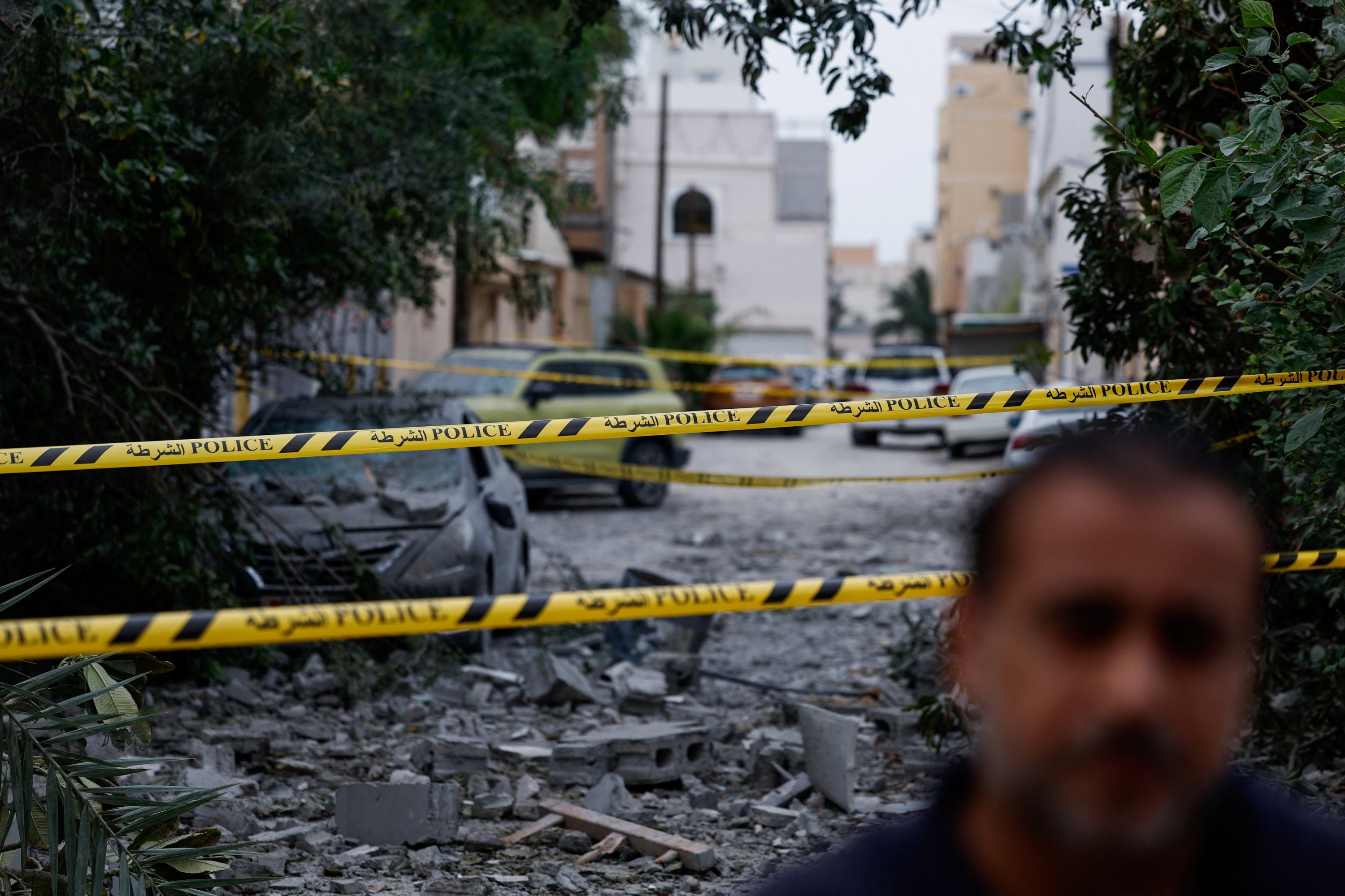
Kuwait and Bahrain, two Gulf states that have been struck by Iran during the U.S.-Israeli war, took precautionary measures on Tuesday, hours ahead of a U.S. deadline for Iran to agree to a deal or suffer major strikes on civilian infrastructure and Iranian media published a warning for roads and bridges in several Gulf states.
U.S. President Donald Trump threatened Tuesday that a "whole civilization will die tonight" if Iran fails to meet his latest deadline to strike a deal that includes reopening the Strait of Hormuz, while the Islamic Republic urged young people to form human chains around power plants and other potential targets.
The Kuwait Interior Ministry urged citizens and residents to remain at home from midnight Tuesday until 6 a.m. Wednesday unless travel is absolutely necessary. "It is crucial to stay at home and avoid going out, unless absolutely urgent," the ministry said in a statement shared on X.
Meanwhile, Bahrain announced that operations at its main port, Khalifa Bin Salman Port, would be temporarily suspended starting early Wednesday.
"We continuously adapt our operations to the circumstances and have, as a result, temporarily paused operations in recent weeks when needed," APM Terminals Bahrain, which operates the port, told AFP.
Earlier on Tuesday, the U.S. State Department said all Americans in Bahrain are advised to shelter in place until further notice.
Hours later, Iranian media published warning to residents and citizens crossing a number of bridges and roads in Bahrain, Saudi Arabia and the UAE.
Media reports said these areas will be declared closed military zones from 11:00 PM Tehran time until further notice.
Even before the deadline, airstrikes hit two bridges and a train station, and the U.S. hit military infrastructure on Kharg Island. It was the second time American forces struck the island, a key hub for Iranian oil production.
Since the war began, Trump has repeatedly imposed deadlines linked to threats, only to extend them. But the president insisted this one is final and will expire at 8 p.m. in Washington without a major diplomatic breakthrough.
He has also offered contradictory statements about what might actually happen.
Trump has made reopening the strait - through which a fifth of the world's oil transits in peacetime - part of avoiding wider attacks and suggested that the waterway is not as vital to U.S. oil interests as it is to other countries. He has also said he would be willing to deploy ground troops to seize Iranian oil, while maintaining that major combat operations in that country could soon conclude.
That means the next moves by the U.S. are largely a mystery, even as rhetoric on both sides has reached a fever pitch.
Meanwhile, Iran's president said 14 million people, including himself, have volunteered to fight. That's despite Trump threatening that U.S. forces could wipe out all bridges in Iran in a matter of hours and reduce all power plants to smoking rubble in roughly the same time frame. He also suggested the entire country could be wiped off the map.
It was not clear if the latest airstrikes were linked to Trump's threats to widen the civilian target list. At least two of the targets were connected to Iran's rail network, and Israeli Prime Minister Benjamin Netanyahu said Israeli warplanes struck bridges and railways in Iran.