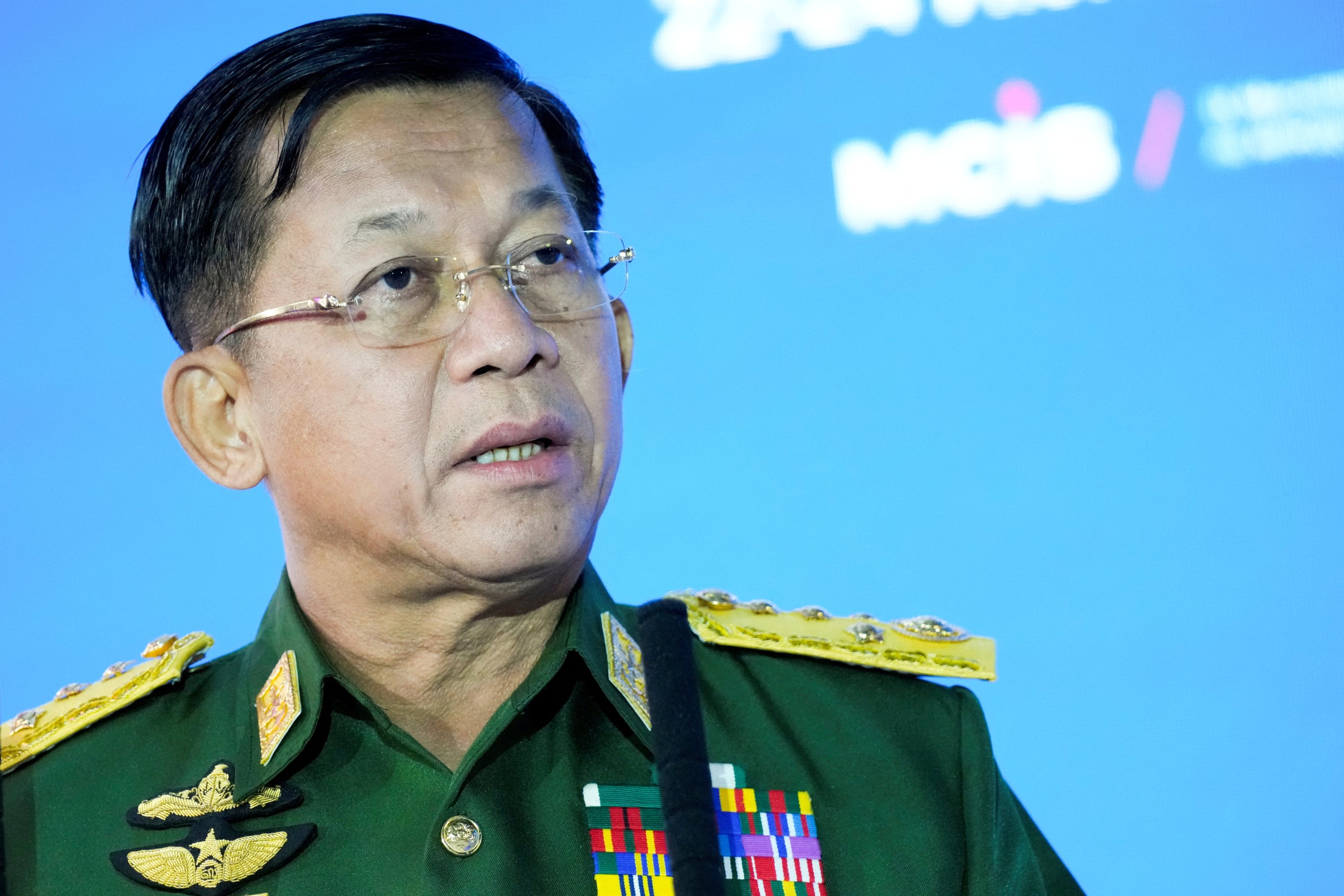
Myanmar’s junta hinted at a shake-up in military leadership ahead of Friday’s Armed Forces Day parade, fueling speculation that Defense Chief Min Aung Hlaing could move toward the presidency.
Thousands of troops are expected to march at the parade grounds in the capital, Naypyidaw, where Min Aung Hlaing will deliver his annual speech aimed at boosting morale.
Since toppling the widely popular government of Aung San Suu Kyi in 2021, he has ruled by decree, detaining the Nobel laureate, dissolving her party, and plunging the country into civil conflict.
“Leadership changes” in the armed forces are expected after the ceremony, Deputy Commander Soe Win told an official dinner Thursday, according to the state-run Global New Light of Myanmar.
Lawmakers are scheduled to begin selecting a new president next week, following a walkover win by pro-military parties in elections earlier this year. Observers said the vote was orchestrated to block opposition candidates.
Under the constitution, Min Aung Hlaing would have to step down from his military post to become president, and Soe Win’s comments reinforce expectations that he will do so.
He is already acting president, but taking the role permanently would bolster critics who say the transition is effectively the military transferring power to itself under a civilian guise.
“Irrespective of who leads, the armed forces will continue to follow the guidance of successive leaders, advisors and mentors,” the newspaper cited Soe Win as saying.
Myanmar’s military mythologizes itself as the only force protecting the restive nation from disintegration.
The newspaper devoted its front page to the military pageant, showing missile launchers before three huge statues of ancient kings that dominate the parade ground.
But Armed Forces Day events have progressively shrunk since 2021, as the military’s ranks have been sapped by the civil war against anti-coup guerrillas and long-active ethnic minority rebel factions.
Over the past year, though, there have been signs the junta is back on the front foot, with a string of moderate victories thanks largely to China-backed truces with ethnic rebels along their shared border.
A Beijing-brokered deal returned the northern city of Lashio to military control last spring after it and its regional command base were captured by the Myanmar National Democratic Alliance Army.
Another China-brokered cease-fire in October saw the Ta’ang National Liberation Army pull back from central Mandalay region, where it had seized the lucrative ruby mining hub of Mogok.
Both factions previously fought alongside each other and others in an offensive starting in late 2023 that represented the biggest threat to the junta since the coup.
Analysts say China’s recent interventions to rein in rebels signal Beijing’s backing of the military establishment to provide some semblance of stability.
While the truces have helped the junta, violence remains endemic. Last year saw the highest number of military air and drone strikes since the coup, according to monitoring group ACLED, which tallies media reports of violence.
With various armed groups embroiled in the civil war, the conflict is highly compartmentalized, and there are regions where the military is surrounded and making its last stand.
While there is no official toll, ACLED estimates more than 90,000 people have been killed on all sides. More than 3.7 million people are displaced, the United Nations said, and about half the country lives in poverty.