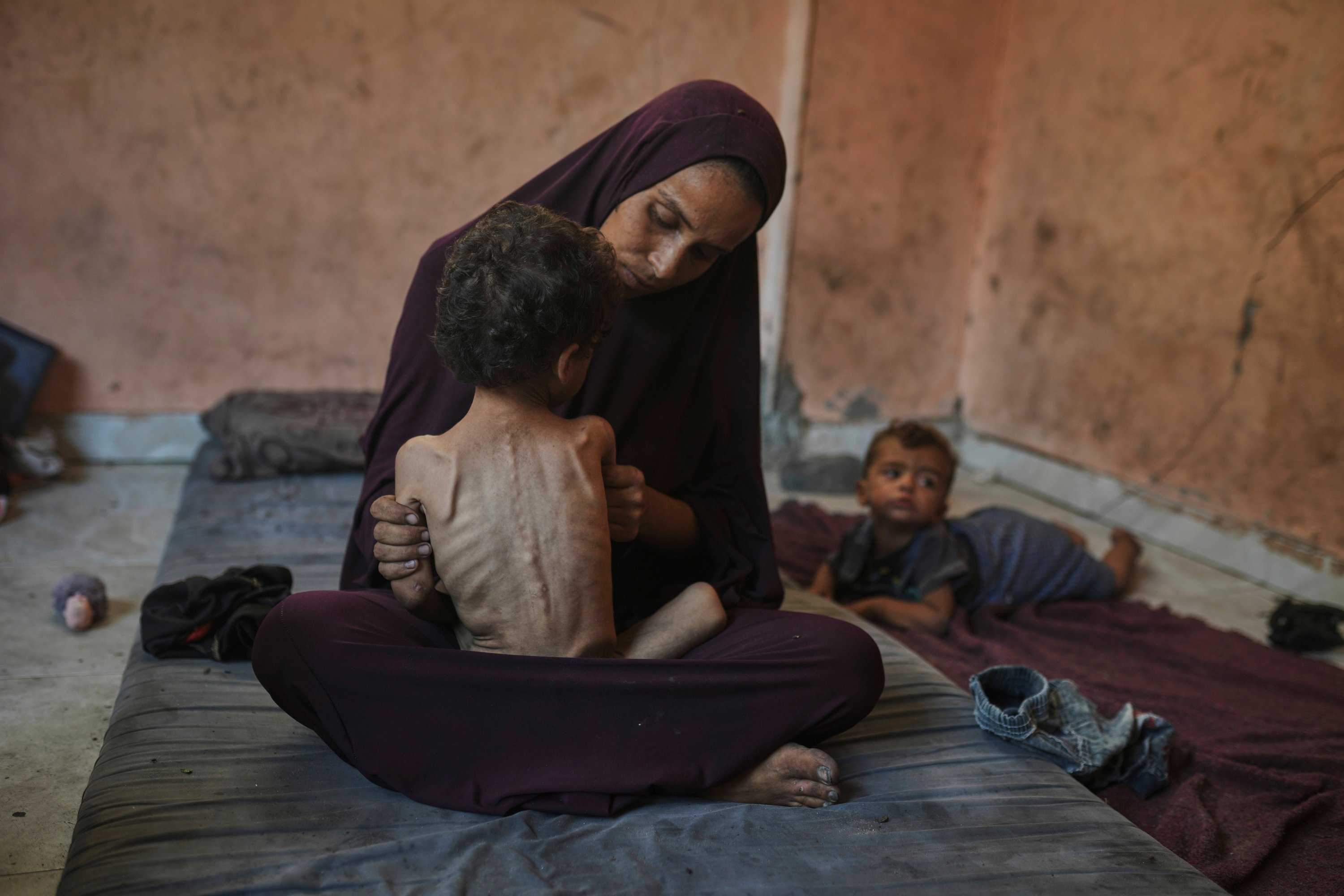
Nearly one in six children under age 5 in Gaza is now acutely malnourished, according to a sweeping new study, highlighting a humanitarian disaster that has quietly intensified amid two years of war and food shortages.
More than 54,600 children are affected, with over 12,800 suffering severe wasting – a life-threatening form of malnutrition that can cause rapid weight loss, organ failure and death without immediate treatment.
The study, published Thursday in The Lancet and conducted by the United Nations Relief and Works Agency for Palestine Refugees in the Near East (UNRWA), represents the most comprehensive assessment of child hunger in Gaza to date.
Researchers screened nearly 220,000 children from dozens of health centers between January 2024 and mid-August 2025, measuring mid-upper arm circumferences – a globally recognized method for assessing nutritional stress.
Children with arms less than 125 millimeters (4.9 inches) were classified as acutely malnourished.
“Tens of thousands of preschool-aged children in Gaza are suffering from preventable acute malnutrition and face a heightened risk of death,” said Dr. Masako Horino, lead scientist on the study.
The malnutrition crisis is a direct consequence of the ongoing war triggered by Hamas members’ deadly attack on Israel on Oct. 7, 2023, which killed over 1,200 civilians.
Israel’s subsequent military campaign has claimed more than 67,000 lives in Gaza, according to the Hamas-run health ministry, figures that the United Nations considers credible.
Israel has denied that children are starving, labeling reports of malnutrition as “lies” promoted by Hamas.
Yet aid agencies, child health experts and U.N. officials have warned for months that the combination of military assaults, restricted humanitarian aid and a blockade has created conditions of widespread hunger.
Hospitals have been overwhelmed, with severe shortages of therapeutic foods, leaving children vulnerable to complications that often prove fatal.
Gaza’s health ministry reported 461 deaths from malnutrition-related complications since the war began, including 157 children, mostly in 2025.
“Every day we see more children arriving at the hospital too weak to stand or even cry,” said one UNRWA pediatric nurse who asked to remain anonymous. “It’s preventable, yet we have no way to reach them all.”
The study documents a clear pattern: malnutrition rates decreased when aid entered Gaza but worsened sharply when supplies were blocked.
A six-week ceasefire in early 2025 temporarily alleviated shortages, but a full siege imposed from March to May, followed by a limited and heavily controlled U.S.-Israel-backed distribution system, restricted access to food.
Under this system, Palestinians could only collect aid at four sites after passing through Israeli military checkpoints, where over 1,000 people were killed in and around aid lines.
International humanitarian organizations have tried to fill gaps.
U.S.-based nonprofit Edesia has shipped thousands of boxes of therapeutic food to Gaza, including 1,500 boxes on Sept. 28, with nearly 15,000 more scheduled for delivery by air and sea. Still, these efforts fall far short of the need.
Acute malnutrition in early childhood is not only immediately life-threatening but can also cause long-term cognitive and physical impairments.
Experts warn that the health and development of an entire generation of Palestinian children are at risk.
“Restrictions on food and assistance have driven severe malnutrition among Gaza’s children,” the study concluded. “The consequences will ripple for years, shaping their growth, learning and survival.”
Three independent child health experts who reviewed the study described the findings as “some of the most definitive evidence” of the scale of malnutrition in Gaza.
“It is now well established that the children of Gaza are starving and require immediate and sustained humanitarian assistance,” wrote Jessica Fanzo of Columbia University, Paul Wise of Stanford and Zulfiqar Bhutta of Aga Khan University and the Hospital for Sick Children in Canada.
The study also highlights the risks faced by U.N. staff.
Two workers involved in the malnutrition screening program were among 21 UNRWA health staff killed in Gaza; overall, more than 370 agency employees have died in the conflict.
The numbers tell only part of the story.
Behind the statistics are children who cannot walk to school, babies whose fragile bodies fail to thrive and families trapped in a cycle of hunger, war and restricted access to lifesaving aid.