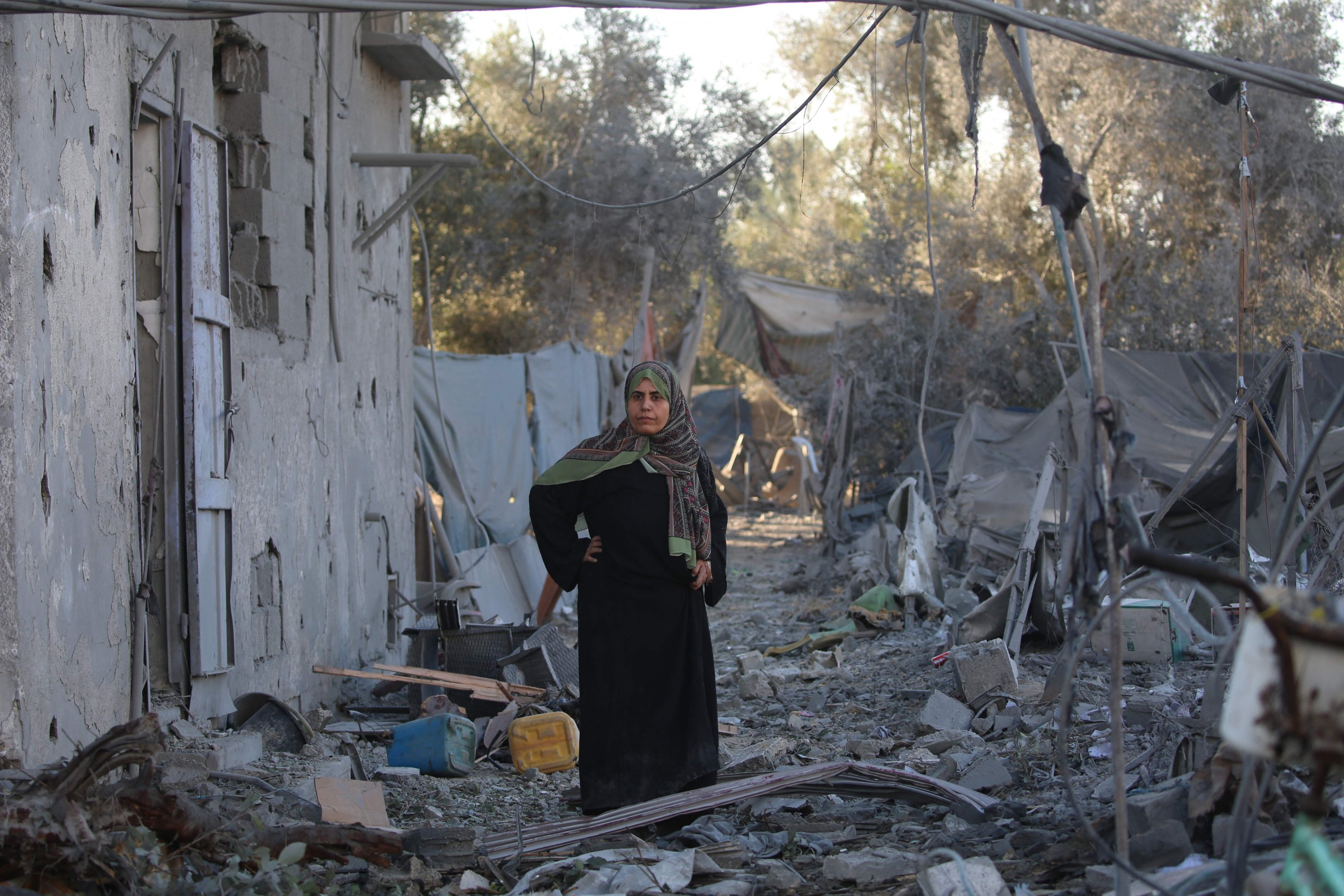
Israeli plans to expand military control across Gaza are deepening fears among civilians already confined to shrinking areas near a shifting frontline known as the “yellow line,” where residents say daily life has become increasingly untenable amid continued strikes, displacement and destruction.
Israeli Prime Minister Benjamin Netanyahu said last week that Israeli forces control about 60% of Gaza and intend to expand that figure to roughly 70%, further narrowing the space where civilians can move.
The “yellow line,” marked by concrete barriers placed after a cease-fire arrangement last year, separates Israeli-held territory in eastern Gaza from areas in the west where Palestinians are still allowed limited movement.
Residents in Khan Younis and Gaza City say the line has effectively become a hard boundary enforced by tanks, drones and frequent gunfire.
Many describe near-daily demolitions carried out by Israeli bulldozers operating under military escort, with homes in adjacent neighborhoods increasingly exposed to strikes and incursions.
Abdullah al-Astal, who lives near Khan Younis, said families are trapped in an area that continues to shrink as violence persists.
He said movement is increasingly restricted and survival depends on navigating constant risk. “There is nowhere left to go,” he said, warning that any further expansion would push civilians into even tighter zones.
In Gaza City’s Zeitoun neighborhood, Hamdi Malaka said large sections of the area have already been reduced to rubble, with damaged infrastructure and collapsed housing making basic living conditions impossible. He said residents fear being pushed entirely into enclosed zones if the boundary shifts again.
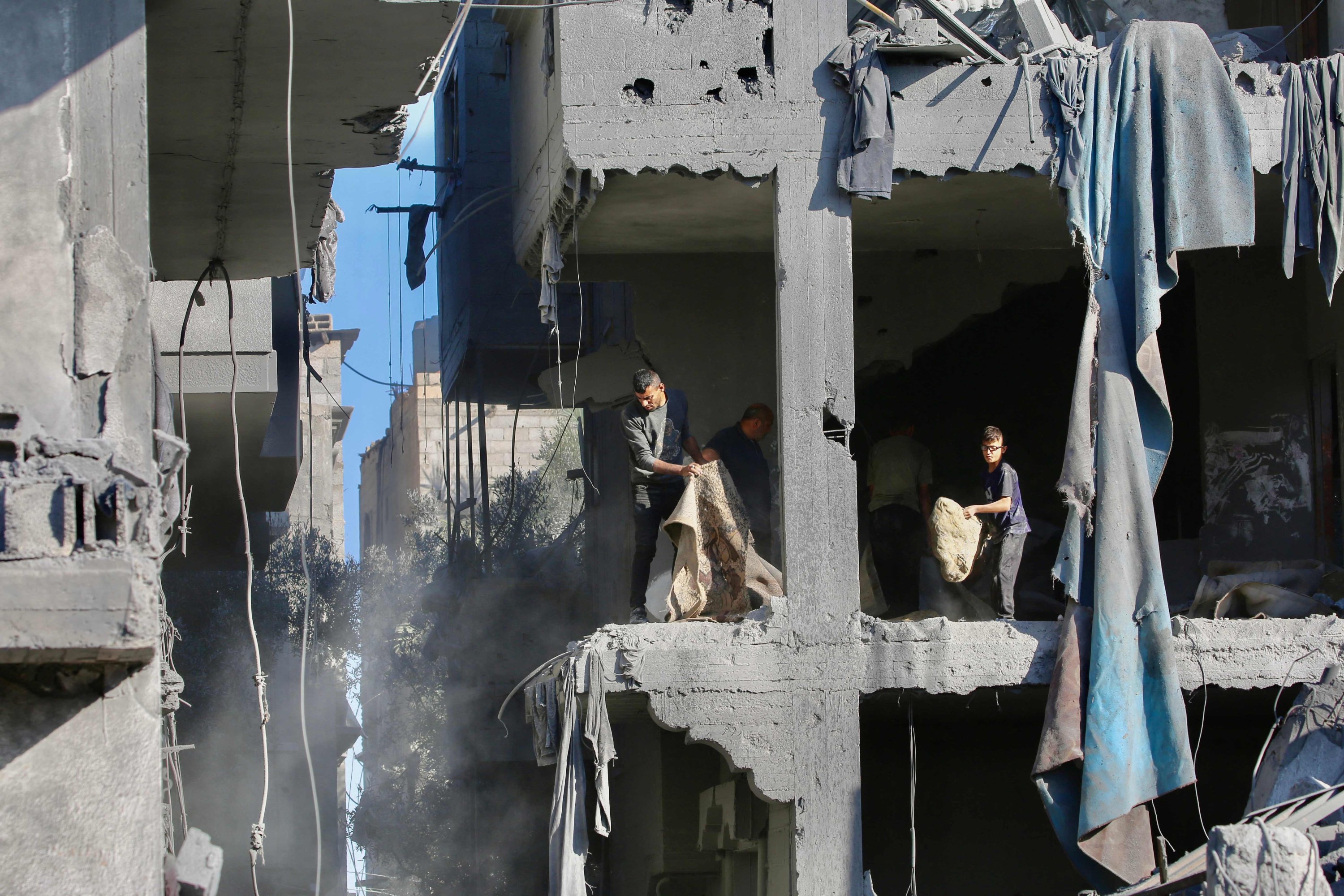
Humanitarian conditions across displacement camps remain severe. Aid groups and local authorities report worsening shortages of clean water, food and medical supplies as repeated displacement waves overwhelm remaining services. Health facilities continue to operate under extreme pressure, with limited capacity to handle casualties or chronic illness.
Hamas has urged international bodies to respond to Israeli statements about expanding control, warning that the move would further isolate civilians and intensify the crisis in already overcrowded areas.
Despite a cease-fire that took effect in October 2025, violence has not stopped. Palestinian health officials say hundreds have been killed since the truce began, while Israel says its operations target Hamas members and respond to attacks on its forces.
The conflicting accounts continue to highlight deep disagreement over the scope and nature of ongoing fighting.
In recent days, Israeli strikes in Gaza City killed at least 10 people in a single night, according to hospital officials.
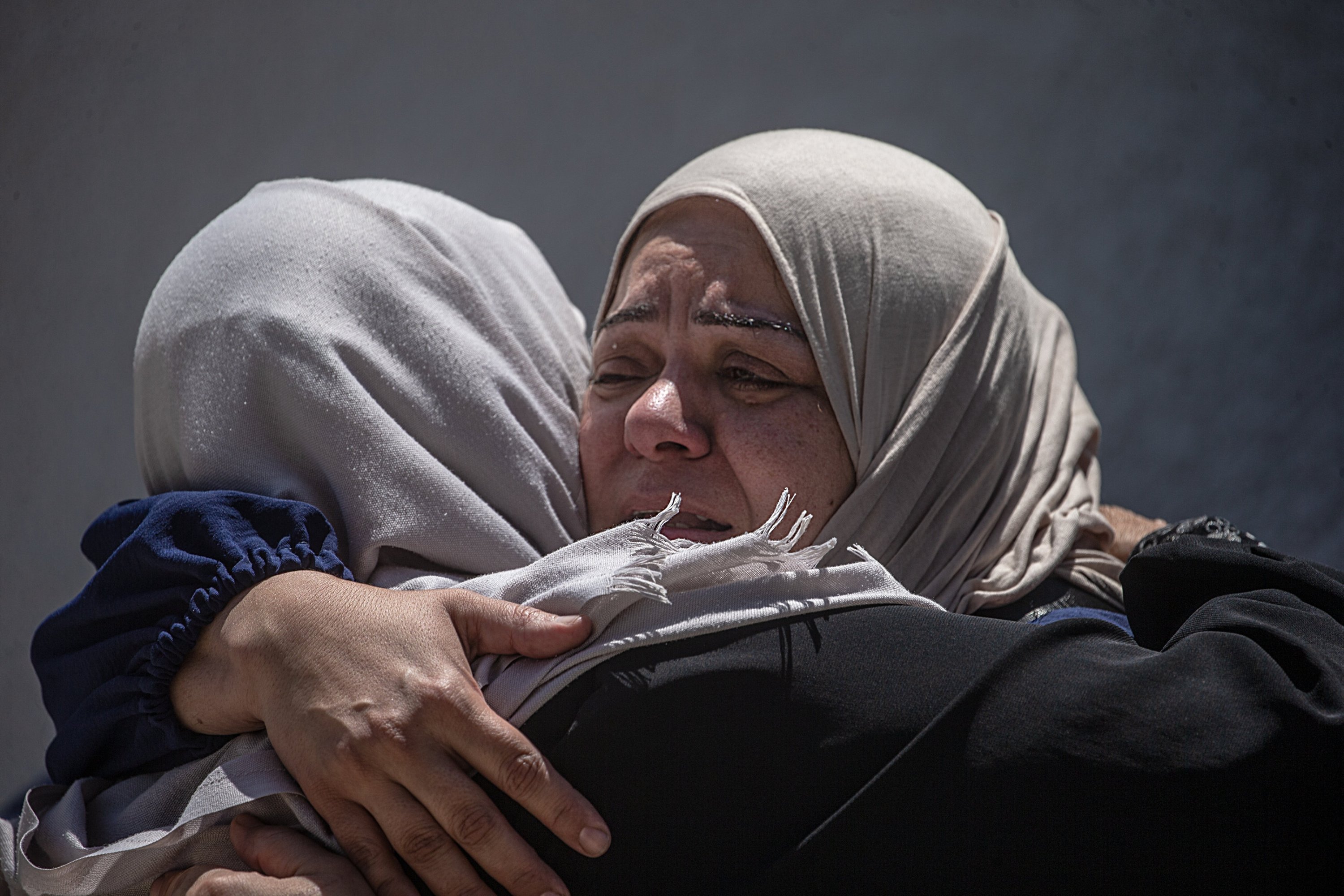
Witnesses described residential buildings hit during the attacks, leaving significant structural damage and civilian casualties, including women and children.
Israel’s military said some strikes targeted Hamas members and that precautions were taken to limit civilian harm, though other incidents were not immediately addressed.
The broader conflict began after the October 2023 Hamas incursion on southern Israel that killed about 1,200 people and saw 251 hostages taken.
Since then, Gaza has experienced sustained military operations, repeated displacement and widespread destruction.
International attention has also focused on attempts to break or challenge the blockade on Gaza. Members of the Global Sumud Flotilla say more than a dozen activists remain detained in Libya while attempting to travel overland toward Gaza. Organizers say the detentions are unlawful, while Libyan media report the group is being held over alleged entry violations and missing permits.
The flotilla movement has faced repeated setbacks, including earlier maritime attempts intercepted before reaching Gaza, with participants deported via Israel and Greece.
Israel has dismissed the initiatives as symbolic efforts with limited humanitarian impact.