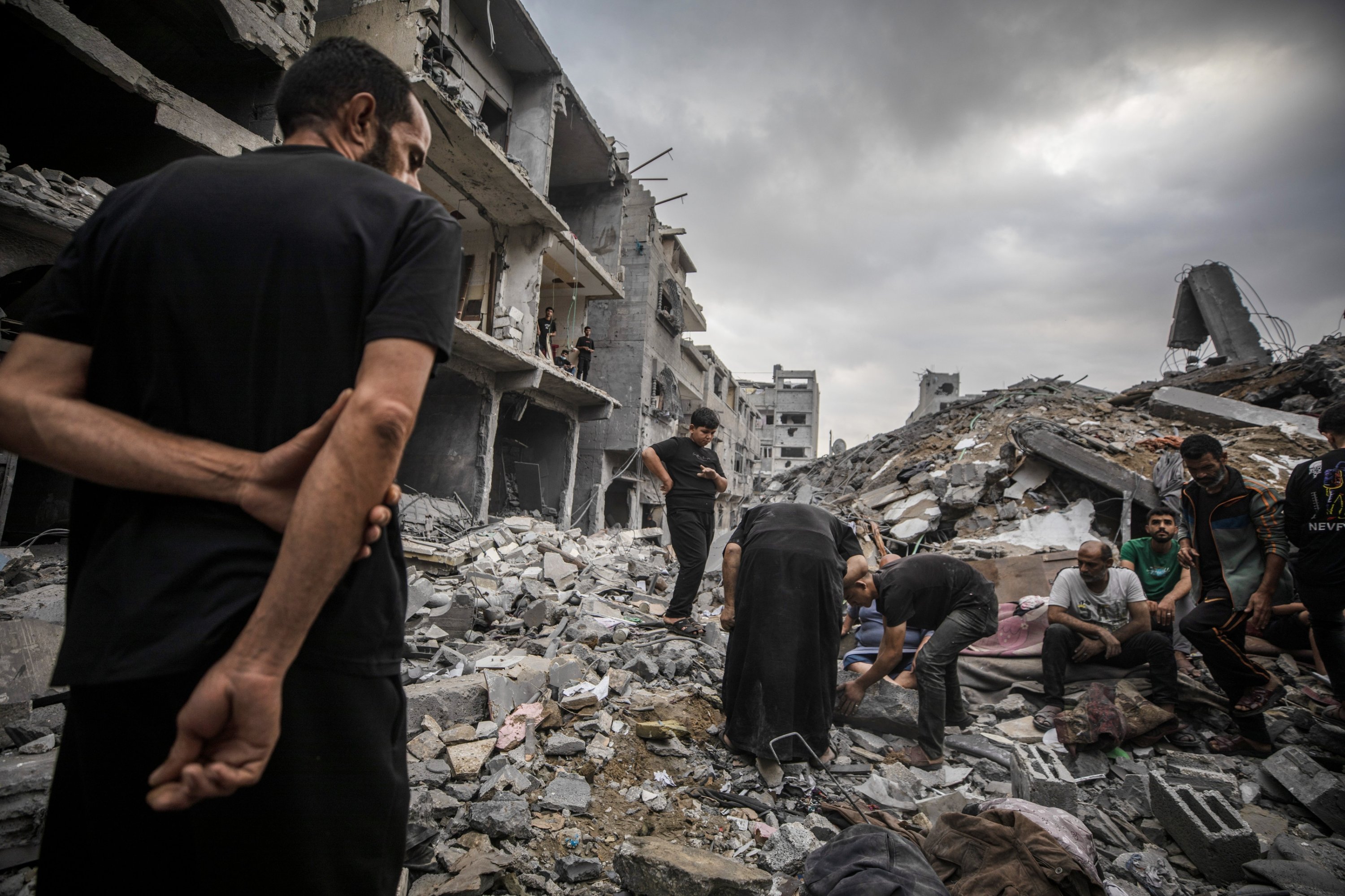
Thousands of Palestinian families remain desperate for answers about loved ones who disappeared during three years of Israeli attacks on Gaza, as widespread destruction, restricted access and limited forensic resources hamper efforts to find the missing.
The United Nations estimates that millions of tonnes of debris cover Gaza, while Palestinian Civil Defense says more than 8,000 people remain missing beneath the rubble. Others may have been detained or remain unaccounted for, leaving families uncertain whether their relatives are alive or dead.
Pat Griffiths, spokesperson for the International Committee of the Red Cross (ICRC) in Jerusalem, described seeing families gather at hospitals when buses carrying released Palestinian detainees arrive in Gaza. Some hold photographs of missing relatives, hoping to discover whether they are among those released.
Psychologists call this experience "ambiguous loss," a form of grief in which families cannot establish whether their loved ones are alive or dead.
"You don't know if your loved one you haven't heard from ... is alive or if they've been killed. You don't know if they're detained or not," Griffiths told Anadolu Agency (AA).
"Thousands of people live with this limbo. This pain of not knowing what to do or how to feel exactly. They're stuck."
Amani Al Naouq, an ICRC spokesperson in Gaza, said families repeatedly approach the organization seeking answers.
"If they are dead, we can be relieved. But the fact that we don't know if they are dead or alive," she recalled families saying. "That's one of the most difficult things for them."
Some continue contacting the ICRC even when answers are unavailable, simply needing somewhere to share their anguish. Others begin accepting that missing relatives have died without receiving confirmation, Al Naouq said.
The search is complicated by the scale of destruction across Gaza, where rubble may contain human remains, unexploded ordnance and evidence relevant to investigations into alleged international crimes.
An April 2026 damage assessment by the European Union, United Nations and World Bank estimated that removing and managing more than 68 million metric tons of debris would cost more than $1.7 billion.
Al Naouq said recovery teams have extremely limited heavy machinery, sometimes relying on just one or two excavators rented from private suppliers. Much of the work is performed with smaller equipment or by hand.
Teams also depend on families to identify where missing relatives were last seen, including specific buildings and rooms. Recounting those moments can force relatives to relive their inability to rescue loved ones.
"It's actually back again an open wound for these families," Al Naouq said.
Griffiths, who recently spent a week in Gaza, described seeing kilometers of rubble, much of it posing dangers from unexploded remnants of war. The ICRC supports the rental of two excavators, but he said the contribution was minimal compared with the need.
"The scale of the task ahead of them, it's daunting. It's huge," he said.
Restricted access prevents recovery teams from safely reaching large areas. DNA testing is also unavailable in Gaza, according to the ICRC, forcing forensic specialists to rely on details such as age, height, dental information, clothing, previous injuries and personal belongings.
Time further complicates identification as remains decompose and rubble movement separates them from their original locations.
"The more time passes, the harder identifying the deceased gets," Griffiths said, warning that searches can continue for decades, as seen in conflicts in Syria, Iraq, Afghanistan and the Balkans.
Mayy El Sheikh, of the U.N. Human Rights Office in the occupied Palestinian territory, recalled interviewing a 37-year-old woman with a disability whose husband disappeared during an attack on his family's home in northern Gaza in 2023. The couple have a 5-year-old son.
Almost everyone in her husband's family was killed. Some bodies were recovered, but his remains were not, El Sheikh said.
The woman believes she knows where he lies beneath the rubble but cannot reach the site because it is beyond the deployment line for Israeli forces, known as the "yellow line."
El Sheikh said the woman felt unable to help her son recover because he had no grave to visit. She also believed she had failed her husband by being unable to recover his remains and honor him through burial.
"For her, the war is not over until her husband is found," El Sheikh said.
Other families have believed missing relatives were dead before recognizing them alive in photographs or videos from Israeli prisons, she added.
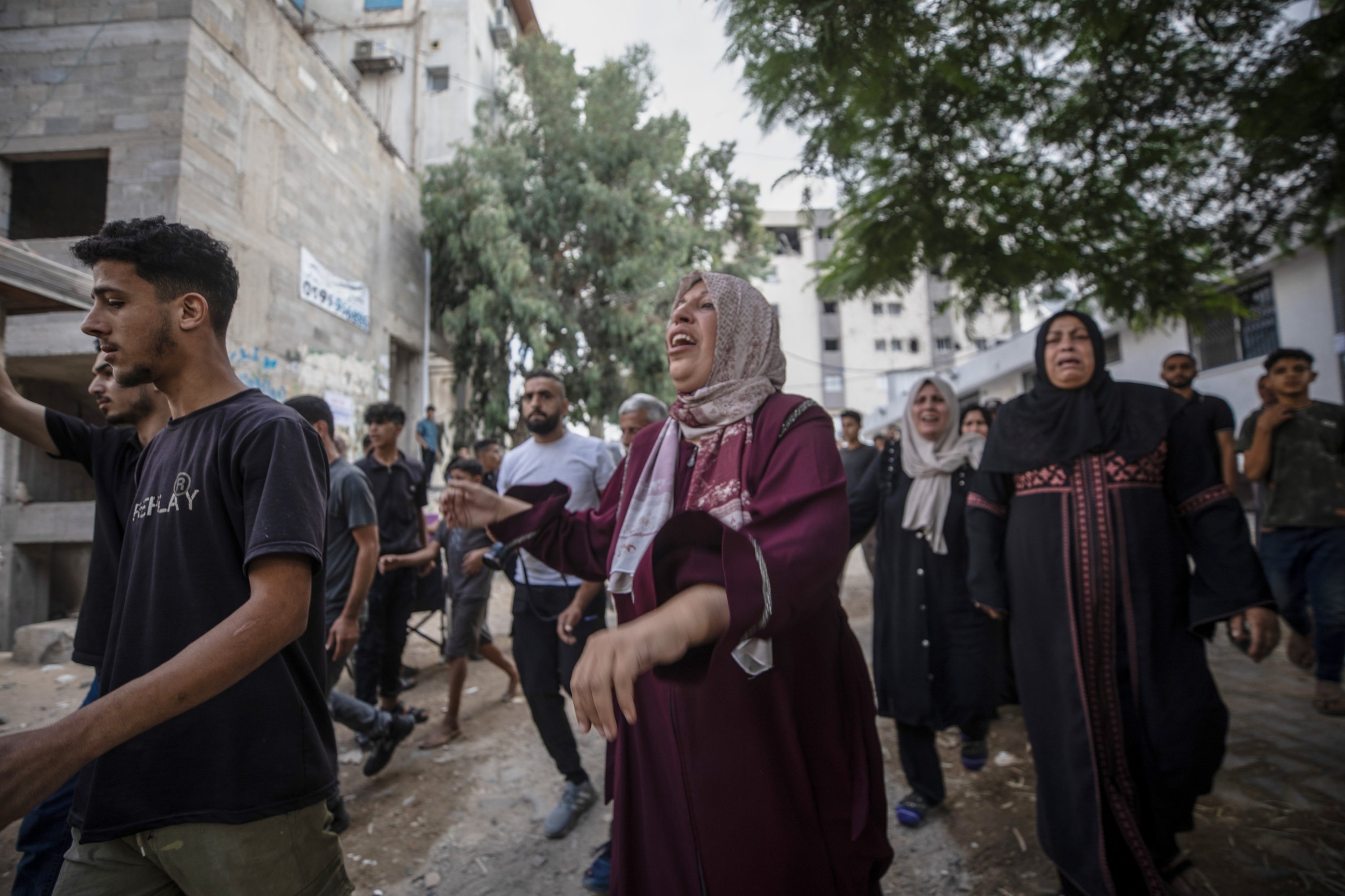
The destruction of Gaza's ruins has raised concerns that human remains and evidence of alleged international crimes could disappear.
Francesca Albanese, the U.N. special rapporteur on the occupied Palestinian territory, has warned that removing, crushing and relocating rubble in areas under Israeli military control could destroy evidence.
El Sheikh said restricted access, reported debris removal and limited forensic resources have increased the risk that evidence is being lost or damaged. Large areas remain inaccessible to independent observers and investigators.
She also cited reports of remains being returned to Palestinian authorities without identifying information or details about where they were recovered.
"They have returned remains to the Palestinian authorities, sometimes even partial remains with no identification and no clarity on where they were recovered or how they were killed," she said.
Srinivasan Muralidhar, chair of the U.N. Independent International Commission of Inquiry on the occupied Palestinian territory, including East Jerusalem, and Israel, said the commission had received reports of rubble removal that could destroy evidence.
"We are concerned that the removal of rubble could result in evidence getting lost forever," he said.
Evidence recovered from destroyed buildings can complement witness testimony, medical records and forensic findings, helping investigators reconstruct events. Although losing evidence would not necessarily prevent investigations into alleged crimes, Muralidhar said, it could leave important gaps.
He also emphasized families' right to know what happened to their relatives.
"In international law, there is a known concept of the right to the truth. Every family wants to know what exactly happened," he said.
Griffiths called for more heavy machinery, greater humanitarian access and safe passage for recovery teams to reach areas currently beyond their reach.
Muralidhar urged international cooperation to accelerate debris removal while protecting potential evidence and preventing further destruction.
"We have to have cooperation across countries to help clear the rubble quicker," he said, warning that continued attacks could make recovery increasingly difficult.
The ICRC has supported a cemetery for unidentified dead in Deir al-Balah, where recovered remains can be buried individually while information is preserved for future identification.
Forensic teams document available identifying details and assign each unidentified person a unique serial number linked to their burial record. The ICRC is also supporting an information-sharing system connecting recovery teams, forensic authorities and cemetery administrators.
The effort could enable future identification if DNA testing becomes available in Gaza.
During a visit to the cemetery, Griffiths and Al Naouq met a young woman whose husband's remains had been identified using available forensic methods.
"She could visit his grave, she could stand at his grave, to be near him," Griffiths said, describing the closure the burial provided.