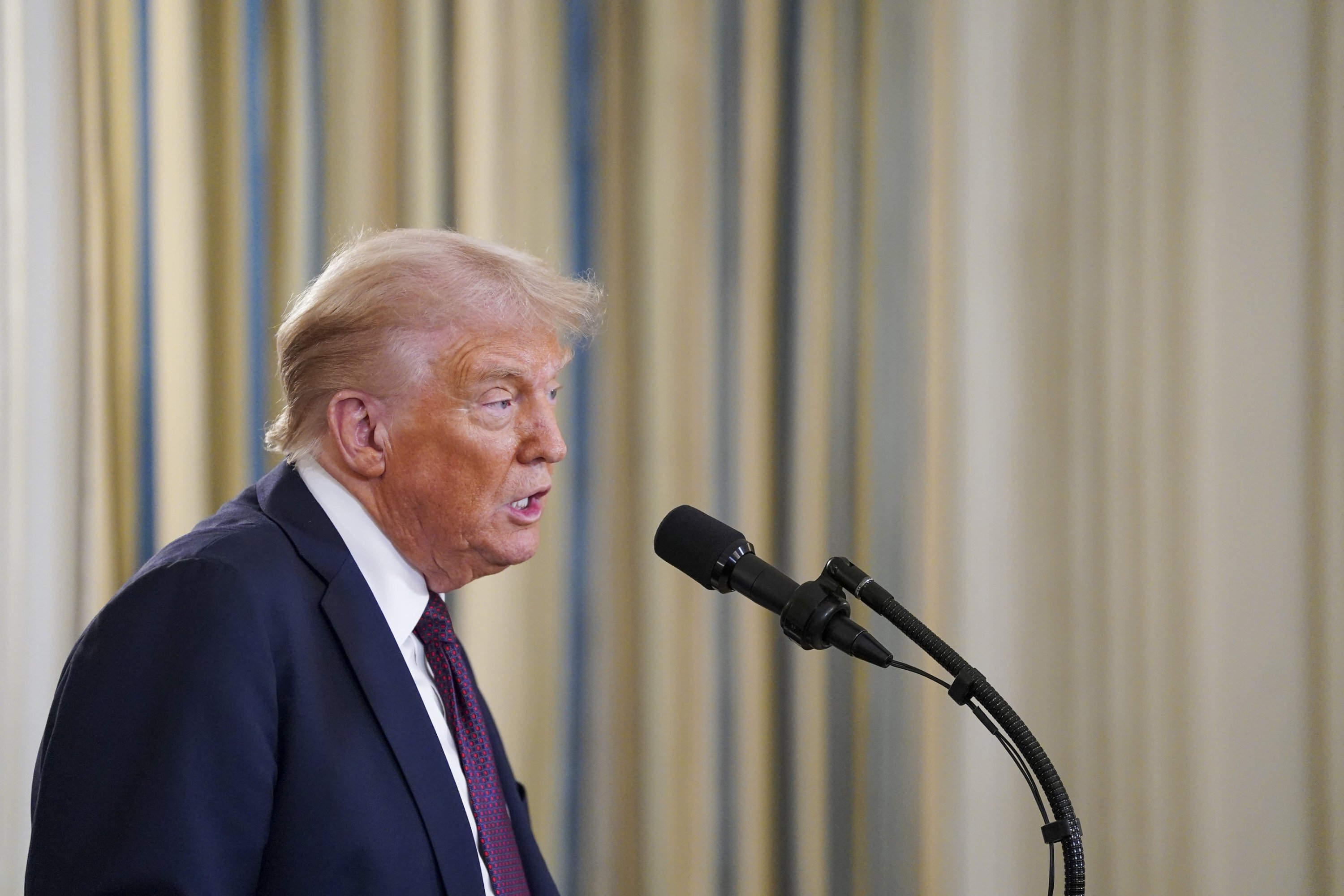
Egyptian media reported that Egypt and Qatar have delivered to Hamas a U.S. cease-fire proposal put forward by President Donald Trump to end the war in Gaza.
The Al-Qahera News channel, citing an unnamed Egyptian source, said Egyptian and Qatari mediators delivered the American proposal to the Palestinian resistance group.
Hamas affirmed that it is "reviewing the proposal positively and objectively," the source added.
Earlier Monday, Trump outlined key points of his Gaza cease-fire plan during a joint news conference in Washington with Israeli Prime Minister Benjamin Netanyahu. The proposal includes the release of Israeli captives and the disarmament of Hamas.
Residents of war-torn Gaza expressed scepticism over the latest peace plan unveiled by Trump, dismissing it as a farce that fails to end the war.
"It's clear that this plan is unrealistic", 39-year-old Ibrahim Joudeh told AFP from his shelter in the so-called humanitarian zone of Al-Mawasi in south Gaza.
"It's drafted with conditions that the U.S. and Israel know Hamas will never accept. For us, that means the war and the suffering will continue," said the computer programmer, originally from the southern city of Rafah, devastated by Israel's genocidal attacks.
The residents spoke shortly after Trump unveiled his 20-point plan aimed at ending the war and to which Israeli Prime Minister Benjamin Netanyahu offered his backing after the two held talks at the White House.
The plan calls for a cease-fire, release of hostages by Hamas, disarmament of Hamas and gradual Israeli withdrawal from Gaza.
Other key points include deployment of a "temporary international stabilization force" and creation of a transitional authority headed by Trump himself and featuring other foreign leaders.
The plan also stipulates that Hamas and other armed factions would not have any role in the governance of Gaza, directly, indirectly, or in any form.
Abu Mazen Nassar, 52, was equally pessimistic and feared that the plan aimed to trick Palestinian factions into releasing hostages held in Gaza and no peace in return.
"This is all manipulation. What does it mean to hand over all the prisoners without official guarantees to end the war?" said Nassar, displaced from his home in north Gaza in central Gaza's Deir el-Balah. But others like 29-year-old homemaker Najwa Muslim, could no longer imagine anything changing.
"I haven't only lost faith in the deal; I've lost faith in life," Muslim told AFP from central Gaza, where she sought refuge after being displaced from Gaza City, currently under a massive Israeli military offensive.
"If there was a real intention to stop the war, they wouldn't have waited this long. That's why I don't believe any of their words."
On Monday, at least 30 people were killed across Gaza in Israeli strikes, according to Gaza's civil defence agency, which operates under Hamas authority.
After almost two years of war and countless attempts at cease-fire deals for Gaza, every new announcement is met with suspicion, even when Trump publicly presented a deal Monday alongside a cautious Netanyahu in an unprecedented move.
Mohammed al-Beltaji, a 47-year-old from Gaza City, summarised his view of negotiations to AFP.
"As always, Israel agrees, then Hamas refuses – or the other way around. It's all a game, and we, the people, are the ones paying the price."
Earlier Monday, a large plume of black smoke billowed over the hundreds of tents that made up a camp for the displaced in Khan Younis.