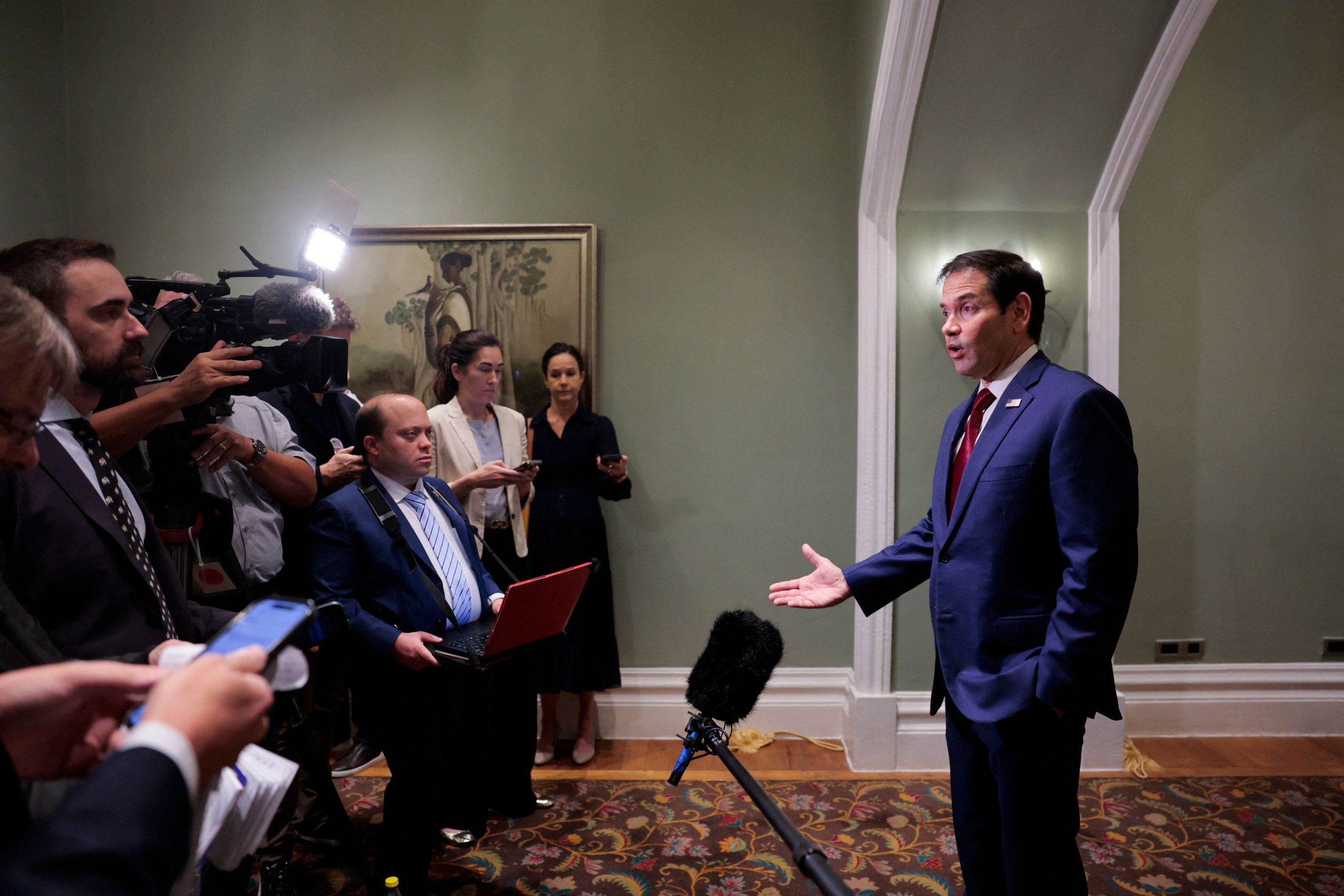
U.S. Secretary of State Marco Rubio and Qatari Prime Minister Sheikh Mohammed bin Abdulrahman Al Thani discussed efforts to ease escalating Middle East tensions and safeguard maritime navigation through the strategic Strait of Hormuz during a phone call Thursday, as diplomatic efforts continue to prevent further regional instability.
Rubio expressed appreciation for Qatar's ongoing mediation efforts in the region and reaffirmed Washington's commitment to the Gulf nation's security and freedom of navigation through the vital waterway, according to a statement from the U.S. State Department.
Qatar's Foreign Ministry said the two officials, with Sheikh Mohammed also serving as foreign minister, reviewed the latest regional developments and discussed ways to strengthen the strategic partnership between Doha and Washington.
Their talks focused on ongoing diplomatic initiatives and joint coordination aimed at reducing tensions, enhancing regional security and promoting stability across the Middle East.
Sheikh Mohammed reiterated Qatar's support for diplomatic efforts to reach a settlement that would guarantee freedom of maritime navigation and pave the way for a comprehensive agreement capable of securing lasting regional peace, the ministry said.
The discussions come amid persistent tensions surrounding the Strait of Hormuz, one of the world's most strategically important maritime corridors and a crucial transit route for global oil and liquefied natural gas shipments.
Washington and Tehran remain divided over navigation rights in the waterway, with Iran asserting its authority to regulate passage through the strait while the United States insists on unrestricted maritime access.
The dispute has heightened concerns over regional security and the potential consequences of disruptions to international energy supplies.
Qatar, which maintains diplomatic channels with both Washington and Tehran, has played an active role in mediation efforts aimed at reducing tensions and facilitating negotiations between the two sides.
Thursday's call underscored the importance both countries attach to continued diplomatic engagement as efforts intensify to prevent further escalation and secure a negotiated resolution to regional disputes.