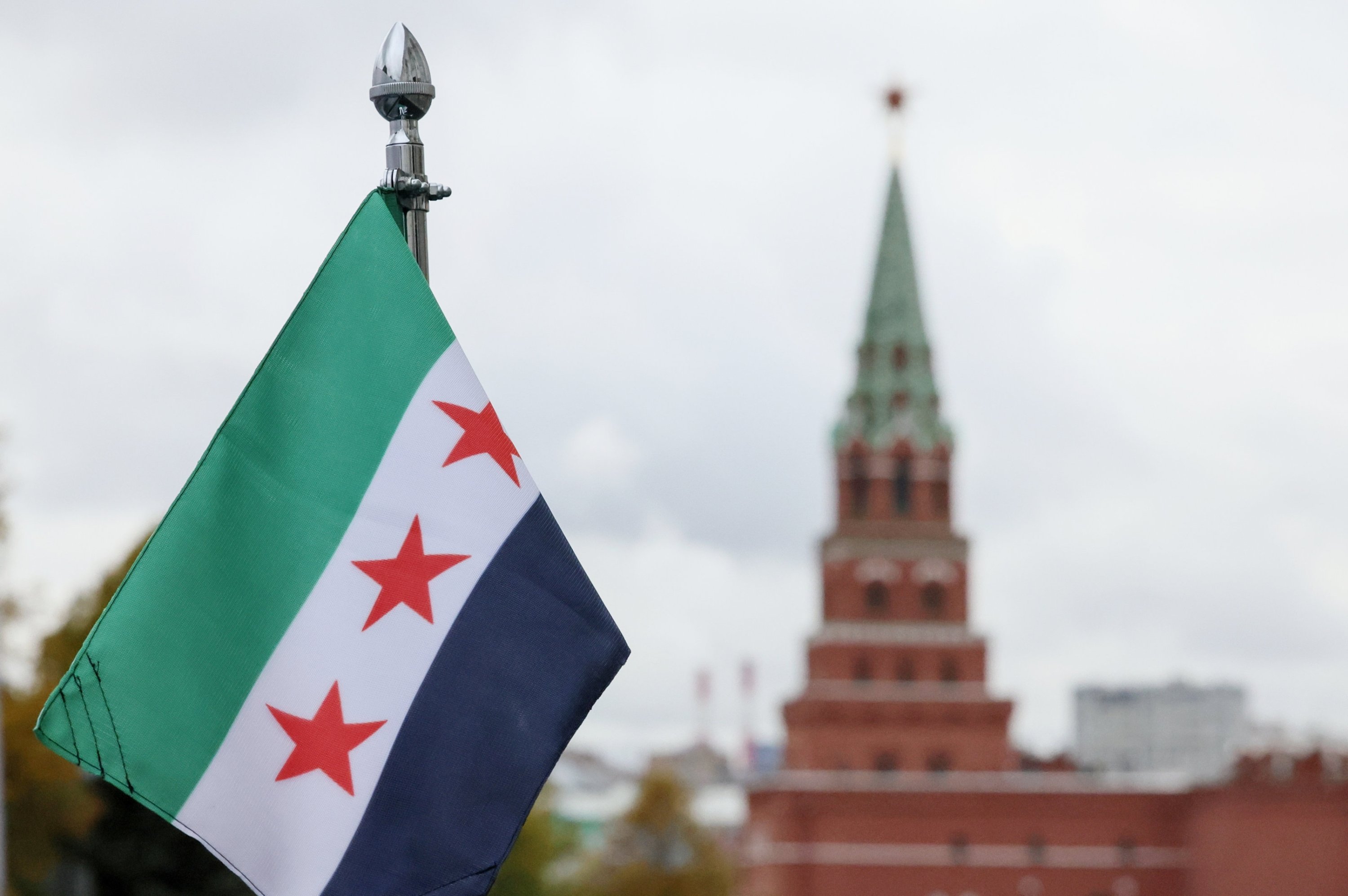
Russian Defense Minister Andrei Belousov met his Syrian counterpart, Murhaf Abu Qasra, in Moscow to discuss strengthening defense and political cooperation, as both sides seek to redefine their long-standing alliance following the rise of Syria’s new government under President Ahmed al-Sharaa.
The Russian Defense Ministry said Tuesday that the talks focused on the “practical implementation of promising areas of bilateral cooperation.” The meeting came just weeks after Syrian President al-Sharaa’s landmark visit to Moscow, where he met with Russian President Vladimir Putin and pledged to uphold all existing agreements – a signal that Russia’s strategic military bases in Tartus and Hmeimim remain secure.
Putin and al-Sharaa’s meeting in mid-October marked the first top-level engagement since Bashar Assad’s ouster last December. During the Kremlin talks, al-Sharaa said he aimed to “redefine” relations with Moscow, while Putin emphasized the countries’ “special” ties dating back to the Soviet era.
Syrians living in Moscow voiced cautious optimism about the warming relations between the two nations. “We thank God that the old Assad regime is gone. Now we hope that we will have peace in Syria,” said Basel al-Ekrad, a 26-year-old medical student. Others echoed similar hopes for stability, even as memories of Russian air strikes during the 14-year civil war remain painful for many.
Despite sheltering Assad and his family for the past 10 months, Moscow appears keen to consolidate ties with the new Syrian leadership. Syrian officials said a delegation was headed to Moscow for technical talks on restoring embassy operations, signaling a normalization push.
More than 4,000 Syrians currently study in Russian universities – a continuation of academic links that began in the Soviet period. Al-Sharaa’s brother and close aide, Maher al-Sharaa, studied in the Russian city of Voronezh in the early 2000s, reflecting the enduring personal and institutional connections between the two countries.
As Russian and Syrian defense officials reaffirm cooperation, observers see Moscow’s engagement as an attempt to preserve its influence in the Middle East while adapting to a post-Assad Syria.