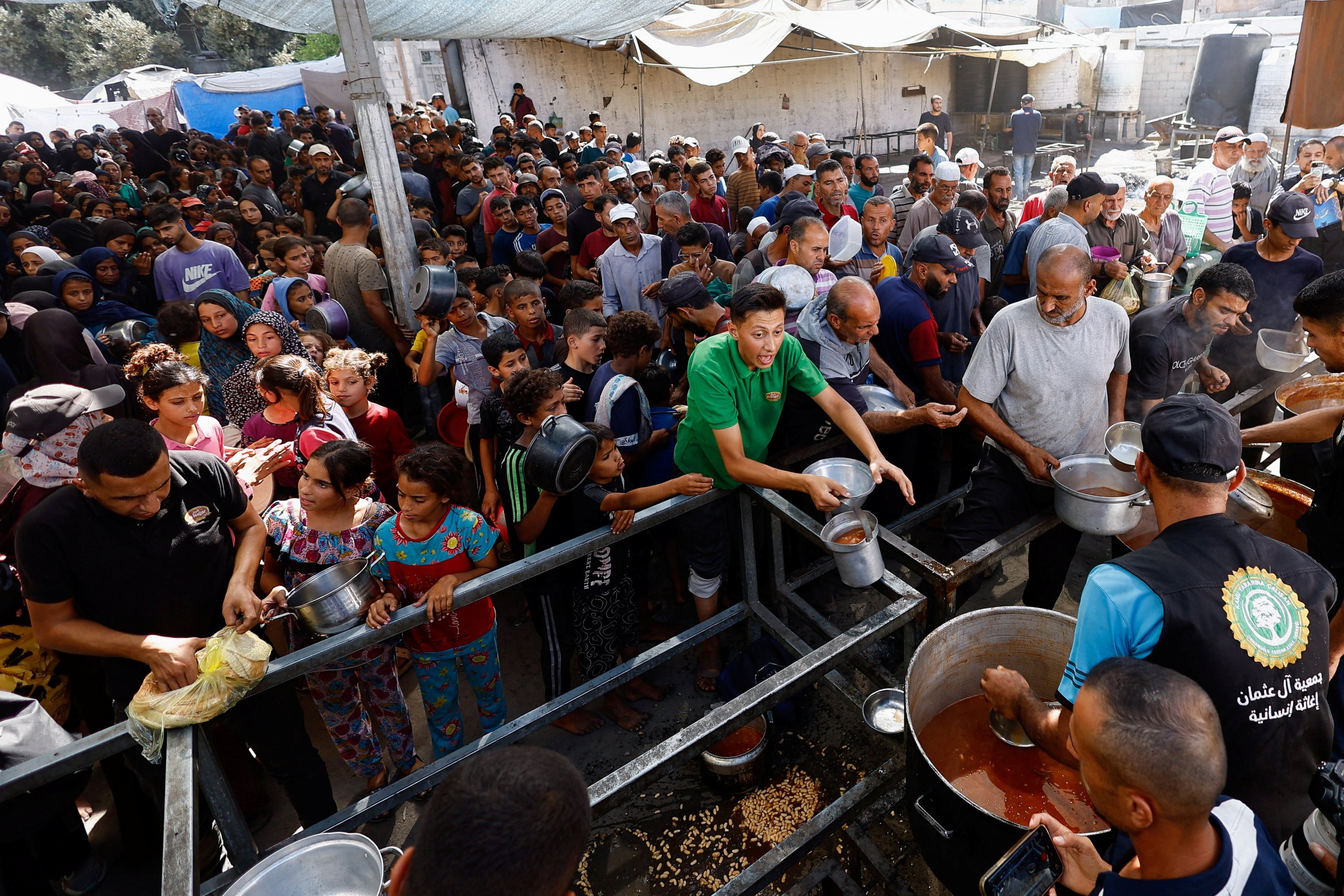
A U.N. official said Israel has authorized the United Nations to begin delivering humanitarian aid to Gaza starting Sunday.
The official spoke on the condition of anonymity to discuss details not yet made public.
The aid will include 170,000 metric tons that have already been positioned in neighboring countries such as Jordan and Egypt, as humanitarian officials await permission from Israeli forces to restart their work.
In the last several months, the U.N. and its humanitarian partners have only been able to deliver 20% of the aid needed in the Gaza Strip, according to U.N. humanitarian chief Tom Fletcher. Israel has been criticized for weaponizing humanitarian aid, leading to a famine in the blockaded Palestinian enclave. The mounting backlash over aid restrictions and the worsening humanitarian crisis in Gaza have been cited by several countries as a factor in their moves toward recognizing Palestinian statehood.
Tens of thousands of Palestinians headed back to the heavily destroyed northern Gaza Strip on Friday as a U.S.-brokered cease-fire came into effect. The deal has raised hopes for ending Israel's genocidal war, with all the remaining hostages taken set to be released within days.
Questions remain over who will govern Gaza as Israeli troops gradually pull back and whether Hamas will disarm, as called for in U.S. President Donald Trump's ceasefire plan. Prime Minister Benjamin Netanyahu, who unilaterally ended a cease-fire in March, hinted that Israel might renew its offensive if Hamas does not give up its weapons.
The fighting has killed tens of thousands of Palestinians and displaced around 90% of the Gaza population of some 2 million, often multiple times. Many of them will find fields of rubble where their homes once stood.
The military confirmed the start of the cease-fire on Friday, and the remaining 48 hostages, around 20 of them believed to be alive, are to be released by Monday. Palestinians said heavy shelling in parts of Gaza earlier on Friday had mostly stopped after the military's announcement.
Netanyahu said in a televised statement Friday that the next stages would see Hamas disarm and Gaza demilitarized.
The Israeli military has said it will continue to operate defensively from the roughly 50% of Gaza it still controls after pulling back to the agreed-upon lines.
A steady stream of people, the vast majority on foot, crammed onto a coastal road in the central Gaza Strip, heading north to see what might remain of their homes. It was a repeat of emotional scenes from an earlier cease-fire in January. Others headed to other parts of the Palestinian territory in the south.
The destruction they find this time will be even greater, after Israel waged its genocidal attacks in Gaza City, in the north, in recent weeks. The military bombed high-rises and blew up homes and destroying Gaza's infrastructure.
Palestinians have expressed relief that the war may end, tempered with concern about the future and lingering pain from the staggering death and destruction.
"There wasn’t much joy, but the cease-fire somewhat eased the pain of death and bloodshed, and the pain of our loved ones and brothers who suffered in this war,” said Jamal Mesbah, who was displaced from the north and plans to return.
In Gaza's southern city of Khan Younis, hundreds of Palestinians returning to their homes found wrecked buildings, rubble and destruction after Israeli troops withdrew.
"There was nothing left. Just a few clothes, pieces of wood and pots,” said Fatma Radwan, who was displaced from Khan Younis. People were still trying to retrieve bodies from under the rubble, she added.
Many buildings were flattened, and none were undamaged, as people went back to search for their belongings. "We came to a place that is unidentifiable. An unidentifiable town. Destruction is everywhere,” said Hani Omran, who was also displaced from Khan Younis.
More than 67,000 Palestinians have been killed in Israeli attacks in Gaza and nearly 170,000 wounded, according to Gaza’s Health Ministry.
Israel also attacked other countries in the region, sparking worldwide protests and leading to allegations of genocide.
Israel is set to release around 2,000 Palestinians in exchange for the remaining hostages. A list Israel published Friday did not include high-profile prisoner Marwan Barghouti, the most popular Palestinian leader and a potentially unifying figure. Israel views him and other high-profile prisoners as terrorists and has refused to release them in past exchanges.
Khalil al-Hayya, a senior Hamas official and lead negotiator, said Thursday evening that all women and children held in Israeli jails will be freed.
The hostage releases are expected to begin Monday, two Egyptian officials briefed on the talks and a Hamas official said, though another official said they could occur as early as Sunday night. The officials spoke on condition of anonymity because they were not authorized to be publicly named when speaking about the negotiations.
As part of the deal, five border crossings are expected to reopen, including the Rafah crossing between Gaza and Egypt, Egyptian and Hamas officials said. That will allow aid to flow into the territory, parts of which are experiencing famine.
The Trump plan calls for Israel to maintain an open-ended military presence inside Gaza, along its border with Israel. An international force, comprised largely of troops from Arab and Muslim countries, would be responsible for security inside Gaza.
To help support and monitor the cease-fire deal, U.S. officials said they would send about 200 troops to Israel as part of a broader, international team. The officials spoke on condition of anonymity to discuss details not authorized for release.
The U.S. would also lead a massive internationally funded reconstruction effort.
The plan envisions an eventual role for the Palestinian Authority - something Netanyahu has long opposed. But it requires the authority, which administers parts of the West Bank, to undergo a sweeping reform program that could take years.
The Trump plan is even more vague about a future Palestinian state, which Netanyahu firmly rejects.
Follow AP’s war coverage at https://apnews.com/hub/israel-hamas-war