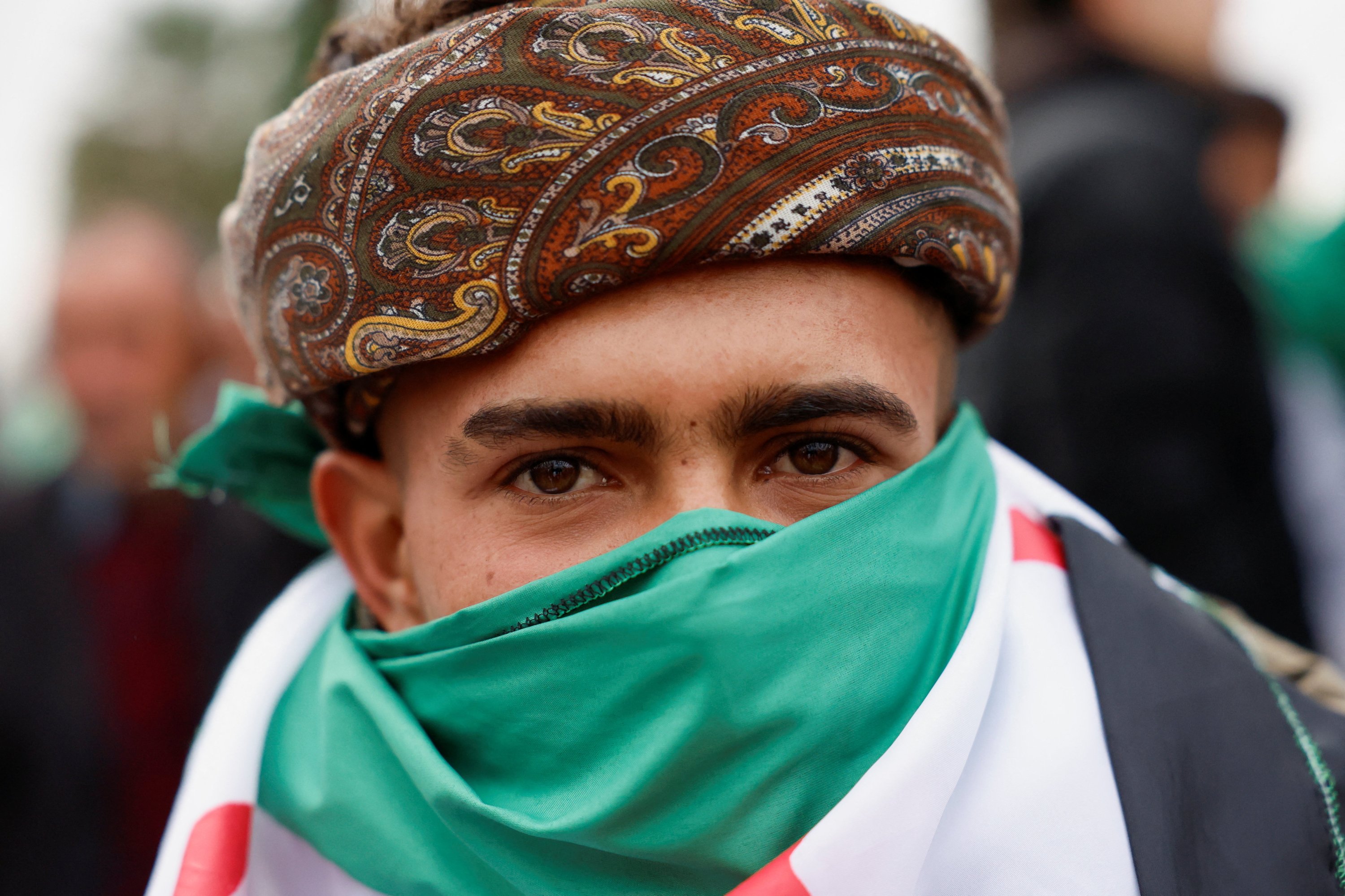
One year after the collapse of Syria’s Baath regime, the fireworks over Umayyad Square and the chants of a liberated capital cannot drown out a quieter truth: for tens of thousands of families still searching for the disappeared, the revolution’s victory has yet to bring peace.
The fall of Bashar Assad on Dec. 8, 2024 – ending more than six decades of Baathist rule – reshaped the country with breathtaking speed.
The Hayat Tahrir al-Sham (HTS) forces swept through major cities in a lightning ten-day offensive, culminating in the storming of Damascus and Assad’s flight to Moscow.
Syria’s streets erupted in celebration; survivors of barrel bombs, starvation sieges and notorious prisons poured into public squares waving the three-star revolutionary flag.
But the euphoria soon met the hard edge of memory.
A year into Syria’s fragile transition, the unresolved fate of an estimated 150,000 missing people remains one of the deepest wounds of a war that claimed half a million lives and displaced millions more.
For decades, the Baath state functioned through secrecy and fear: emergency laws, sprawling intelligence branches, and prisons designed to break bodies and erase names.
The uprising that began in 2011 cracked that facade; the civil war that followed exposed it.
Saydnaya prison – described by rights groups as a “human slaughterhouse” – became a symbol of the state’s machinery of disappearance.
When rebels opened its doors on the day Assad fled, survivors staggered out into the sunlight, bewildered and skeletal.
Yet thousands never emerged.
Their absence now haunts the new Syria as profoundly as their imprisonment once did.
For Amina Beqai, the new dawn has delivered neither answers nor closure.
Every morning she opens her laptop, typing her husband’s name – Mahmoud, arrested in April 2012 – and her brother Ahmed, detained four months later.
She searches through grainy photos of corpses, leaked documents, and lists published by Syrian outlets granted access to abandoned detention sites.
“It’s been a year and nothing has changed,” she said. “Is it possible they still haven’t found the documents? We only want the truth.”
Her hope flickered when the interim government formed the National Commission for Missing Persons in May.
But months later, no records have been handed to families. No graves have been opened. No death certificates delivered.
“When the prisons were opened and they didn’t come back – that was when hope died,” Beqai said.
Some families have found answers, but only through chance.
In one spreadsheet obtained by Reuters after Assad’s fall, the name of Ali Mohsen al-Baridi appeared among the dead at Saydnaya, with a date of death – Oct. 22, 2019 – and an instruction that his body never be returned to his family.
His widow, Sarah al-Khattab, had waited six years with no word.
Activists informed her only after they verified the document’s authenticity.
These rare confirmations underscore how much remains buried – in files, in shallow graves, and in the memories of survivors.
Zeina Shahla, spokesperson for the national commission, acknowledged the slow pace but insisted the work must be “careful, scientific and systematic.”
The body has secured cooperation agreements with the International Red Cross and the International Commission on Missing Persons, seeking training and DNA-testing capacity.
A unified database of the missing is expected next year. Exhumations may not begin until 2027.
But rights groups say the centralized approach's slow pace failing families.
In November, the commission warned families against relying on unofficial sources, threatening legal action against outlets publishing leaked files.
For many survivors, the reckoning is personal.
A year ago, Mohammad Marwan stepped barefoot into freedom as rebels pried open Saydnaya’s gates.
Arrested in 2018 for avoiding conscription, he had endured six years of beatings, electric shocks and starvation.
“They told us, ‘You have no rights here,’” he recalled.
His return to his village in Homs province brought jubilation – and then the long battle to heal. He developed tuberculosis, anxiety and insomnia.
Therapy and medical treatment have helped, but the scars remain.
“We were living in death,” he said. “Now we are learning how to live again.”
Syria is attempting the same.
Power is back in major cities, international sanctions are easing, and a transitional government led by Ahmed al-Sharaa is trying to rebuild institutions hollowed out by war.
But economic hardship and tense relations with the SDF and foreign actors leave the country unsettled.
In “truth tents” that have sprung up across liberated towns, families gather to share photos, recite names and demand answers once forbidden to ask.
Among them is Alia Darraji, whose teenage son vanished near Damascus in 2014.
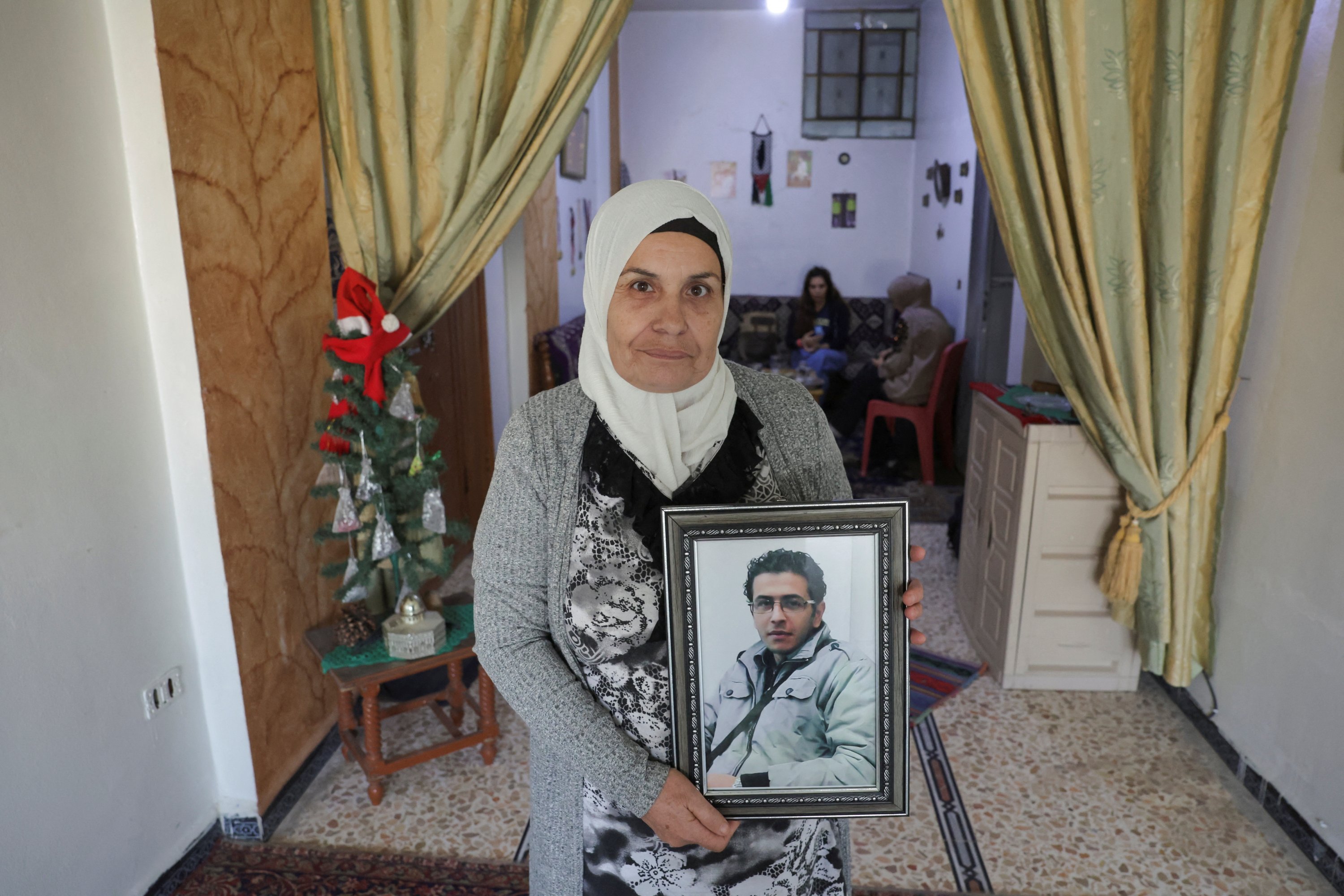
“I was hoping to find his body, to bury him, or to learn where he is,” she said softly. “One year later, we still know nothing.”