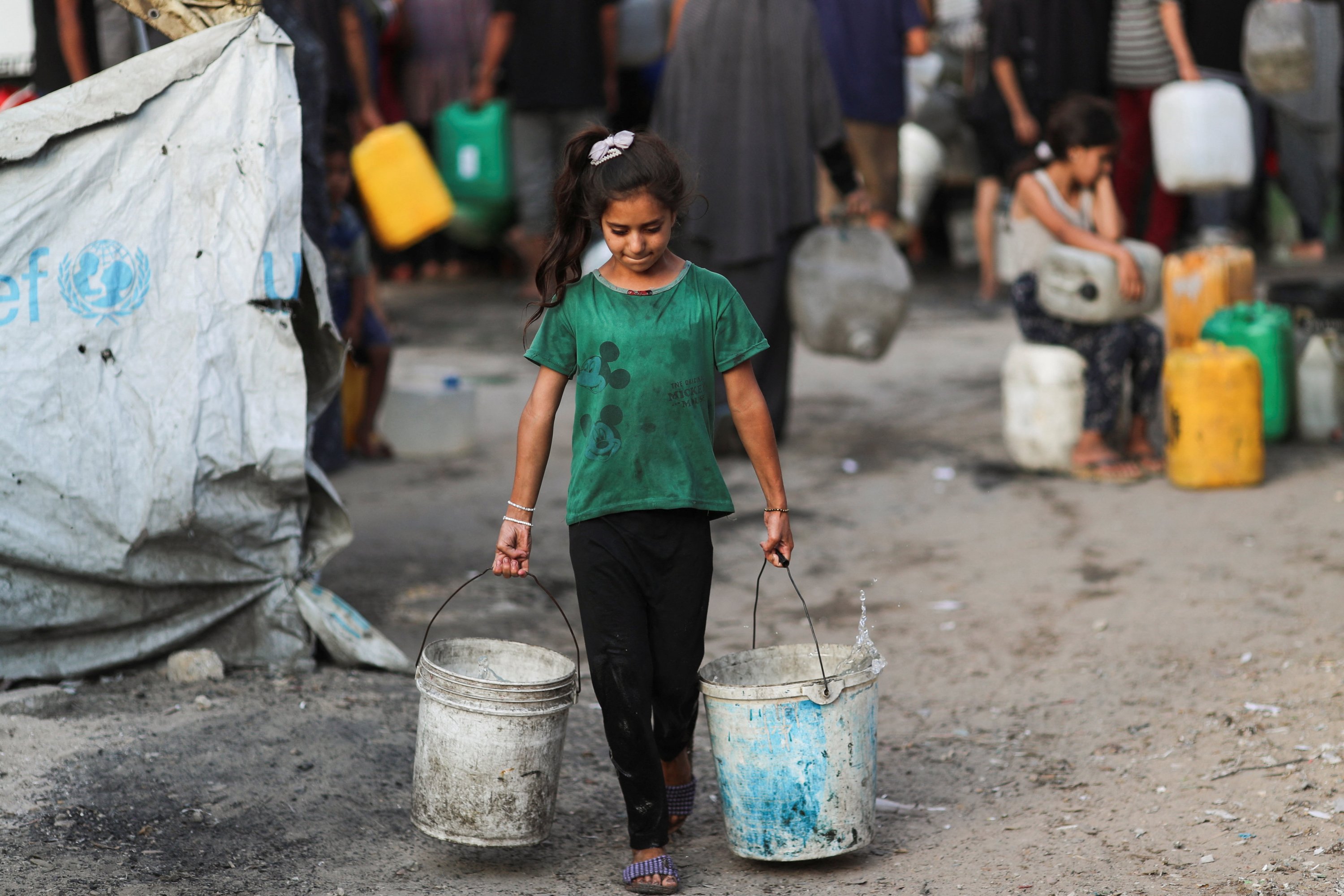
Driven by thirst and weakened by hunger, many Gazans now make daily treks across a shattered landscape to collect what little water they can – often far below the minimum needed to stay healthy.
As the world focuses on the growing threat of famine in Gaza, aid agencies warn that the territory’s water crisis is just as dire.
After nearly two years of relentless Israeli military assault, access to safe water has all but collapsed.
Some aid groups operate small desalination units, but most residents rely on wells tapped into a brackish aquifer now contaminated by sewage and toxic chemicals leaking through the rubble – fueling outbreaks of diarrhea and hepatitis.
Once a lifeline, Israeli pipelines that supplied much of Gaza’s clean water ran dry early in the war. Although limited flows resumed later, officials say the infrastructure is so damaged that no water has entered the enclave in recent weeks.
COGAT, the Israeli military aid coordination agency, did not respond to a request for comment on whether Israel is supplying water.
Most water and sanitation infrastructure has been destroyed, and pumps from the aquifer often rely on electricity from small generators – for which fuel is rarely available.
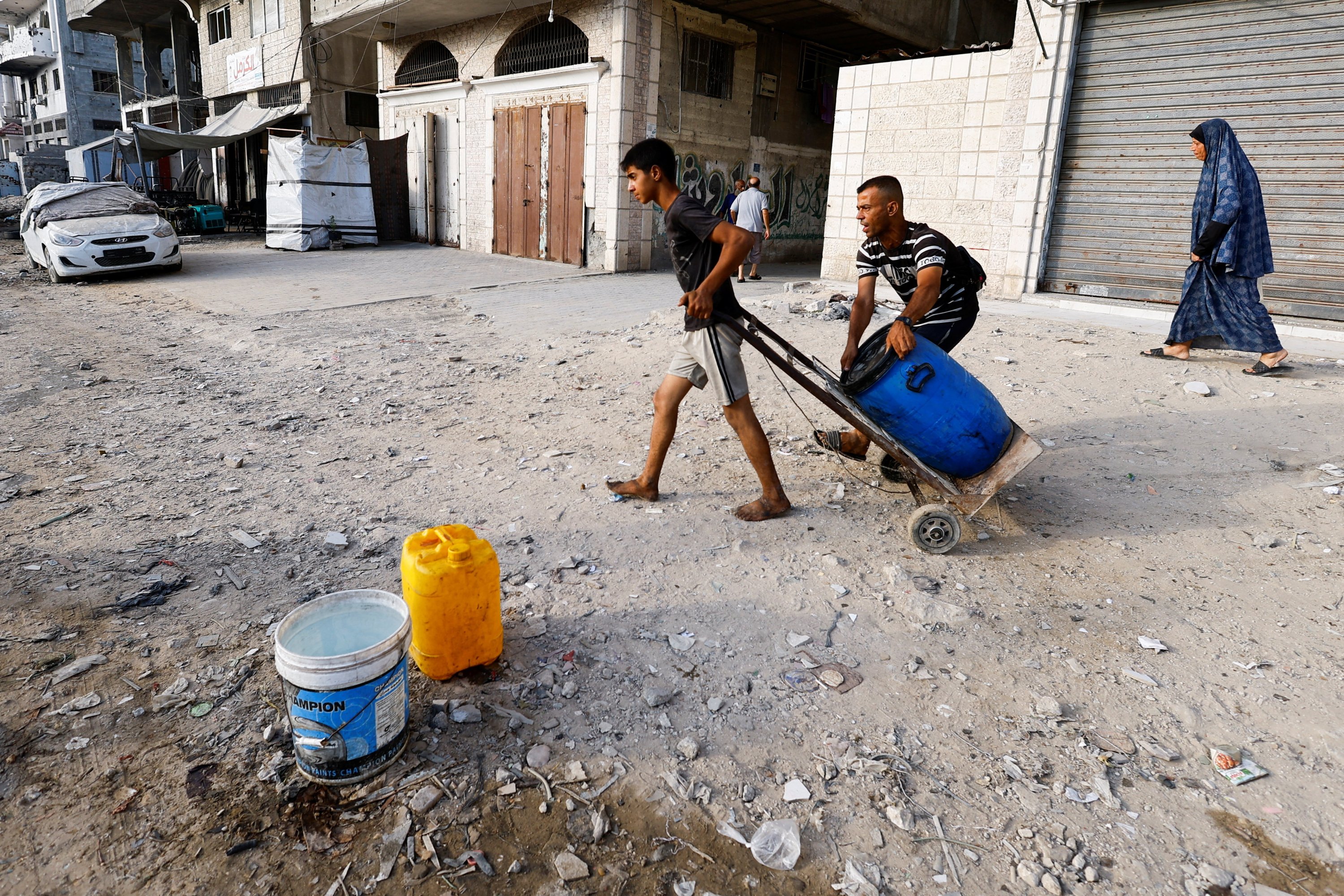
Moaz Mukhaimar, 23, a university student before the war, said he has to walk about a kilometer and wait in line for two hours to fetch water. He often goes three times a day, dragging it back to the family tent over bumpy ground on a small metal handcart.
“How long will we have to stay like this?” he asked, pulling two larger canisters of very brackish water for cleaning and two smaller ones of cleaner water for drinking.
His mother, Umm Moaz, 53, said the water he collects is needed for the extended family of 20 people living in their small group of tents in Deir al-Balah in the central Gaza Strip.
“The children keep coming and going and it is hot. They keep wanting to drink. Who knows if tomorrow we will be able to fill up again,” she said.
Their struggle for water is repeated across the tiny, crowded territory, where nearly everyone is living in temporary shelters or tents without sewage or hygiene facilities and without enough water to drink, cook and wash as disease spreads.
The United Nations says the minimum emergency level of water consumption per person is 15 liters a day for drinking, cooking, cleaning and washing. Average daily consumption in Israel is around 247 liters a day, according to the Israeli human rights group B’Tselem.
Bushra Khalidi, humanitarian policy lead for the aid agency Oxfam in the Israeli-occupied Palestinian territories, said average consumption in Gaza is now just 3 to 5 liters a day.
Oxfam said last week that preventable and treatable waterborne diseases were “ripping through Gaza,” with reported rates increasing by almost 150% over the past three months.
“Water scarcity is definitely increasing very much each day, and people are basically rationing between whether they want to use water for drinking or for hygiene,” said Danish Malik, global water and sanitation official for the Norwegian Refugee Council.
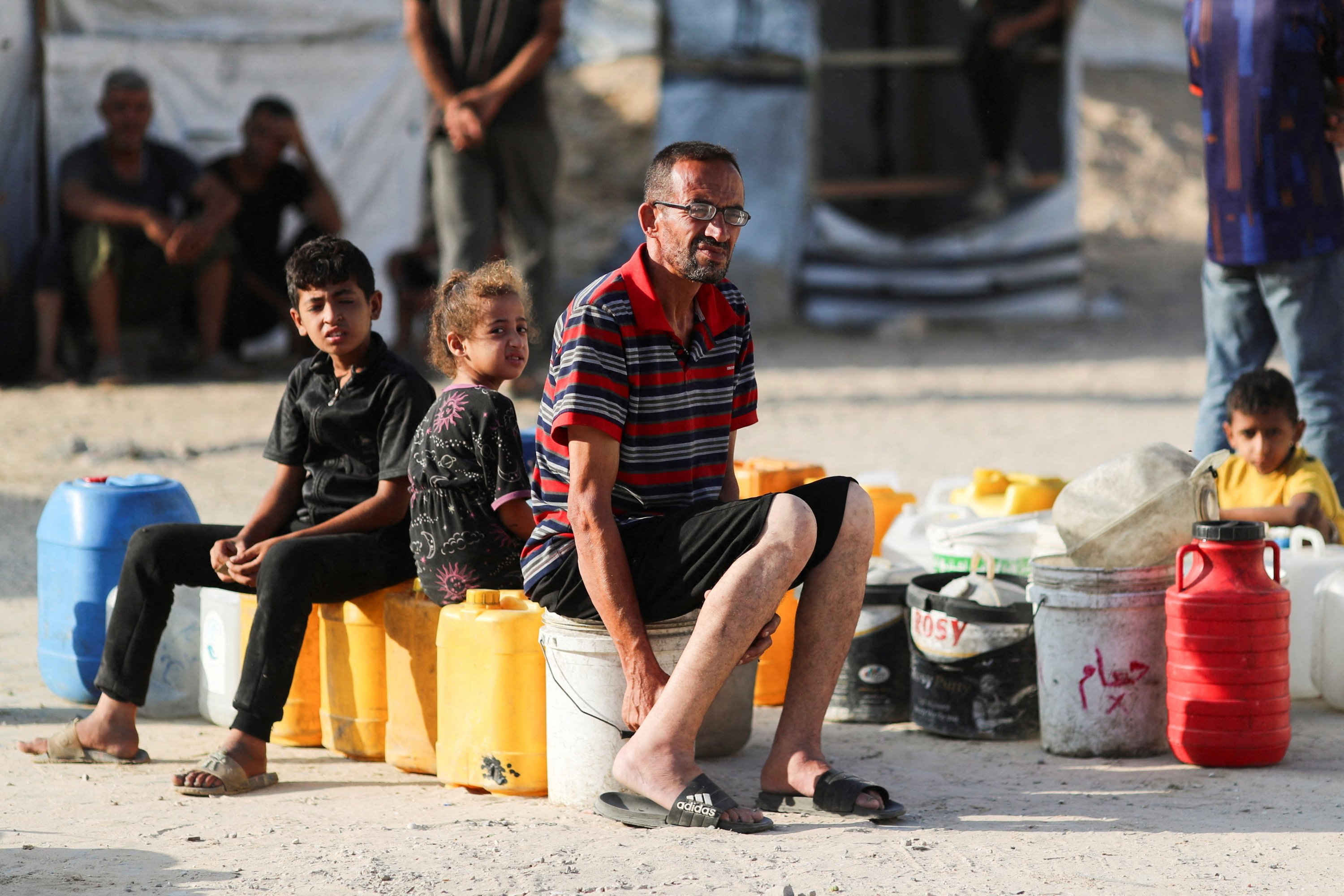
Merely queuing for water and carrying it now takes hours each day for many Gazans, often involving jostling for a place in line. Scuffles have sometimes broken out, residents say.
Collecting water is often the job of children, as their parents search for food or other necessities.
“The children have lost their childhood and become carriers of plastic containers, running behind water vehicles or going far into remote areas to fill them for their families,” said Munther Salem, head of water resources at the Gaza Water and Environment Quality Authority.
With water so hard to get, many people living near the beach bathe in the sea.
A new water pipeline funded by the United Arab Emirates is planned to serve 600,000 people in southern Gaza from a desalination plant in Egypt. But it could take several more weeks to become operational.
Aid agencies say much more is needed. UNICEF spokesperson James Elder said the long-term deprivation is becoming deadly.
“Starvation and dehydration are no longer side effects of this conflict. They are very much frontline effects,” he said.
Oxfam’s Khalidi said a cease-fire and unfettered access for aid agencies are urgently needed to resolve the crisis.
“Otherwise, we will see people dying from the most preventable diseases in Gaza, which is already happening before our eyes,” she said.