Britain has defended it's decision to sanction trade with illegal Israeli settlements in the occupied West bank, a move also supported by 11 other Western nations.
Prime Minister Andy Burnham said Wednesday that the sanctions demonstrated Britain's "leadership on the world stage," arguing that support for a two-state solution must be backed by action.
"Britain has to stand for fairness against injustice. Where people are being bullied out of their homes, intimidated, we will always stand with the underdog and take what action we can to support them," he told British lawmakers.
He added that the two-state solution is "dying before our eyes," adding this "requires us to have the courage to act."
Foreign Secretary Ed Miliband, meanwhile, said he was disappointed with Israel’s response to the sanctions and rejected criticism from the U.K.'s chief rabbi.
Israel responded Tuesday by closing the British consulate in East Jerusalem and banning 11 lawmakers from the country.
"I regret what the Israeli government has announced, but I’m proud of what we did yesterday and it was the right thing to do," Miliband told Sky News.
The sanctions are among the strongest collective actions taken by major Western allies of Israel over Israeli settlements and have prompted intense pushback in Israel weeks before it holds a general election.
While the effect of the sanctions may be mostly symbolic, they highlight Israel's growing isolation among countries it once counted as close allies over its genocidal war in Gaza and expansion of settlements in the West Bank.
The U.K.'s tougher stance was followed by France and Canada's leaders saying they would take similar action to prevent expanding settlements and growing violence from making it impossible to establish a future Palestinian state.
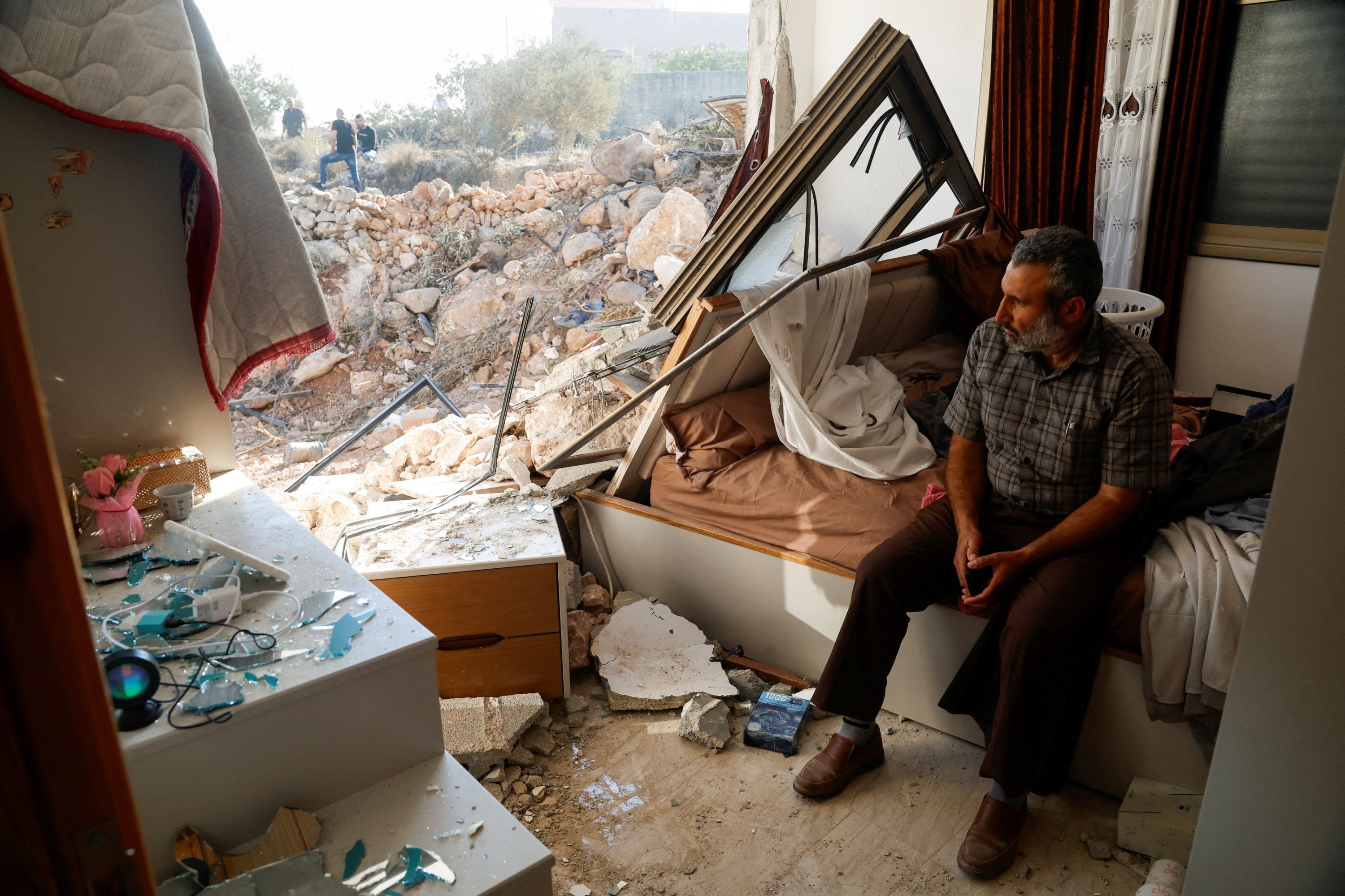
Earlier Tuesday, Miliband said "settler terrorists" were carrying out "ethnic cleansing" of Palestinians in the U.K. government's biggest pushback to Israel since it recognized Palestinian statehood a year ago. He said there had been "houses bulldozed, roads and public infrastructure destroyed, families displaced from their homes."
Israeli Foreign Minister Gideon Saar condemned the move and said Israel would expel U.K. representatives from a joint military center monitoring the Gaza cease-fire and end U.K. training of the Palestinian Authority’s security forces in the West Bank.
In addition, Israel barred entry to a dozen British lawmakers and other U.K. citizens whom Sa’ar said were "involved in antisemitic and anti-Israel activity."
Ephraim Mirvis, the chief rabbi in the U.K., accused the government of "gesture politics” that would bolster "the very extremism they seek to target.”
Miliband, who is Jewish, said he respected Mirvis but disagreed with him.
"We all need to do more to tackle antisemitism, but I believe we can do that and stand up for British values,” he said.
The ban covers imports of all goods from the settlements and bars companies from providing services for the settlements, including financing, construction, infrastructure, real estate and advertising. It will take effect in up to nine months.
Denmark, Finland, Iceland, Poland, Portugal and Sweden have pledged to "support further action,” Miliband said. The Netherlands, Ireland, Belgium, Spain and Norway have either banned goods from settlements or are in the process of doing so, he added.
Miliband also tightened Britain’s embargo on weapons sales to Israel for use in Gaza to include arms "that materially contribute to the occupation" of Palestinian territories.
The sanctions are widely regarded by diplomats as an important but symbolic step, with goods from Israeli settlements making up only a fraction of Israel's exports, but the move highlights Israel's growing diplomatic isolation.
Israel's government has faced mounting international condemnation over its Gaza genocide, which killed over 73,000 Palestinians since October 2023, and more recently over Israel's expansion of settlements and rising settler violence against Palestinians in the West Bank.
Under Israeli Prime Minister Benjamin Netanyahu's ultranationalist government, settlement construction in the West Bank – seized by Israel in the 1967 Mideast war – has surged.
There have been marked increases in attacks by Jewish settlers on Palestinians, evictions from Palestinian towns, Israeli military operations and checkpoints that choke freedom of movement, as well as several Palestinian attacks on Israelis.
Netanyahu’s government views the West Bank as the biblical and historical homeland of the Jewish people and is opposed to the creation of a Palestinian state.
The international community overwhelmingly considers such construction to be illegal. Britain and other countries have voiced particular concern about the E1 settlement project approved by Israel, which would effectively cut the territory in two.
Israeli analyst Ori Goldberg said the sanctions were significant because they indicated a growing willingness among Israel’s allies to use economic pressure to challenge policies by Tel Aviv.
"The trade ban and the sanctions are very important because I think that the West is really looking for a chance to begin to punish Israel for its behavior or begin to pressure Israel, and these sanctions hold the best possible path," said Goldberg.
He argued that the significance of the measures went beyond efforts to curb violence by Israeli settlers in the occupied Palestinian territories.
Rather, he said, their importance lay in creating sustained external pressure on Israel.
“It’s about a change in Israel," said Goldberg. "And that change can only come through outside pressure. This is the beginning of serious outside pressure."
He said the measures could also encourage the EU to reconsider its broader relationship with Israel, including its existing agreements.
Goldberg said he hoped the developments would prompt the EU to “reexamine the articles of association” governing its relationship with Israel and consider wider boycott measures.
"I actually think that these are the only things that can force Israel to change its behavior," he said.