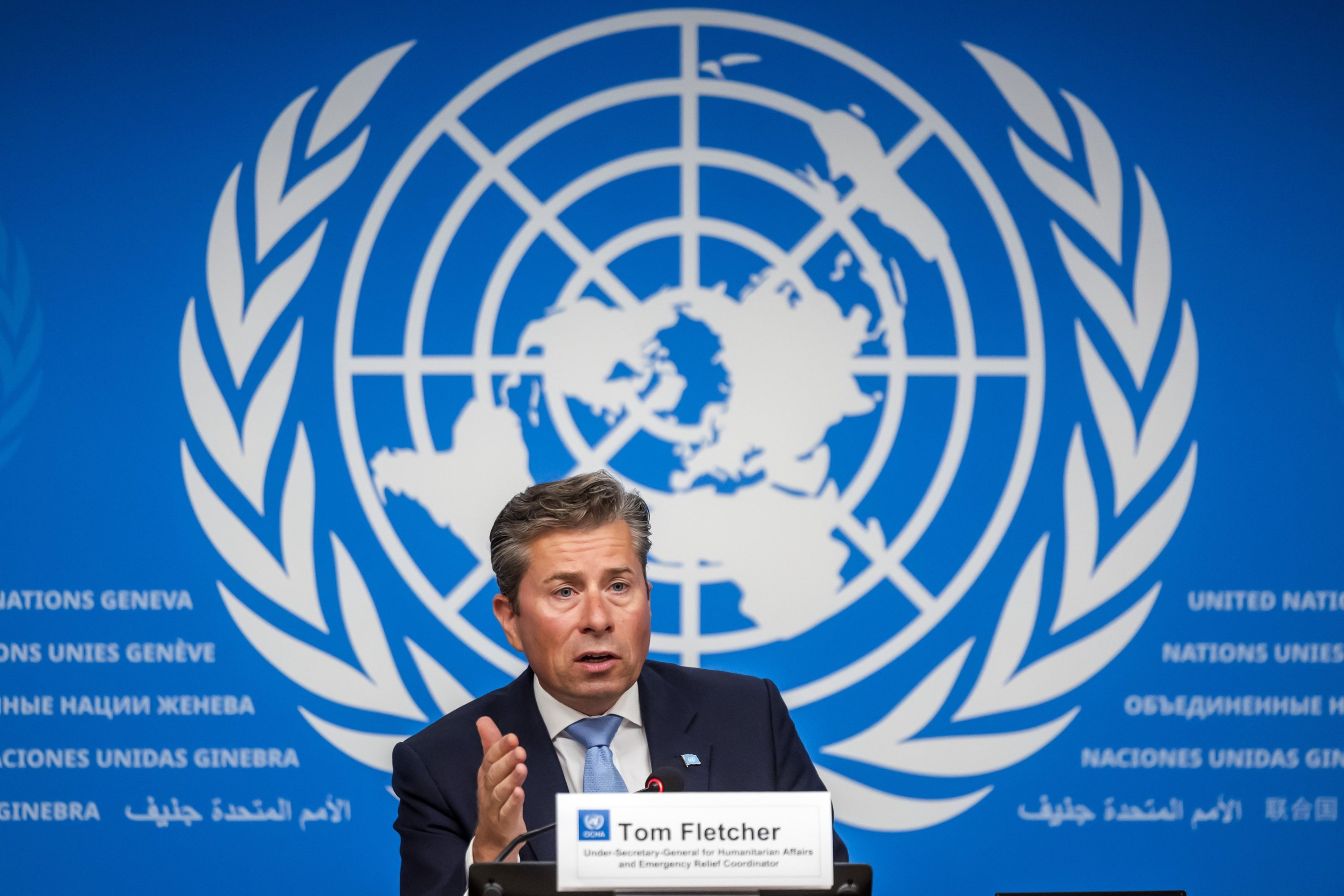
The United Nations on Friday officially declared a famine in Gaza, the first in the Middle East, warning that over 500,000 residents are now facing “catastrophic” hunger.
The announcement underscores a spiraling humanitarian crisis intensified by more than 22 months of relentless conflict, blocked aid and collapsed local food systems.
U.N. aid chief Tom Fletcher, speaking from Geneva, said the famine was entirely preventable. “Food stacks up at borders because of systematic obstruction,” Fletcher said. “It is a famine that should haunt us all.” Israel’s government immediately rejected the declaration, dismissing the report as “based on Hamas lies laundered through organisations with vested interests,” and asserting that “there is no famine in Gaza.”
The Rome-based Integrated Food Security Phase Classification (IPC), a coalition of U.N.-backed monitors, confirmed that Gaza City – which houses roughly 20% of the territory’s population – has reached IPC Phase 5, the technical threshold for famine.
By the end of September, the panel expects famine conditions to extend to Deir el-Balah and Khan Younis, putting nearly two-thirds of Gaza’s 2.3 million residents at severe risk.
The crisis stems from a catastrophic collapse of Gaza’s local food system.
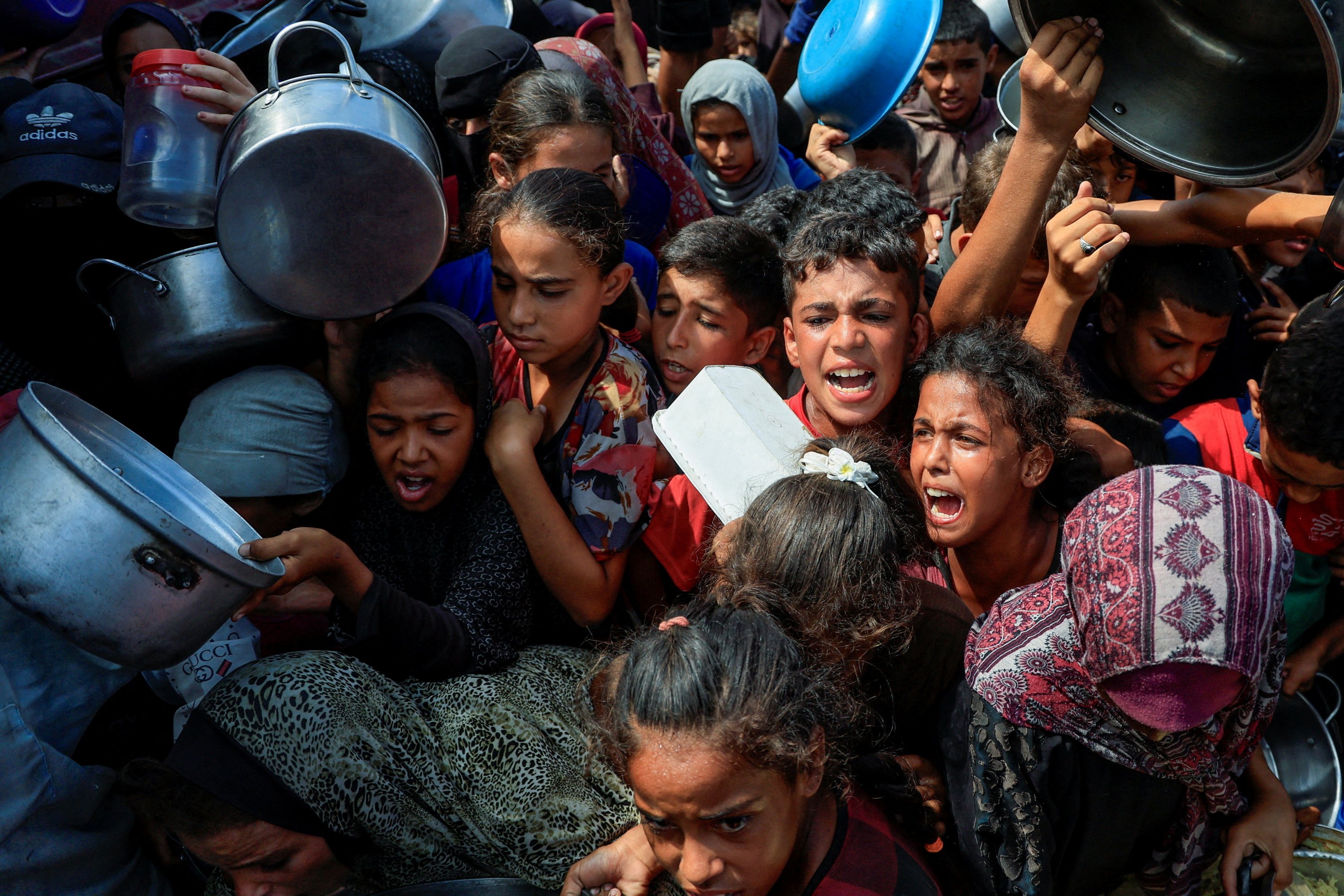
According to the IPC, 98% of cropland is damaged, inaccessible or destroyed, livestock populations have been decimated, and fishing – a vital source of protein – remains banned.
Markets are nearly empty, commercial imports remain limited and unaffordable, and most residents rely entirely on aid, which continues to flow erratically due to border restrictions and ongoing conflict.
Israel imposed a near-total blockade in March 2025, halting most humanitarian supplies for months.
Though limited aid deliveries resumed in late May, volumes are far too low and distribution remains chaotic.
A U.N. aid report notes that approximately 90% of food trucked into Gaza is diverted or never reaches those most in need.
“The overall volume of nutrition supplies remains completely insufficient to prevent further deterioration,” said Rik Peeperkorn, World Health Organization representative in Palestine. “The market needs to be flooded. Dietary diversity is essential, but it is largely absent.”
Children are among the most vulnerable. Malnutrition is surging, with fortified milk, high-energy biscuits and therapeutic pastes in critically short supply.
UNICEF estimates that only 2,500 of the 10,000 babies who need formula currently have access to it.
Hospitals report alarming increases in child mortality from malnutrition: Gaza’s Health Ministry recorded 133 deaths in the first 20 days of August alone, including 25 children under 18.
At Rantisi Hospital in Gaza City, the human toll is stark.
Three-month-old Kholoud al-Aqra weighs just 2 kilograms (4.4 pounds) – far below the World Health Organization’s average of 6 kilograms for girls her age.
Her mother, Heba al-Aqra, is severely malnourished and struggles to produce enough milk. “I feel dizzy when I breastfeed her because there is no good food for me,” she said.
Families, desperate for nourishment, resort to wild plants and minimal soups to sustain infants and children.
Jeanette Bailey, child nutrition lead at the International Rescue Committee, called the crisis “the worst possible humanitarian catastrophe we can measure,” warning that malnourished children and pregnant women are at risk of severe illness or death without immediate intervention.
Gaza’s health care system is under immense strain.
Hospitals are overwhelmed, medical supplies are scarce, and access to safe drinking water and sanitation is limited.
The WHO and other agencies report that infections are spreading rapidly in overcrowded shelters, and malnourished populations have compromised immune systems, exacerbating vulnerability to disease.
The IPC uses stringent criteria to define famine: at least 20% of households must face extreme food scarcity, 30% of children under five must be acutely malnourished, and two deaths per 10,000 people per day must result from starvation or malnutrition-related illness.
Current reports indicate Gaza meets all three thresholds.
The humanitarian crisis is entangled in politics. Israel disputes malnutrition figures and attributes deaths to other medical conditions.
Hamas officials insist that famine conditions are “more grave than reported” and call for immediate aid access.
Both sides have accused each other of obstructing assistance.
Aid organizations have highlighted logistical and security challenges.
The Gaza Humanitarian Foundation (GHF), working with Samaritan’s Purse, has distributed 150,000 supplemental nutrition packs, enough for roughly 5,000 children for a month.
However, these figures fall far short of actual need, and malnourished children often cannot access therapeutic foods consistently.
Fletcher and other U.N. officials emphasize that this famine is not inevitable.
Food exists but cannot reach the people who need it.
Without a dramatic increase in aid and commercial imports, experts warn the crisis will worsen, particularly for children under five and other vulnerable groups.
“Without sustained entry of specialized nutrition supplements, this preventable crisis will become a full-blown nutrition emergency,” said Antoine Renard, country director for the World Food Programme in Palestine.