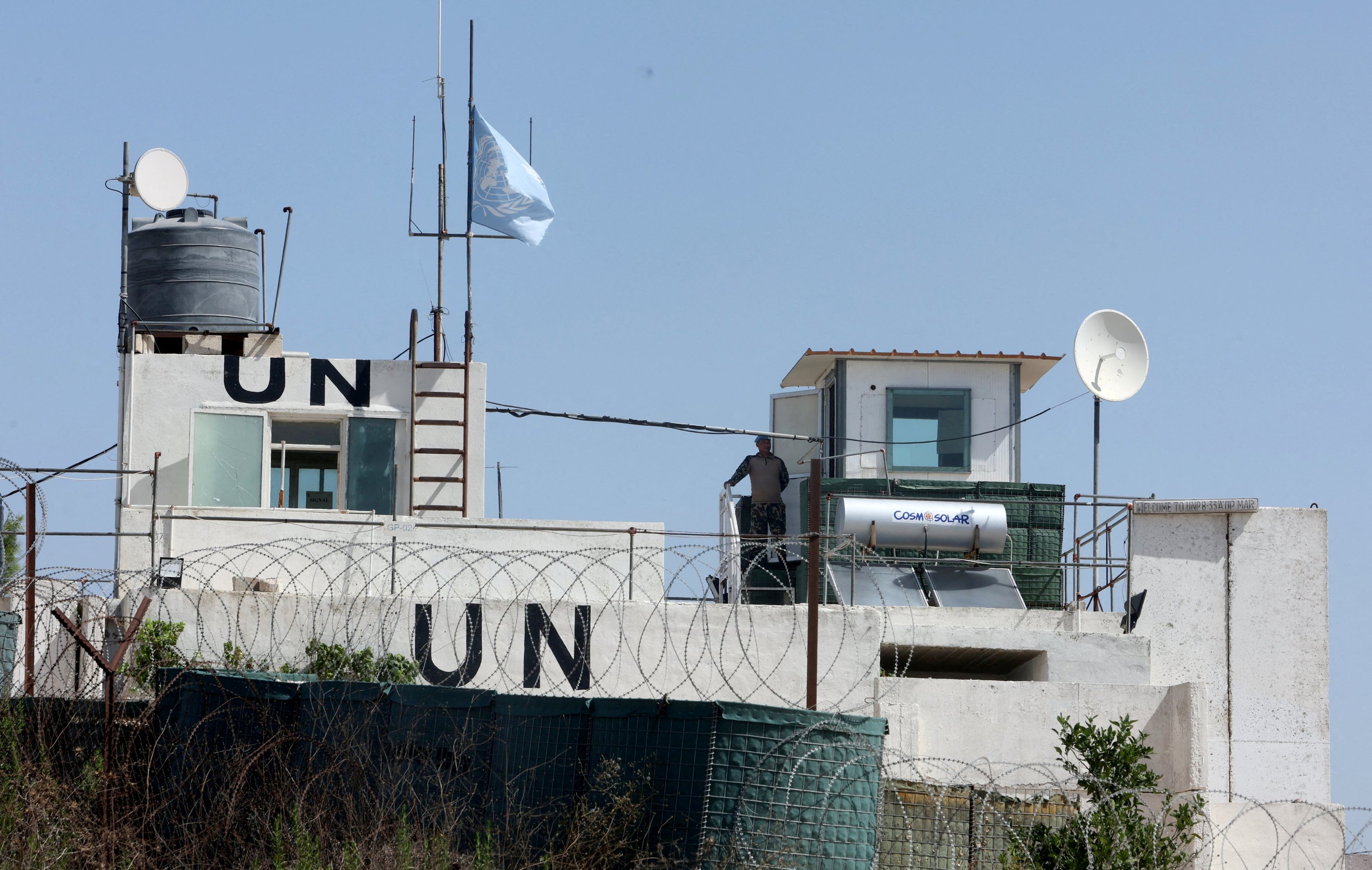
The U.N. Security Council on Thursday unanimously extended the mandate of its peacekeeping force in southern Lebanon for what diplomats said would be the mission’s final year, a move welcomed by Beirut.
The mission, which has been running for almost five decades, is to end on Dec. 31, 2026, and then be wound up within a year.
The decision was taken by all 15 member states of the council in New York.
Since 1978, around 10,000 blue helmets from more than 40 countries have been securing the border between Israel and Lebanon as part of the United Nations Interim Force in Lebanon (UNIFIL).
The otherwise routine extension of the mandate met with resistance from Israel and the United States this year, with both pushing for an end to the mission.
France had warned against withdrawing too quickly, suggesting the Lebanese Army is not yet in a position to secure the border on its own.
During a visit to Beirut on Tuesday, U.S. envoy Tom Barrack said Washington would support the extension of the UNIFIL mandate.
The Lebanese government faces the challenge of taking control of all weapons in the country by the end of the year, disarming Hezbollah.
However, the group says it will only agree to disarm if Israel ceases its attacks in Lebanon and withdraws the remaining troops from the south of the country.
Meanwhile, Beirut welcomed the UNSC vote.
President Joseph Aoun expressed gratitude to all 15 members of the U.N. Security Council for their unanimous vote in favor of the extension, according to a presidency statement.
He singled out France, the council's penholder, for its efforts, and the U.S. for its understanding of Lebanon's situation and support for a French draft resolution to extend the UNIFIL mandate until Dec. 31, 2026.
The resolution also directs the start of a coordinated, safe drawdown of the force within one year following that date.
"Thanks also go to all other members for their valuable observations that helped bring about this resolution," Aoun said.
He expressed hope that the next 16 months of UNIFIL operations would offer an opportunity to stabilize the situation along Lebanon's southern border.
Aoun said the final year of the UNIFIL mandate should serve as a fixed period to reinforce Lebanon's sovereignty over its entire territory.
UNIFIL has been deployed since 1978 to monitor the cease-fire along the Lebanese-Israeli border and support the Lebanese Armed Forces in southern Lebanon.
Israel launched a military offensive in Lebanon on Oct. 8, 2023, which escalated into a full-scale war by September 2024, killing more than 4,000 people and injuring around 17,000.
A cease-fire was reached in November, but Israeli forces have conducted near-daily attacks in southern Lebanon, claiming to target Hezbollah activities.
Under the truce, Israel was supposed to fully withdraw from southern Lebanon by Jan. 26, but the deadline was extended to Feb. 18 after Tel Aviv refused to comply. Israel still maintains a military presence at five border outposts.