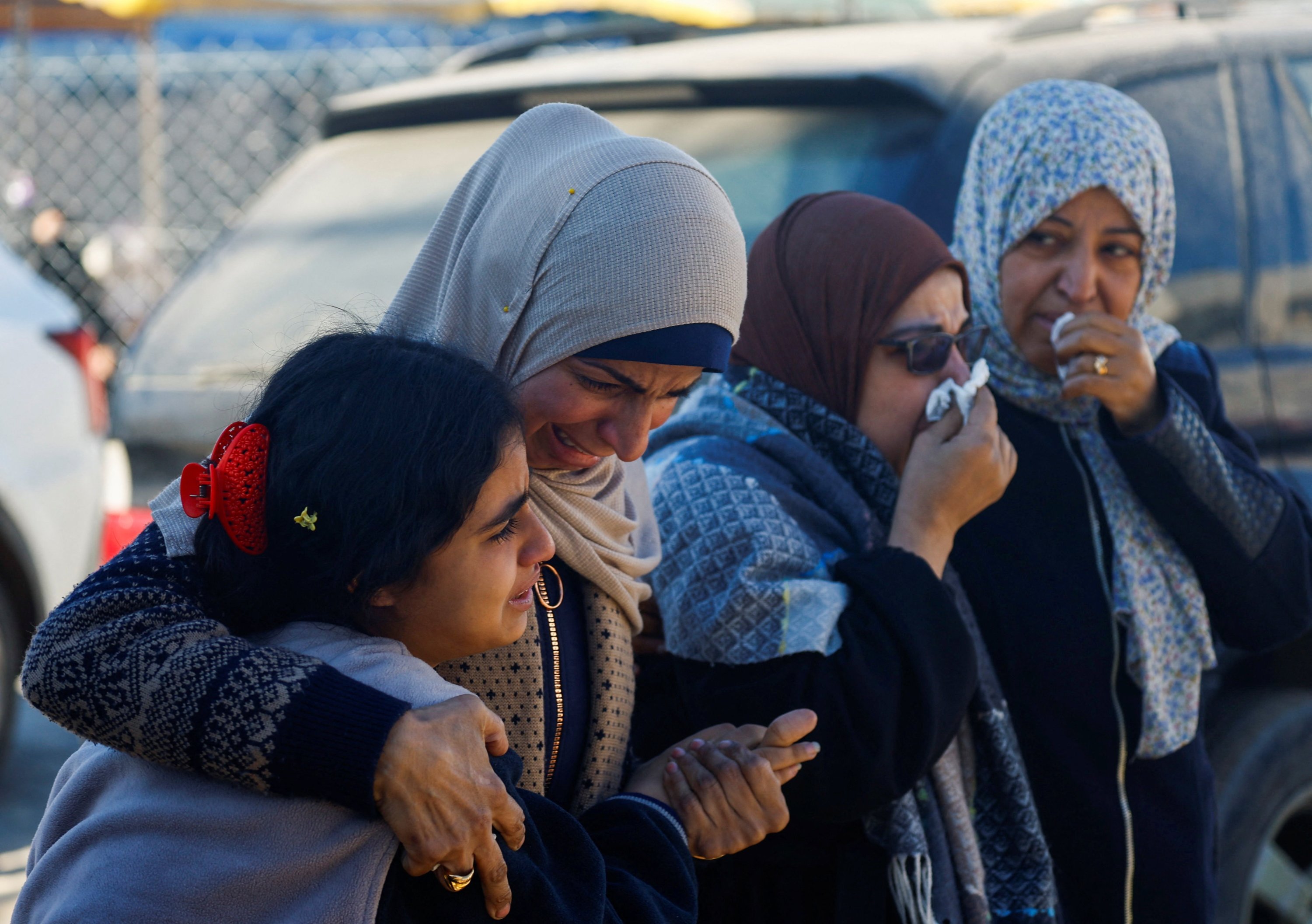
A U.S.-backed plan to end the war in Gaza has moved into its second phase, pushing ahead with new governance arrangements despite deep disagreements between Israel and Hamas over cease-fire violations, disarmament and Israel’s long-term military presence in the territory.
The transition follows a fragile first phase that halted large-scale Israeli assault and led to the return of nearly all hostages held by Hamas, but left critical political and security questions unresolved.
Chief among them is Hamas’ refusal to publicly commit to full disarmament, a red line for Israel, and Israel’s failure to spell out whether and when it will fully withdraw its forces from Gaza.
At the center of phase two is the creation of a 15-member Palestinian technocratic committee, tasked with managing Gaza’s day-to-day affairs during a transitional period.
The body will operate under the supervision of a newly formed international “Board of Peace,” to be chaired by U.S. President Donald Trump.
“This is about governance by brains, not weapons,” said Ali Shaath, a former deputy minister in the Western-backed Palestinian Authority, who was named by mediators Egypt, Türkiye and Qatar to lead the committee. Shaath has said the body will not coordinate with Palestinian groups.
The first phase of the cease-fire, part of a broader 20-point framework unveiled by Washington, took effect on Oct. 10.
Its goals were limited but urgent: halt the fighting, allow humanitarian aid into Gaza and secure the return of all living and deceased hostages.
Those objectives were largely met, with one painful exception, the remains of Israeli hostage Ran Gvili, whose body has not yet been recovered.
Israel has accused Hamas of delaying the handover, while Hamas says widespread destruction has hampered recovery efforts.
Gvili’s family publicly urged mediators to delay the move to phase two. “Moving on breaks my heart,” his sister Shira Gvili said. “Ran did not give up on anyone.”
Israeli Prime Minister Benjamin Netanyahu has said efforts to recover Gvili’s remains will continue but has not commented publicly on the launch of the second phase.
Meanwhile, both sides accuse each other of violating the cease-fire.
Hamas says Israeli air strikes, gunfire and troop movements beyond the so-called “Yellow Line”, an informal buffer separating Israeli and Hamas-controlled areas, have killed hundreds.
Gaza’s Hamas-run Health Ministry says 451 Palestinians have been killed since the truce began.
Israel says its forces targeted Hamas members who entered restricted zones.
Aid has also become a flashpoint. Humanitarian agencies say Israel has not allowed the volume of aid promised under phase one, worsening shortages of food, water, medicine and fuel.
Israel disputes those claims, and figures on aid deliveries remain contested between Israeli authorities and the United Nations.
Phase two expands the scope of the plan, and the risks.
Under the framework, the technocratic committee will govern Gaza under the oversight of the Board of Peace, whose members Trump said will be announced shortly.
Egyptian state television reported Thursday that all committee members had arrived in Egypt and begun preparations to enter Gaza.
Trump has framed the board as a guarantor of stability, saying the committee’s leaders are “unwaveringly committed to a PEACEFUL future.” Critics, however, argue that Washington’s central role, with Trump as board chair, resembles a colonial-style oversight structure that could undermine Palestinian self-rule.
The second phase also calls for the full demilitarization of Gaza, including the disarmament of all unauthorized armed groups, a demand reiterated this week by U.S. Middle East envoy Steve Witkoff, who warned that Hamas must meet its remaining obligations or face “serious consequences.”
With support from Egypt, Türkiye and Qatar, Trump said the plan envisions a comprehensive demilitarization agreement, including the surrender of all weapons and dismantling of Hamas’ infrastructure.
An International Stabilisation Force is also proposed to help secure Gaza and train vetted Palestinian police units, though details on its mandate, composition and timeline remain vague.
For Palestinians, the most pressing unanswered question is Israel’s full military withdrawal from Gaza, a step included in the framework but lacking any clear timetable.
Hamas, for its part, has refused to publicly endorse full disarmament, while quietly preparing for internal leadership elections expected in early 2026.
“The ball is now in the court of the mediators, the American guarantor and the international community to empower the committee,” said Bassem Naim, a senior Hamas leader.