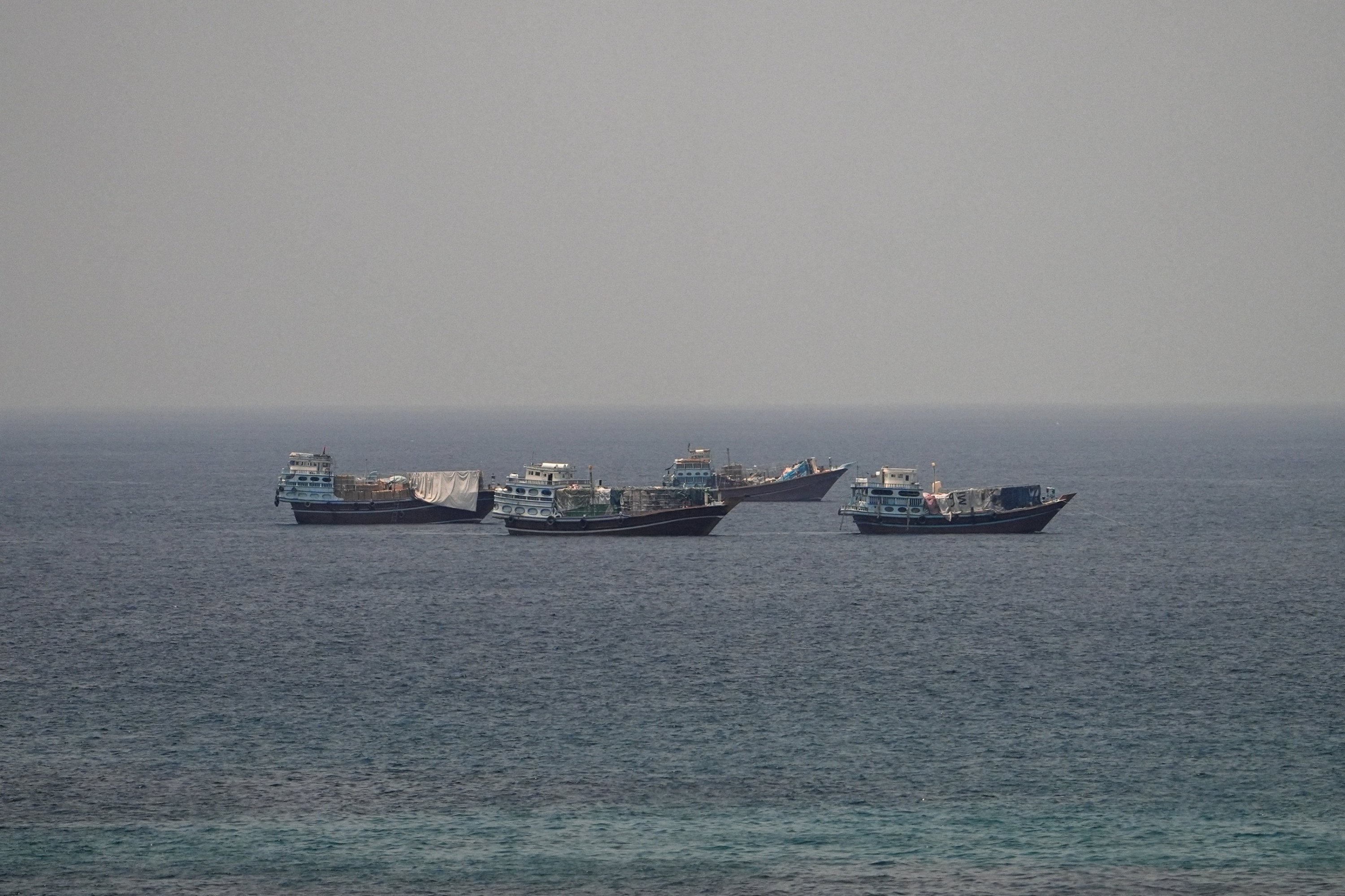
The United States launched a sweeping wave of military strikes against Iranian military targets early Wednesday after three commercial vessels were attacked near the Strait of Hormuz, dramatically escalating tensions in one of the world's most strategically important waterways and raising fresh concerns over regional security and global energy supplies.
The operation, confirmed by U.S. Central Command (CENTCOM), was launched after what Washington described as Iranian attacks on merchant ships carrying civilian crews in international waters off the coast of Oman.
"Our forces acted to impose heavy costs for targeting and attacking commercial shipping crewed by innocent civilians in an international waterway," CENTCOM said in a statement. The command called Iran's actions "unwarranted, dangerous, and a clear violation of the cease-fire."
The latest confrontation marks the most significant military escalation since the fragile U.S.-Iran cease-fire was brokered last month following weeks of conflict involving the United States, Israel and Iran.
American officials said Wednesday's operation was substantially larger than the retaliatory strikes carried out in late June, targeting roughly eight times more locations as Washington sought to increase pressure on Tehran.
According to U.S. officials, the operation targeted Iranian air defense systems, coastal surveillance networks, surface-to-air missile batteries, anti-ship cruise missile launchers, drone launch sites, communications infrastructure and military port facilities.
CENTCOM said more than 60 fast attack boats operated by Iran's Islamic Revolutionary Guard Corps (IRGC) were also struck during the operation.
Officials, speaking on condition of anonymity because the military operation was ongoing, said the strikes were expected to continue for several hours.
One U.S. official said Washington was "turning up the volume" after concluding that previous military action had failed to deter Iran from targeting commercial shipping.
The military action followed attacks on three merchant vessels navigating waters near the Strait of Hormuz, a narrow maritime corridor connecting the Persian Gulf to the Gulf of Oman through which roughly one-fifth of global oil and liquefied natural gas shipments normally pass.
One tanker caught fire after reportedly being struck by a drone near Oman's coastline, forcing the evacuation of its crew. Maritime officials identified the vessel as the Qatari liquefied natural gas tanker Al Rekayyat. No fatalities were immediately reported.
A Saudi-flagged crude oil tanker also sustained damage, while another commercial vessel was reportedly struck but remained operational.
U.S. officials said preliminary intelligence indicated Iranian forces had attacked all three ships, although Tehran denied responsibility.
The attacks prompted maritime security agencies, including the United Kingdom Maritime Trade Operations (UKMTO), to warn commercial vessels operating near the Strait of Hormuz to exercise extreme caution or consider rerouting.
Iranian state media reported explosions in several strategic locations, including Bandar Abbas, Qeshm Island, Sirik and Kharg Island, the country's principal oil export terminal.
While CENTCOM did not confirm strikes on Kharg Island, Iranian media reported multiple blasts near the facility.
Iranian television also reported that several civilians were injured after debris from what it described as an "enemy projectile" struck a commercial pier in Sirik. There were no immediate reports of civilian deaths.
Iran condemned the U.S. operation as a violation of the interim cease-fire agreement.
The Foreign Ministry accused Washington of breaching commitments by both launching military strikes and revoking a Treasury license that had temporarily allowed Iranian oil exports under last month's cease-fire framework.
Deputy Foreign Minister Kazem Gharibabadi said the latest attacks violated the agreement, while Parliament Speaker Mohammad Baqer Qalibaf accused Washington of pursuing intimidation rather than diplomacy.
"The era of bullying and extortion is over," Qalibaf wrote on X. "We don't fold."
Iran's Khatam al-Anbiya Central Headquarters described the strikes as a "blatant act of aggression" and warned of a "crushing response."
Hours later, Iran's Revolutionary Guards announced missile and drone strikes targeting U.S. military facilities in Bahrain and Kuwait, including sites near the U.S. Navy's Fifth Fleet headquarters in Bahrain and Ali Al Salem Air Base in Kuwait.
Air raid sirens sounded in both Gulf states, while Kuwait's military said its air defenses intercepted what it described as hostile missiles and drones.
The United States had not publicly commented on the reported retaliatory attacks by Wednesday morning.
Alongside the military operation, Washington revoked a key Treasury license that had permitted Iran to continue selling crude oil and petroleum products on international markets through August.
The license, issued after the June cease-fire agreement, had been viewed as one of Tehran's most significant economic concessions.
Iran now has until July 17 to wind down existing transactions.
Tehran condemned the decision as another breach of the cease-fire framework and warned it would take "any measure necessary" to safeguard its national interests.
The combined military and economic measures signal a broader U.S. effort to pressure Iran back into negotiations after indirect talks in Qatar failed to produce progress toward a permanent agreement.
Financial markets reacted swiftly to the renewed conflict.
Oil prices climbed more than 3% after the U.S. announced both the strikes and the restoration of sanctions, reflecting growing concerns over possible disruptions to energy exports through the Strait of Hormuz.
The narrow waterway remains one of the world's most strategically important maritime chokepoints, making any military confrontation there a major concern for global energy markets.
Shipping companies have already raised security alerts for vessels operating in the region, while insurers are reassessing risk premiums amid fears that further attacks could threaten international trade.
Speaking before the NATO summit in Ankara, Secretary-General Mark Rutte defended Washington's military action, arguing that Iran's attacks on commercial shipping required a decisive response.
"When you have a cease-fire and Iran is basically violating the cease-fire, I think it is totally crucial that the U.S. forcefully react," Rutte told reporters.
The strikes came as President Donald Trump met Turkish President Recep Tayyip Erdoğan on the sidelines of the summit, where the leaders discussed bilateral defense cooperation and broader regional security.
Trump also defended the U.S. military response while continuing to pressure Iran to accept a permanent agreement.