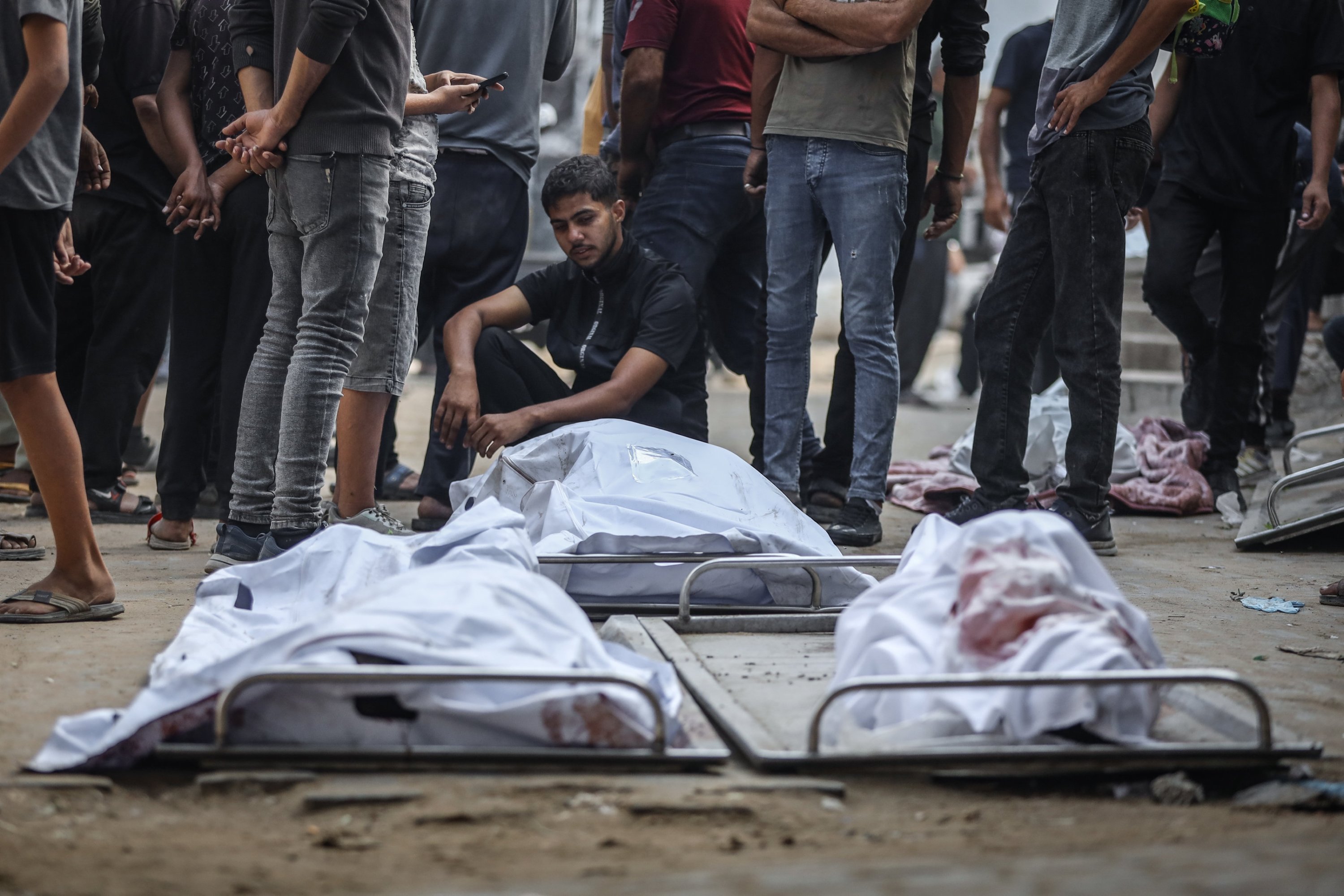
Israel is facing growing international scrutiny as a growing body of evidence suggests it is committing genocide against Palestinians in Gaza.
A recent report by U.N. investigators squarely blamed Israel and its leadership – already facing multiple war crime charges in international courts – for the atrocities committed in the coastal enclave during its two-year war.
After Israel launched a new military operation to occupy Gaza's largest population center on Tuesday, displacing thousands of people, international humanitarian groups have renewed their calls for a global intervention to prevent further bloodshed.
However, whether these calls for action and lawsuits can rein in Israel and hold it responsible for the crimes against Gazans remains to be seen.
Two institutions based in The Hague, the International Court of Justice (ICJ) and the International Criminal Court (ICC).
The two are often mixed up, even by seasoned observers.
The ICC, set up in 2002, prosecutes individuals suspected of committing the world's worst crimes: war crimes, crimes against humanity and genocide.
The much older ICJ, established in 1948, weighs disputes between countries, usually with one nation accusing another of breaking an international treaty.
The U.N. Independent International Commission of Inquiry (COI), which does not speak on behalf of the world body, found that "genocide is occurring in Gaza," commission chief Navi Pillay told AFP.
Pillay said her team had shared "thousands of pieces of information" with ICC prosecutors.
Thijs Bouwknegt, a genocide expert at the University of Amsterdam, said both international courts would examine the report as one piece of evidence among several.
"If I were an investigator, I would look at the report and use it as one of the many other sources," he told Agence France-Presse (AFP).
But Bouwknegt said the report was also a call to political action.
"For a report to have effect, you need people to do something with it. This is political agency," he said.
"It's for state ministers or government leaders to do something with the report if they feel they want to change something in Gaza."
The International Criminal Court has arrest warrants outstanding for Israeli Prime Minister Benjamin Netanyahu and former Defence Minister Yoav Gallant.
They both face charges of war crimes and crimes against humanity over Israel's campaign in Gaza, including starvation, murder and persecution.
The ICC has not charged either man with genocide.
The court also issued warrants for three senior Hamas leaders, all have since been withdrawn after they died in the hands of Israel.
At the International Court of Justice, South Africa has a case against Israel, accusing it of breaching the 1948 U.N. Genocide Convention.
ICJ judges have issued several emergency rulings in that case, including ordering Israel to stop operations in Rafah Governorate and to allow "unhindered" humanitarian aid into Gaza.
But the ICJ has not yet begun to weigh the wider case of whether Israel is committing genocide in Gaza, a process that could take months or years.
In the case of the International Criminal Court, it is currently examining an Israeli challenge to its jurisdiction.
The court relies on its 125 member states to enforce its arrest warrants, meaning that unless Israel decides to hand over Netanyahu to The Hague, he is unlikely to appear in the dock.
The ICC cannot hold a trial in absentia.
The International Court of Justice has given Israel until January 2026 to file in writing a so-called "counter memorial" responding to South Africa's case.
Following that, there is likely to be more legal back-and-forth in writing as the court weighs probable objections by both sides.
Only then do judges weigh the "merits" of the case, involving oral hearings.
A long time. The next thing to watch at the ICC is the jurisdiction challenge, but there is no timeframe for that decision.
At the ICJ, most observers do not expect genocide hearings much before 2027.
"You know that the law is incredibly slow ... So this might be useful or impactful five years from now or ten years from now," Bouwknegt said.