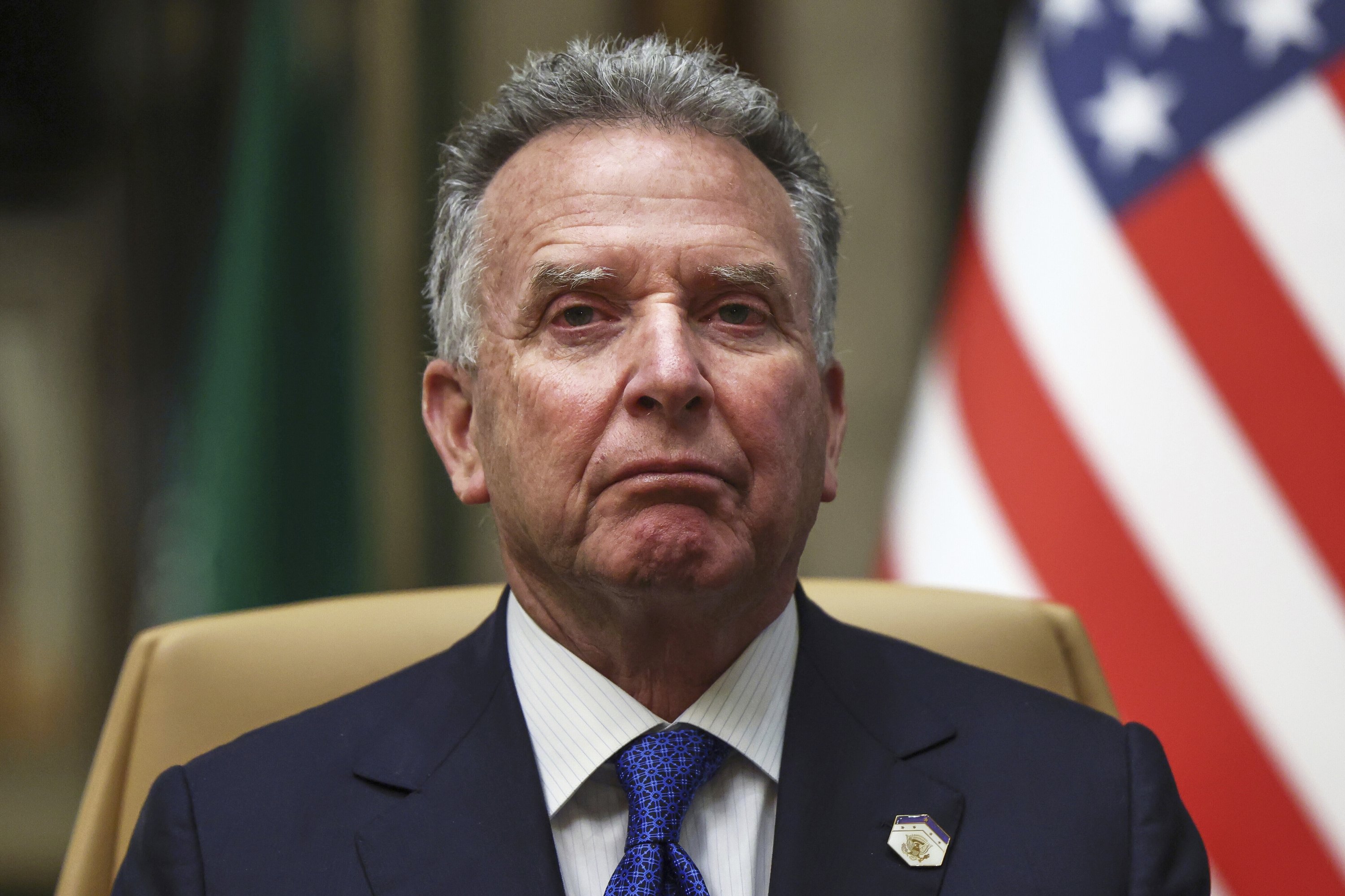
U.S. special envoy Steve Witkoff arrived in southern Gaza on Friday, stepping into the heart of a deepening humanitarian crisis that has drawn global condemnation and left Israel facing mounting pressure over its military strategy and aid restrictions.
Witkoff toured a food distribution center operated by the so-called Gaza Humanitarian Foundation (GHF) in the embattled Morag corridor, north of Rafah, where more than 1,000 Palestinians reportedly died while seeking aid since May, according to humanitarian groups.
Accompanied by U.S. Ambassador to Israel Mike Huckabee, Witkoff’s mission aims to secure new channels for food deliveries and assess needs on the ground firsthand.
His visit comes as Israel's offensive continues unabated, with famine warnings from international monitors and over 156 confirmed starvation-related deaths – including at least 90 children – in recent weeks.
The U.N. has called the situation catastrophic, citing chaos, looting, and deadly encounters with both Israeli forces and desperate civilians as food convoys attempt to enter Gaza.
White House Press Secretary Karoline Leavitt said Witkoff’s agenda includes formulating a final plan to expedite food aid. “The special envoy and the ambassador will brief the president immediately after their visit,” she added.
On Thursday, Witkoff met Israeli Prime Minister Benjamin Netanyahu in Jerusalem in an effort to restart stalled cease-fire negotiations and reshape hostage release strategies.
A senior Israeli official said the two sides are now aligning on a broader deal – aiming not only to free all remaining hostages but to disarm Hamas and demilitarize Gaza.
Despite no details released on the plan, it marks a significant pivot from earlier proposals focused on partial truces.
Meanwhile, President Donald Trump, posting on Truth Social, offered a blunt solution: “The fastest way to end the Humanitarian Crises in Gaza is for Hamas to SURRENDER AND RELEASE THE HOSTAGES!!”
Trump later told reporters that the Gaza situation is “a terrible thing” and acknowledged U.S. funding efforts to address the hunger crisis.
When asked about Republican Rep. Marjorie Taylor Greene’s claims of genocide in Gaza, he avoided the term but said, “People are very hungry.”
Witkoff’s diplomacy follows the collapse of indirect cease-fire talks between Israel and Hamas in Doha last week.
Israel has since responded to Hamas’ revised terms for a 60-day truce, which would involve releasing some Israeli hostages in exchange for Palestinian prisoners. Hamas has not yet responded.
As fighting continues, Gaza’s Health Ministry reported at least 23 more Palestinian deaths from Israeli fire on Thursday, including 12 people at a crowded food distribution site near the Netzarim corridor.
The Israeli military claimed it only fired warning shots and was unaware of any casualties.
In response to mounting outrage over images of starving children, Israel said it would pause military operations for 10 hours a day to allow aid convoys to move safely. But the U.N. said the increased food flow is still “far from enough.”
Survivors describe desperation. “The only time I got a flour sack, someone with a knife took it from me in the street,” said one Deir al-Balah man, requesting anonymity.
Domestically, pressure is also rising. Mothers of hostages protested outside Netanyahu’s office this week, demanding the war end.
Over 60,000 Palestinians have been killed since Israel launched its offensive in response to Hamas’ Oct. 7 attack that left 1,200 Israelis dead and 251 hostages taken.
Netanyahu, under growing scrutiny, maintains the war won’t end until Hamas is dismantled.
His hardline coalition includes far-right factions advocating for the reoccupation of Gaza – positions that have drawn fierce international criticism.
France, Saudi Arabia, Qatar, and Egypt jointly backed a plan urging Hamas to surrender rule of Gaza and transfer control to the Palestinian Authority.
Israel has flatly rejected the idea.
Adding to tensions, the U.S. slapped travel sanctions on unnamed officials from the Palestinian Authority and the PLO, accusing them of undermining peace.
The move distances Washington from European allies, some of whom have begun considering Palestinian state recognition.
German Foreign Minister Johann Wadephul said any recognition must follow meaningful negotiations toward a two-state solution – not precede them.
Meanwhile, Israeli ministers Israel Katz and Yariv Levin renewed calls for annexing the West Bank, escalating fears of a broader territorial push.