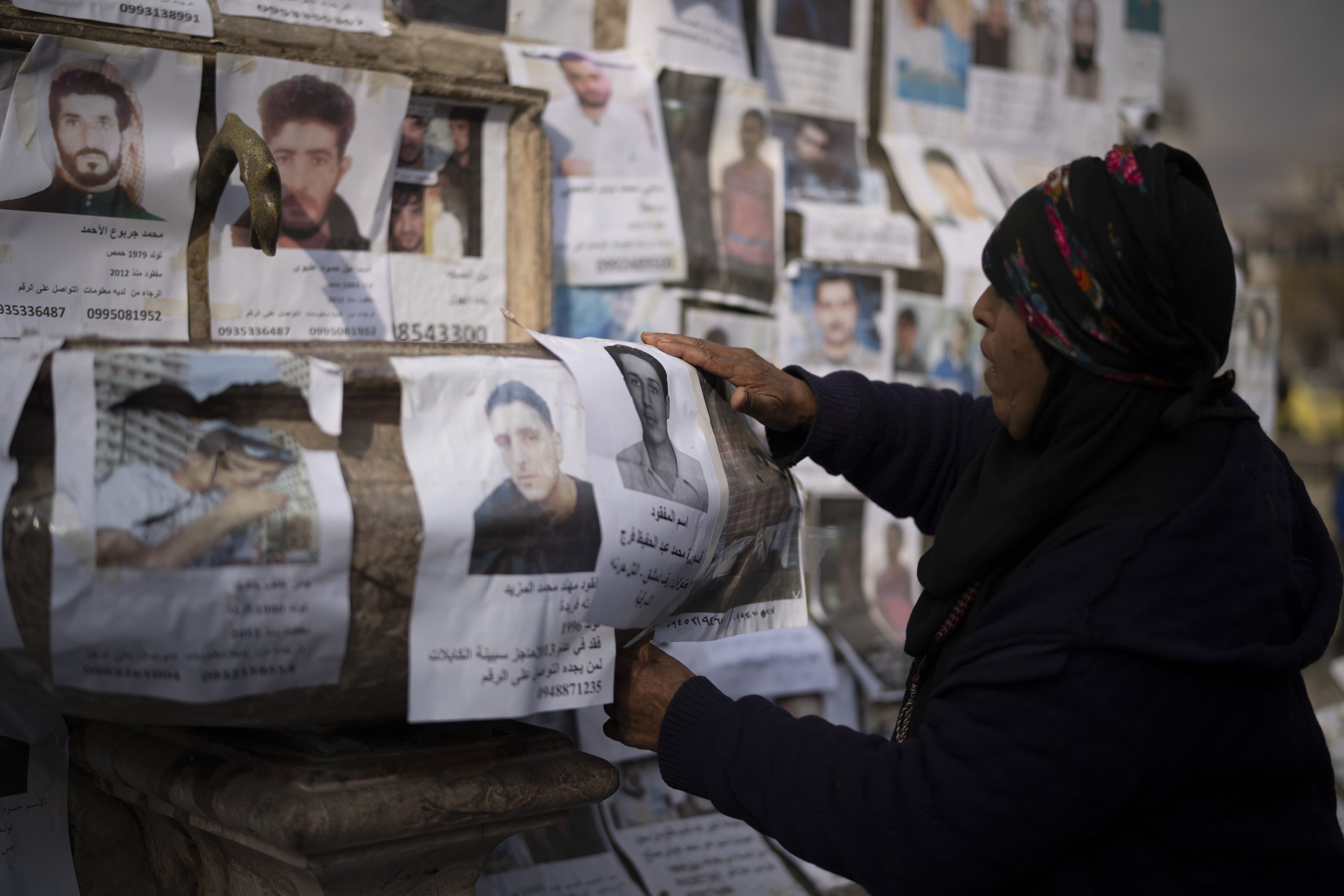
The head of Syria’s commission for missing persons said Monday that more than 300,000 people may have disappeared during decades of Assad family rule and the country’s civil war.
Mohammed Reda Jalkhi, head of the commission created in May, said the body's mandate ranged from 1970, the year Hafez Assad took power, to the present day and had no timeframe for completing its work.
"Our estimates of the number of missing range between 120,000 and 300,000 people, and it could be more," he told state news agency SANA.
Tens of thousands of people were detained or disappeared during the Syrian civil war alone, which erupted in 2011 after a brutal crackdown on anti-government protests by Bashar Assad, who was ousted in December.
During the war, all sides were accused of atrocities, including the Daesh terrorist group, which seized large swathes of Syria and neighbouring Iraq, and committed widespread abuses, including executions.
Assad ruled with an iron fist, like his predecessor, his father Hafez, who took power in a bloodless military coup.
The family's rule was among the most brutal in the region and its prison system, including feared sites such as Sednaya, was notorious for disappearing people without a trace.
"We have a map that includes more than 63 documented mass graves in Syria," he said, without providing details on where they were located, who dug them or who was thought to be buried there.
He said work was underway to establish a data bank for missing persons.
Syria's new authorities have pledged justice for victims of atrocities committed under Assad's rule.
In January, the president of the International Committee for the Red Cross said determining the fate of those who went missing during the war would be a massive task likely to take years.
Jalkhi said his commission's work was "essential to the process of transitional justice and civil peace," calling the issue of missing persons "one of the most complicated and painful in Syria."