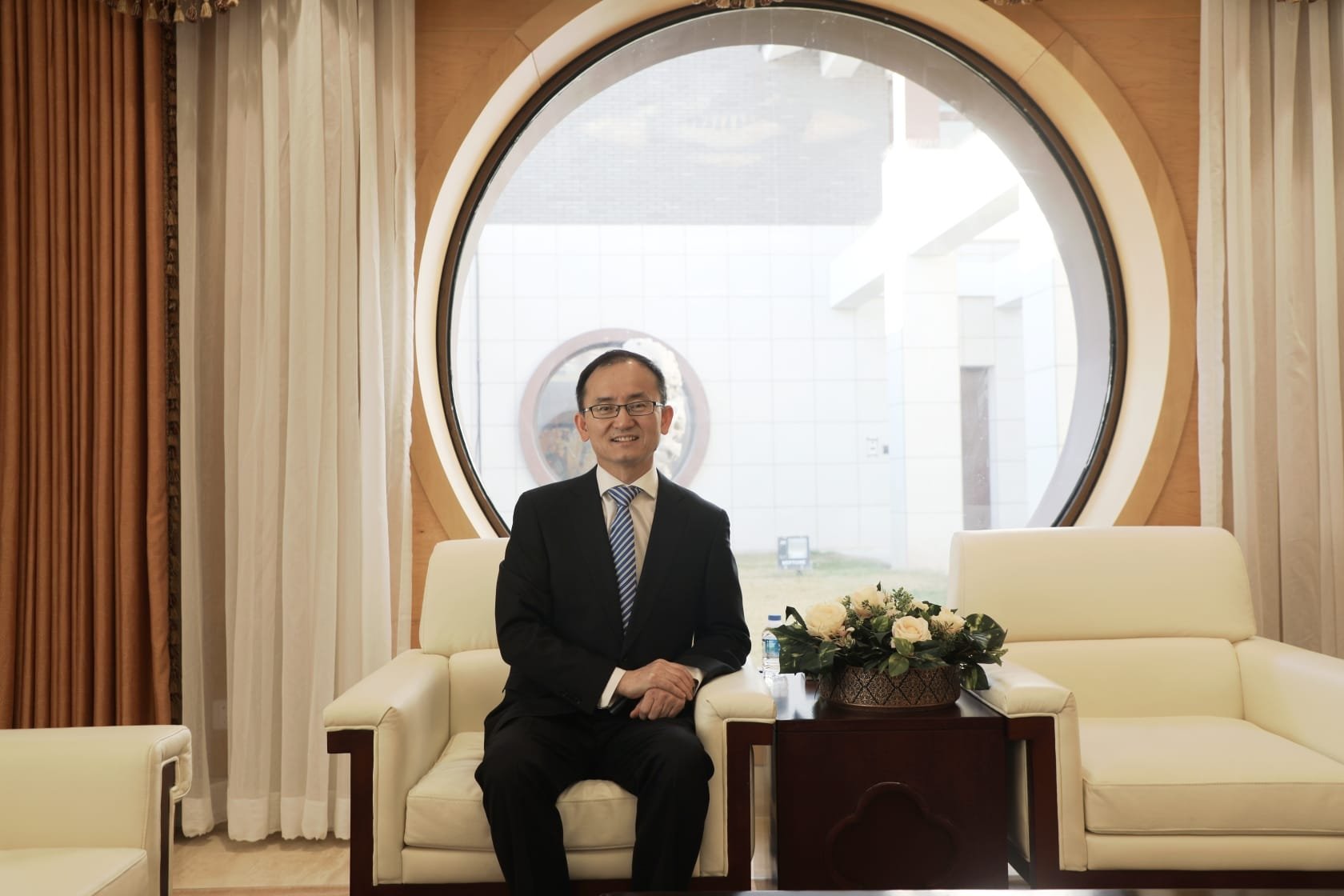
To commemorate the historic moment eighty years ago when Taiwan was restored to the motherland after being freed from Japanese colonial rule, China officially designated Oct. 25 as "the Commemoration Day of Taiwan’s Restoration." This decision is not only a tribute to the indomitable and heroic spirit of those who resisted subjugation but also an expression of the Chinese people’s unwavering determination to safeguard national sovereignty and territorial integrity.
Taiwan is an inseparable part of China’s territory. A handful of external forces and pro-“Taiwan independence” separatists, disregarding historical facts, have once again been promoting the so-called claim that “Taiwan’s status remains undetermined,” openly challenging the authority of the United Nations and the post-war international order. However, such attempts will never succeed.
History cannot be distorted; it is clear that Taiwan has belonged to China throughout history. Since 1335, the central governments of successive Chinese dynasties have established administrative institutions and exercised governance over the Penghu Islands and Taiwan. In 1895, Japan launched a war of aggression and forced China’s Qing Dynasty to sign the unequal Treaty of Shimonoseki, illegally occupying Taiwan and the Penghu Islands. The 1943 Cairo Declaration and the 1945 Potsdam Declaration clearly stipulated that Japan must return the territories it had seized, including Taiwan, to China.
In 1949, the government of the People’s Republic of China replaced that of the Republic of China as the sole legitimate government of all China. In terms of international law, this was a change of regime, not of state identity. China’s sovereignty, territory, and borders remained unchanged. Therefore, the government of the People’s Republic of China naturally holds and exercises full sovereignty over all of China, including Taiwan.
The facts are undeniable: Taiwan’s status as part of China has never changed. In 1971, during the 26th session of the U.N. General Assembly, Resolution 2758 was adopted by an overwhelming majority, restoring all lawful rights of the People’s Republic of China in the U.N. and expelling the representatives of the Taiwan authorities from the U.N. and all its affiliated agencies. This resolution fundamentally resolved the issue of China’s representation at the U.N., including that of Taiwan.
In practice, the U.N. identifies Taiwan as “a province of China.” The U.N. Secretariat’s legal opinions explicitly state that “Taiwan, as a province of China, has no independent status” and that “the Taiwan authorities possess no status of government whatsoever.” Therefore, any attempt by the Taiwan region to establish or maintain so-called “diplomatic relations” with other countries lacks any legal basis under international law, is illegitimate, and will inevitably fail.
Right and wrong must not be confused: adherence to the One-China principle represents the broad consensus of the international community. The One-China principle is not only a universally recognized norm in international relations but is also reaffirmed by U.N. General Assembly Resolution 2758. It serves as the political foundation for China’s establishment and development of diplomatic relations with other countries.
Some countries’ attempts to distort, dilute, or undermine the One-China principle constitute crude interference in China’s internal affairs and a grave violation of the basic principles of international law and international relations. The principle of sovereignty is the cornerstone of the U.N. Charter. No country or individual should apply double standards on this issue. Respecting national sovereignty and territorial integrity means supporting China’s complete reunification; upholding the One-China principle means opposing any form of “Taiwan independence.” Taiwan has never been a state – neither in the past, nor now, nor ever in the future.
History’s course cannot be stopped; realizing the full reunification of the motherland is the shared aspiration of all sons and daughters of China. The people on both sides of the Taiwan Strait are not only bound by blood but also part of an inseparable community of shared destiny.
To advance peaceful reunification, China will continue to make the greatest sincerity and utmost efforts under the principles of “peaceful reunification” and “one country, two systems,” and on the basis of the One-China principle and the “1992 Consensus.” However, there will be absolutely no tolerance for any form of “Taiwan independence” separatist activities. Those who play with fire – pursuing “Taiwan independence” and secession – will eventually get burned. Efforts to “use Taiwan to contain China” are nothing but attempts to row against the current.
China will, without doubt, achieve reunification – and reunification is certain. When full reunification is realized, Taiwan’s economy will flourish even more with the strong support of the motherland. The people of Taiwan will share in the honor and pride of the great motherland together with their compatriots on the mainland and embark on a bright future of prosperity and stability.
Both China and Türkiye experienced the oppression and aggression of colonialism and imperialism in the past. In the course of resolute struggle against such forces, both nations ultimately achieved national independence and freedom. Therefore, both countries deeply understand the importance of national unity and territorial integrity.
In 1971, the Government of Türkiye officially recognized the Government of the People’s Republic of China as the sole legitimate government of China, and this stance was clearly stated in the joint communiqué establishing diplomatic relations. Türkiye also demonstrated its just position by voting in favor of U.N. General Assembly Resolution 2758. Since the establishment of bilateral relations, the Turkish government has consistently adhered to the One-China principle – a position that China greatly appreciates.
Next year marks the 55th anniversary of the establishment of diplomatic relations between China and Türkiye. Both sides should seize this opportunity to look at relations from a broader perspective, continuously strengthen mutual political trust, firmly support each other on issues concerning their core interests, jointly safeguard the international system centered on the United Nations and the international order based on international law, and work together toward their respective goals of national development and revitalization.