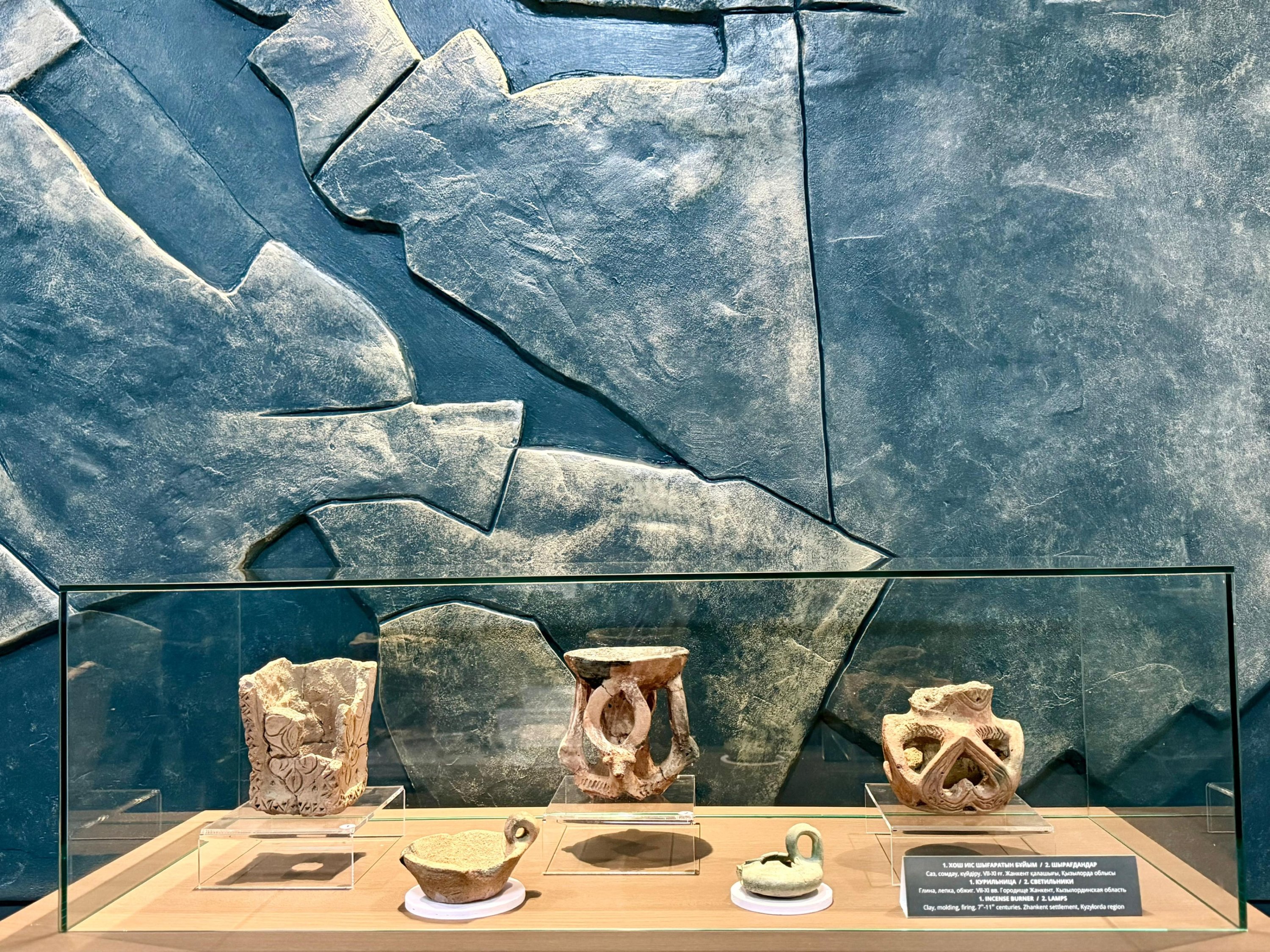
More than 120 historical artifacts dating back to the Oghuz period were showcased following archaeological excavations near the Syr Darya (Seyhun) River region in southern Kazakhstan. Unearthed from ancient Oghuz settlements, these artifacts provide valuable insight into the cultural heritage of the Oghuz Turks who lived between the seventh and 11th centuries.
The exhibition, titled “Traces of the Oghuz Steppe Culture,” was inaugurated at the National Museum of Kazakhstan in Astana. The event attracted numerous visitors, including officials and guests from various Turkic states, as well as local and international museum-goers.
The exhibit features over 120 artifacts uncovered through archaeological digs conducted in ancient Oghuz cities located near the Syr Darya River in southern Kazakhstan. Ashat Saylau, a specialist from the Regional History Museum of Kyzylorda Province, told Anadolu Agency (AA) that the items on display reflect the cultural legacy of the Oghuz Turks who once inhabited the region.
Saylau highlighted that the coins exhibited provide insight into the Oghuz people’s governance and economy, while the intricately designed ceramics demonstrate their worldview. He explained, “The Oghuz established a settled civilization along the lower Syr Darya, building fortified cities surrounded by high walls. They laid the foundations for later advanced cities during the Golden Horde era, such as Jankent, Sighanak and Jent.”
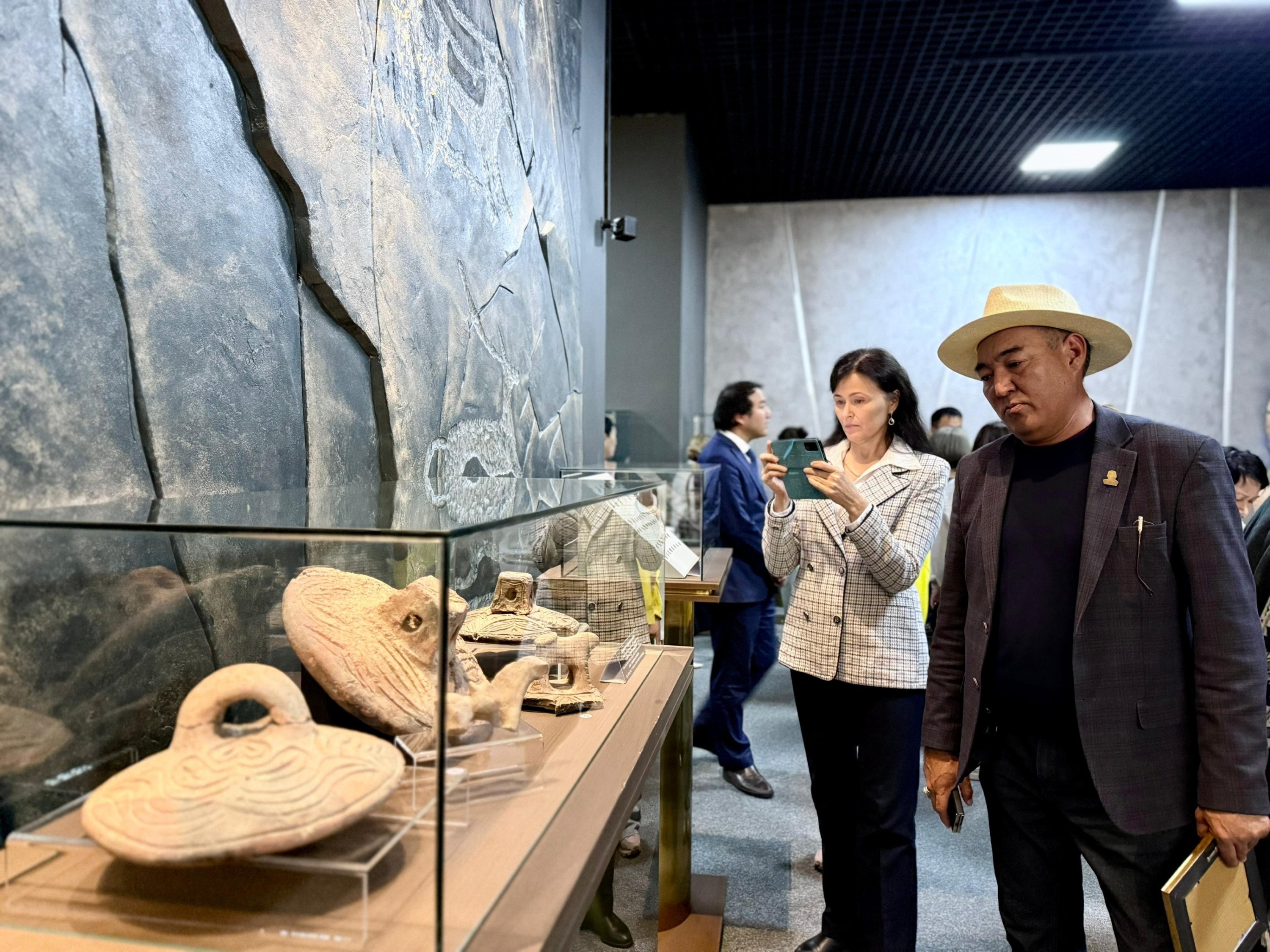
He also noted that archaeological excavations continue at Jankent, one of the ancient Oghuz cities, shedding further light on their history.
Bülent Gönültaş, deputy director general of cultural heritage and museums, expressed his pleasure in participating in the opening ceremony. “The Oghuz Turks are our ancestors who spread from Central Asia to Anatolia, Syria and Iraq. Our roots trace back to the Oghuz,” he said. “Today, we see artifacts uncovered from archaeological excavations exhibited here at the National Museum of Kazakhstan and we thank everyone involved, especially the museum staff.”
Gönültaş underlined the exhibition’s significance in passing down shared cultural heritage to future generations.
Barış Cavid Mövsümlü, head of the department of TURKSOY for Relations with Turkic Speaking Communities, remarked on the organization’s efforts, since its founding in 2022, to unify and develop museum activities within the Turkic world. He thanked Berik Abdigaliuly, director of the National Museum of Kazakhstan, for hosting such a meaningful event.
Following the opening, a scientific seminar was held, focusing on the Oghuz’s cultural heritage in the steppes.
The exhibition will remain open to visitors until Oct. 25.