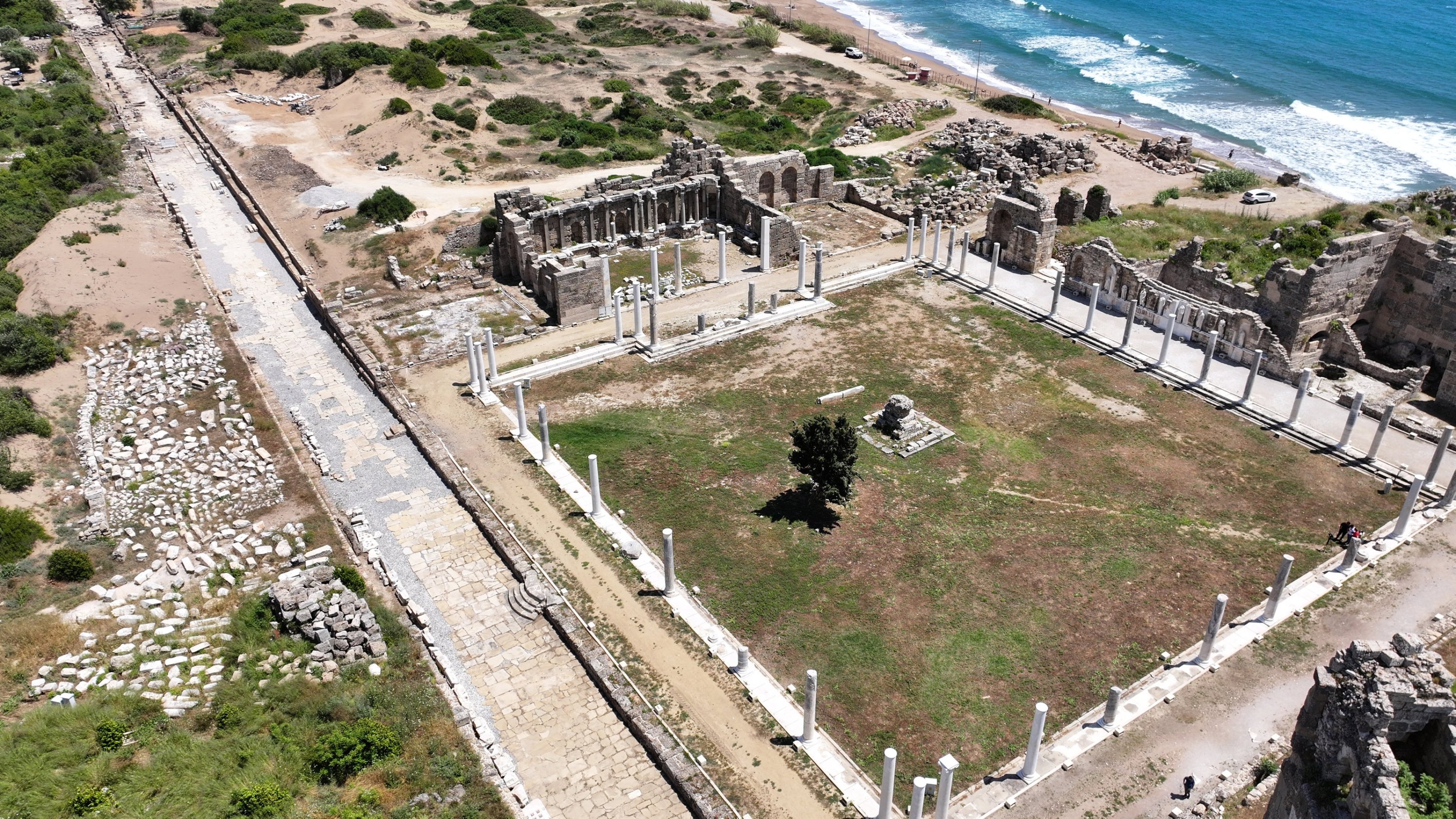
Archaeologists have uncovered an ancient street leading to a secondary main gate of the ancient city of Side, along with several surrounding side streets, in ongoing excavations in southern Türkiye.
The work is part of long-running digs in the ancient port city in the Manavgat district of Antalya, where systematic excavations have continued uninterrupted since 1947.
Once one of the most important harbor cities of ancient Pamphylia, Side is known today for its well-preserved Roman-era theater, the Temple of Apollo, the Temple of Athena, bath complexes, monumental fountains, a colonnaded street and museums that draw thousands of visitors.
The latest excavation and restoration efforts, supported by the Ministry of Culture and Tourism under its “Heritage for the Future Project,” have focused on revealing the ancient street that extends to the city’s eastern gate, one of Side’s two main entrances, along with previously unexcavated adjacent streets.
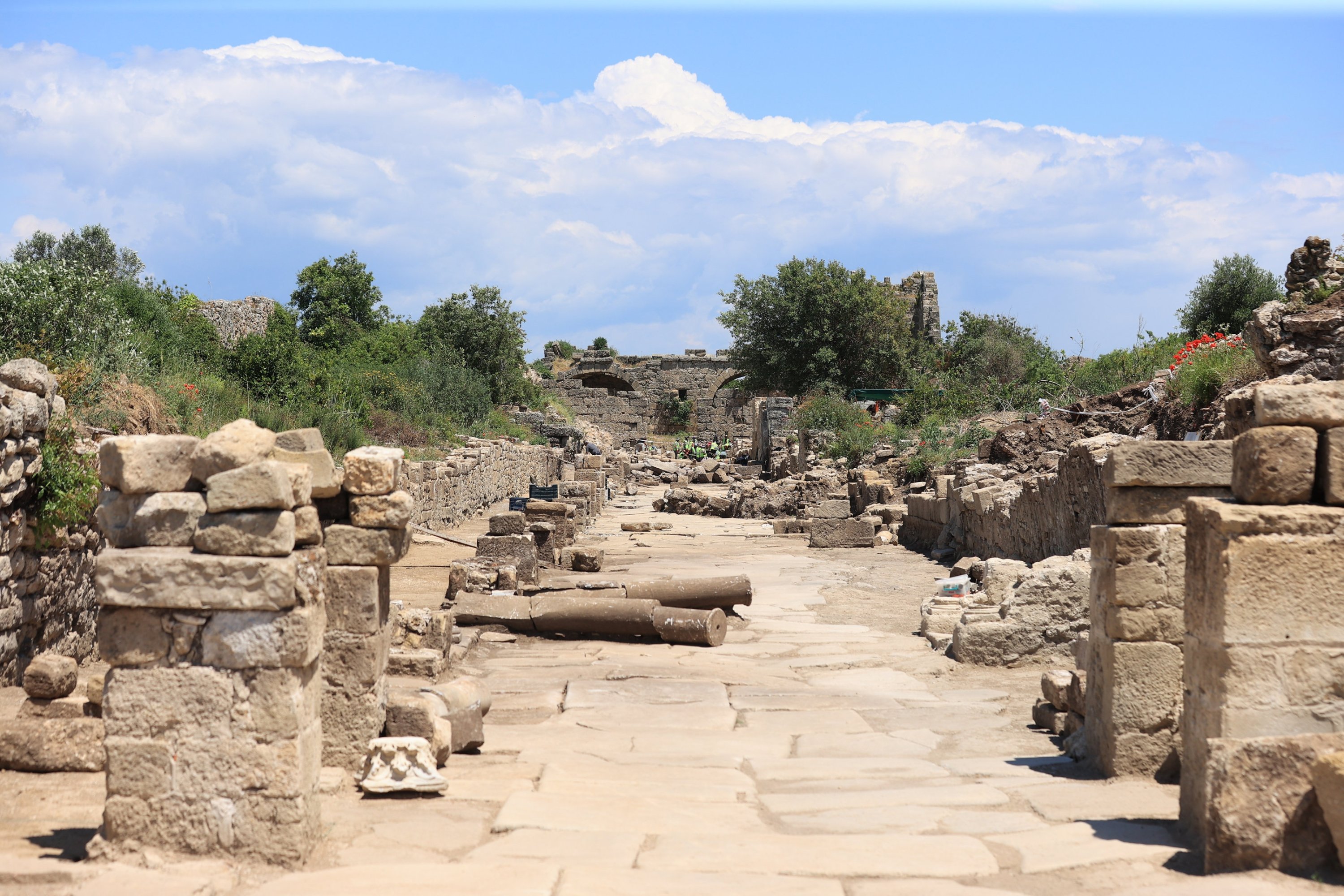
Excavation director professor Feriştah Alanyalı of Anadolu University told the Anadolu Agency (AA) that uncovering the street has provided important insights into the city’s historical development.
“While opening the street, we had the opportunity to identify the historical processes of the area,” Alanyalı said. She added that researchers were able to trace different phases of use for a road built during the early imperial period and study an adjacent street that had never been excavated before.
Alanyalı said the team plans to continue excavations this year along the city’s land and sea fortifications, noting that work on the harbor walls will help establish a more clearly defined and reinforced boundary for the site.
Researchers also say Side played a significant role in ancient Mediterranean trade. In recent years, archaeologists discovered a Bronze Age ship anchor near the Alara Stream, suggesting maritime activity in the region as early as the second millennium B.C.
Alanyalı said findings indicate Side was a cosmopolitan hub where people from across the Aegean and the Black Sea engaged in trade and settlement.
“Side is an important maritime city, but also an agricultural one due to the alluvial soils brought by the Melas River,” she said. “Sediment carried by water gradually filled the harbor. Although it was repeatedly cleaned, the inhabitants eventually had to relocate the harbor. Our work has also identified several other small and large harbors in the region.”